







Definition and Meaning
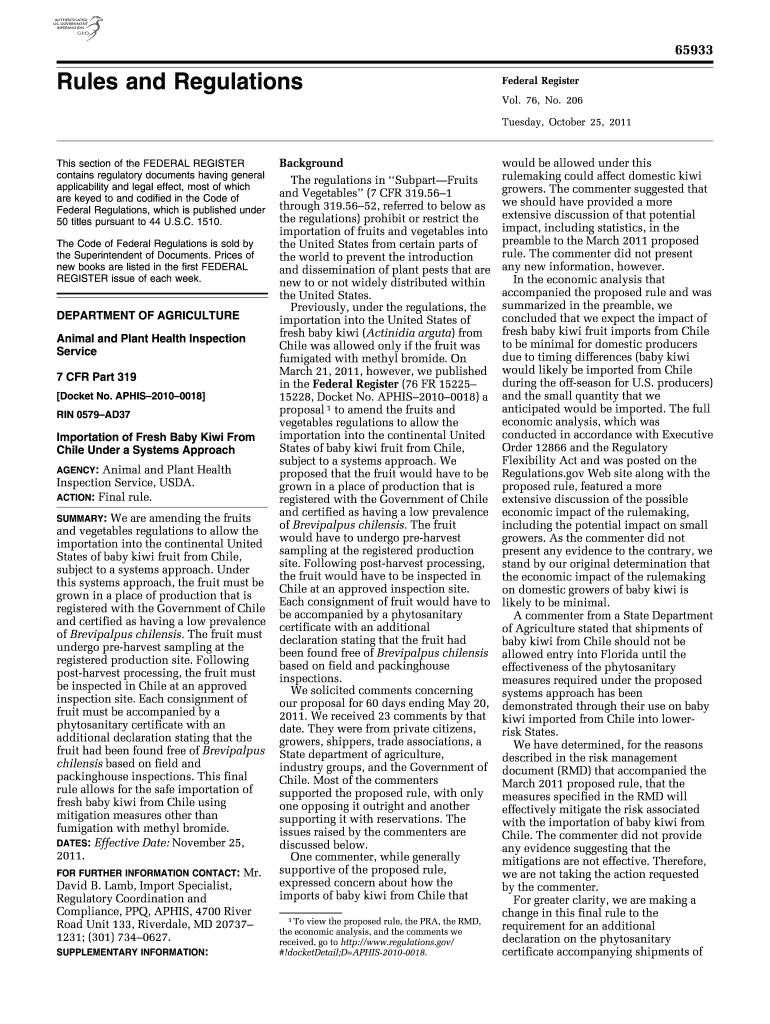
The "76 FR 65933 - Importation of Fresh Baby Kiwi" is a final rule documented in the Federal Register that outlines the regulations for importing fresh baby kiwi from Chile into the continental United States. This rule is designed to facilitate the safe entry of the kiwi while minimizing pest risks and economic disruptions to domestic kiwi producers.
Key Aspects of the Regulation
-
Systems Approach: This refers to a comprehensive set of procedures that include production site registration, certification to ensure low pest prevalence, post-harvest processing, and rigorous phytosanitary inspections. The goal is to reduce the risk of importing harmful pests, such as Brevipalpus chilensis, into the U.S.
-
Phytosanitary Measures: The rule specifies necessary treatments and inspections to keep unwanted pests at bay, ensuring that only pest-free produce enters the U.S. market.
How to Use the 76 FR 65933 - Importation of Fresh Baby Kiwi
Understanding how to use this regulation effectively is key for importers seeking to bring fresh baby kiwi into the U.S. market.
Compliance Procedures
-
Register Production Sites: Importers must ensure that production sites in Chile are registered and recognized as compliant with the U.S. standards.
-
Certification: Obtain a certification indicating low pest prevalence at these sites, which is crucial for meeting import criteria.
-
Processing and Inspection: Post-harvest kiwi must undergo specific processing procedures and inspections to clear them for U.S. import.
How to Obtain the 76 FR 65933 - Importation of Fresh Baby Kiwi
Accessing and obtaining the details of this regulation involves familiar steps:
Steps to Access the Rule
-
Federal Register: The full text of the rule can be found in the Federal Register, offering comprehensive details for adherence.
-
Online Resources: Government databases and agricultural import platforms provide digital access to this document for easy reference.
Steps to Complete Compliance with 76 FR 65933
Completing compliance with this rule involves several methodical steps to ensure all requirements are fulfilled.
Compliance Checklist
-
Site Registration: Ensure you have registered all participating production sites in Chile.
-
Documentation: Gather certification documents proving low prevalence of targeted pests.
-
Pre-Import Inspections: Conduct and document thorough inspections at both pre- and post-harvest stages.
-
Phytosanitary Certainty: Ensure the kiwi undergoes approved treatments and inspections, and that pests are not present.
Who Typically Uses the 76 FR 65933
The demographic of users impacted by this rule is quite specific.


Primary Users
-
Importers: Primarily businesses and agents involved in the importation of fresh produce into the U.S.
-
Agricultural Inspectors: Professionals ensuring compliance with phytosanitary and agricultural standards.
Important Terms Related to 76 FR 65933
Understanding relevant terminology is crucial for proper adherence to the rule.
Key Definitions
-
Systems Approach: A structured protocol including all necessary layers of inspection and processing to mitigate pest risks.
-
Phytosanitary Certificate: An official document certifying that the consignment adheres to the phytosanitary standards described in the rule.
Legal Use of the 76 FR 65933
This section details the legal framework and implications of the regulation.
Legal Requirements
-
Compliance Assurance: Importers must demonstrate consistent compliance with all specified processes and documentation.
-
Inspections and Certifications: These are legally binding requirements to ensure pest-free import.
Key Elements of the 76 FR 65933
This rule encompasses several core elements necessary for its successful application.
Main Components
-
Low-Prevalence Certification: Fundamental to ensuring the reduction of pests during importation.
-
Post-Harvest Treatments and Inspections: Essential steps for maintaining product integrity and safety.
Examples of Using the 76 FR 65933
Several scenarios illustrate the effective use of this regulation.
Practical Applications
-
Successful Import: An importer who registers their production site, follows the systems approach, and meets all inspection criteria successfully imports kiwi with no pest issues.
-
Non-Compliance Example: A failure to obtain the necessary certification can lead to denied entry of the product, showcasing the rule's stringent enforcement.
Penalties for Non-Compliance
Failure to meet the requirements of 76 FR 65933 carries implications.
Consequences
-
Entry Denial: Imports that do not meet the outlined standards may be refused entry into the U.S.
-
Legal and Financial Penalties: Non-compliance can result in fines and legal actions against the offending parties.




