
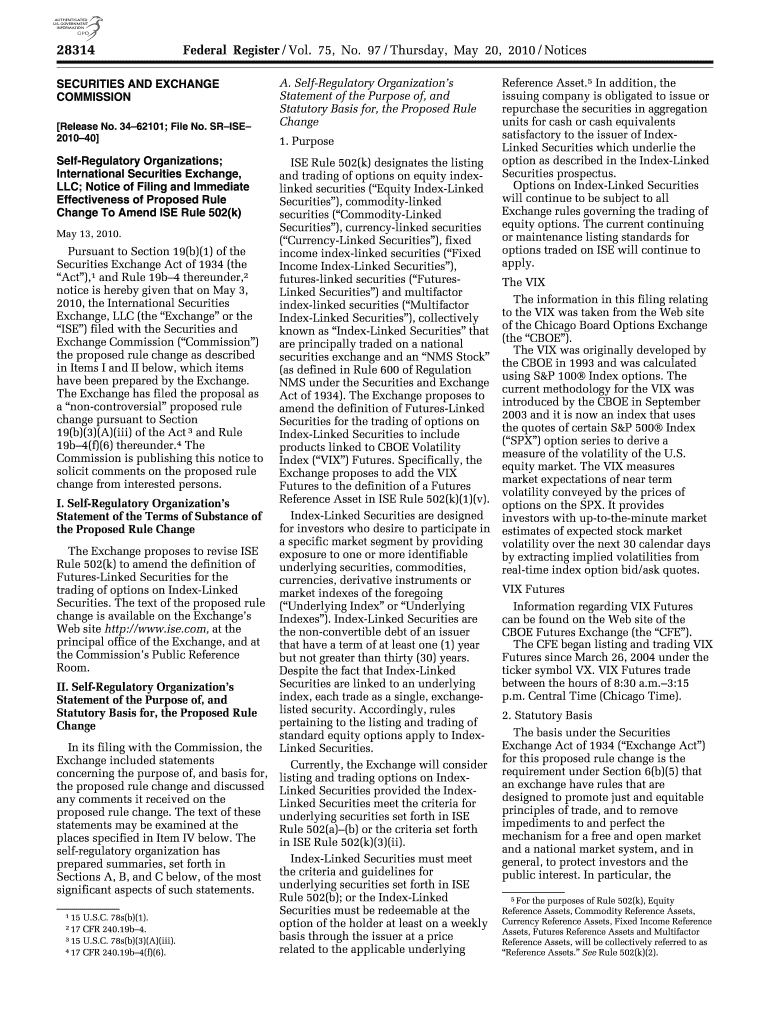







Definition & Meaning of the Statutory Basis for the Proposed Rule
The "Statutory Basis for the Proposed Rule" refers to the legal foundation underpinning a proposed regulatory change. This statutory basis identifies the legislative or legal authority that allows the introduction and implementation of a new rule. In the context of the Government Publishing Office (gpo), it suggests where and how the law supports the proposed changes, ensuring that they align with existing legal frameworks and mandates.
Practical Examples
- Securities Regulation: In the realm of securities, a statutory basis might refer to sections of the Securities Exchange Act that permit changes to listing requirements.
- Environmental Policy: A statutory basis for environmental rules could be rooted in the Clean Air Act, which governs emissions standards.
Why It Matters
Understanding the statutory basis ensures that the changes are legally viable and reduces the risk of challenges that could invalidate the proposed rule.
How to Use the Statutory Basis for the Proposed Rule
Utilizing the statutory basis effectively involves interpreting the legal texts that justify the rule's formulation. Users need to analyze these texts for relevance and legal standing.
Steps for Interpretation
- Identify Relevant Laws: Locate the specific legislation cited as the statutory basis.
- Analyze Texts: Examine the language and scope of the law to understand the extent of authorization.
- Consult Legal Experts: Engage with legal professionals to interpret complex legal areas.
Contextual Application
For legal advisors drafting new rules, the statutory basis guides the drafting process by framing legal boundaries and responsibilities.
Steps to Complete the Statutory Basis for the Proposed Rule
Completing a statutory basis involves several key stages that ensure comprehensive coverage and legal compliance.
Process Overview
- Research Legislative Authority: Identify the acts and sections that relate to the rule.
- Draft Legal Justifications: Create clear descriptions linking the rule to its statutory basis.
- Review & Consultation: Submit drafts for legal review to ensure accuracy.
Detailed Breakdown
- Legislative Review: Examine the legislative history for intent and precedents.
- Drafting: Write a concise yet detailed justification aligning with legal standards.
Key Elements of the Statutory Basis for the Proposed Rule
Focusing on essential components helps ensure that the statutory basis is comprehensive and robust.
Core Components
- Legal Citations: Specific references to statutes or codes granting authority.
- Scope Definitions: Clear articulation of how the statutory basis applies to the proposed rule.
- Alignment With Existing Law: Ensures consistency with current legal frameworks.
Important Considerations
- Contextual Relevance: Legal foundations must relate directly to the proposed changes.
- Updates and Amendments: Consider any changes in law that might affect the rule's basis.
Who Typically Uses the Statutory Basis for the Proposed Rule
This form is primarily used by regulatory bodies, legal advisors, and policymakers involved in drafting and implementing new rules.


Typical Users
- Regulatory Agencies: To justify the introduction of new regulations.
- Legal Teams: For advising on compliance and potential challenges.
- Policy Developers: As a foundation for crafting new policy proposals.
Real-World Scenarios
- Environmental Regulation: Agencies like the EPA use statutory bases to develop emissions regulations.
- Financial Markets: Organizations such as the SEC use these grounds for securities rules.
Legal Use of the Statutory Basis for the Proposed Rule
The statutory basis serves as a legal instrument to bolster the legitimacy and enforceability of rules.
Legal Applications
- Defending Regulations: Provides a defense mechanism in litigation challenging new rules.
- Regulatory Alignment: Ensures consistency with broader regulatory frameworks.
Case Studies
- Successful Defense: Agencies with well-documented statutory bases succeed in maintaining contested rules.
- Litigation Precedents: Past cases highlight the importance of thorough statutory justification.
State-Specific Rules for the Statutory Basis for the Proposed Rule
While the statutory basis usually operates at the federal level, individual states may have specific rules and challenges.
State Variations
- Local Statutes: Some states require additional justification under state law.
- Regulatory Nuances: Definitions and interpretations may vary by jurisdiction.
Implications
- Legal Challengers: State differences can lead to discrepancies in enforcement and compliance.
- Regulatory Complexity: Agencies must navigate both federal and state requirements.
Examples of Using the Statutory Basis for the Proposed Rule
To illustrate the application of a statutory basis, real-world examples can highlight its practical usage.
Illustrative Examples
- Consumer Protection: The FTC cites statutory authority from the Consumer Credit Protection Act when proposing new consumer rights regulations.
- Health Regulations: The FDA employs statutory bases from the Federal Food, Drug, and Cosmetic Act to implement safety standards.
Lessons Learned
- Effectiveness Enhancements: A clear statutory basis aids in smoother implementation and fewer legal disputes.
- Precedent Observations: Learning from past implementations helps refine future rule proposals.




