
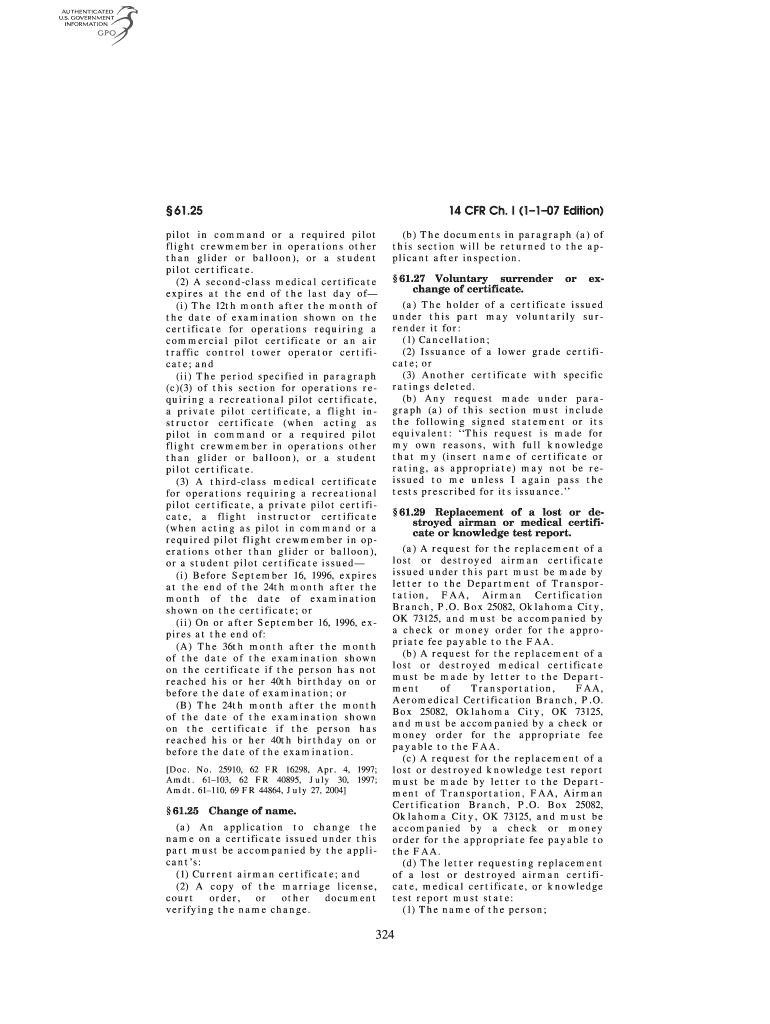







Definition and Meaning
The "I (1 1 07 Edition) pilot in command or a required pilot flight crewmember in operations other than g" form is an integral document used by pilots to certify their role in non-commercial aviation operations. It establishes the legal and operational criteria for pilots operating in specific capacities, ensuring compliance with aviation regulations. This form serves as a declaration of eligibility and capability for pilots who are involved in operations outside of traditional commercial flights.
Key Components
- Pilot in Command: The individual responsible for the safe operation of the aircraft throughout the flight.
- Required Pilot Flight Crewmember: A pilot whose presence is necessary according to the regulatory requirements for the operation of certain classes of aircraft.
- Non-commercial Operations: Refers to flights that do not involve the transport of goods or passengers for compensation or hire.
How to Use the Form
Using this specific form involves filling out detailed sections that verify the pilot’s qualifications and operational roles. Pilots must provide comprehensive personal information, flight hours, and certification details.
Completing the Form
- Personal Information: Include full name, address, and contact details.
- Certification Information: Provide pilot license numbers and expiration dates.
- Operational Role: Specify if the role is as pilot in command or a required crewmember.
- Flight Hours: Document flight experience with specific emphasis on recent hours.
Key Elements of the Form
The form demands meticulous attention to several critical elements to ensure accurate completion:
- Date of Completion: Must reflect current date to ensure the information is up-to-date.
- Signatures: A signature from the pilot and potentially a verifying authority is required to validate the document.
- Certification Details: Clear indication of the class and type of medical certification held by the pilot.
- Acknowledgment of Responsibilities: The pilot must understand and accept the responsibilities associated with their declared role.
Steps to Complete the Form
Completion of this form follows a precise set of steps to ensure compliance and accuracy:
- Download or Obtain the Form: This can be done through official aviation authority websites or offices.
- Fill in Personal Details: Start with the personal and contact information.
- Add Certification Details: Ensure all data related to certifications, including types and expiration dates, are accurate.
- Provide Flight Experience: Record all relevant flight hours, specifying the recency of experience.
- Review and Sign: Carefully review all information for errors before signing the form.
- Submit to Relevant Authority: Submit through the designated channel, whether via mail or in-person at an aviation office.
Legal Use of the Form
Submitting this form is critical for legal operation in non-commercial aviation activities. It acts as a testament to the pilot's adherence to required standards, ensuring they meet all necessary regulations and have the qualifications to command or crew an aircraft legally.
Steps to Obtain the Form
Obtaining this form requires understanding the specific aviation authority in charge of issuing such documents. Typically, it can be accessed through:
- Official aviation websites.
- Aviation regulatory offices.
- Pilot certification bodies.
Application Process
- Online Access: Most authorities provide electronic versions that can be filled and submitted online.
- In-Person Requests: Available at aviation authority offices for physical collection.
Who Typically Uses the Form
This form is predominantly utilized by pilots involved in non-commercial aviation operations. These include:
- Individual pilots operating private aircraft.
- Corporate pilots not engaged in passenger transport.
- Flight instructors conducting training operations under specific licensing.


Penalties for Non-Compliance
Failure to complete or submit this form can result in substantial penalties, including:
- Fines: Significant financial penalties can be levied for unregistered operations.
- License Suspension: Aviation authorities may suspend the pilot’s operating license.
- Legal Action: Non-compliance can lead to severe legal ramifications, including court proceedings.
Required Documents
When completing this form, several supporting documents must also be included to verify the pilot's credentials and operational readiness:
- Pilot License Copy: Include a current and valid copy of your pilot license.
- Medical Certification: Proof of medical certification relevant to the class of aircraft being flown.
- Flight Logbooks: Evidence of flight experience as required by the regulations.
By adhering strictly to these guidelines and ensuring all data is accurately represented, pilots can maintain compliance with aviation standards and continue operations without disruption.




