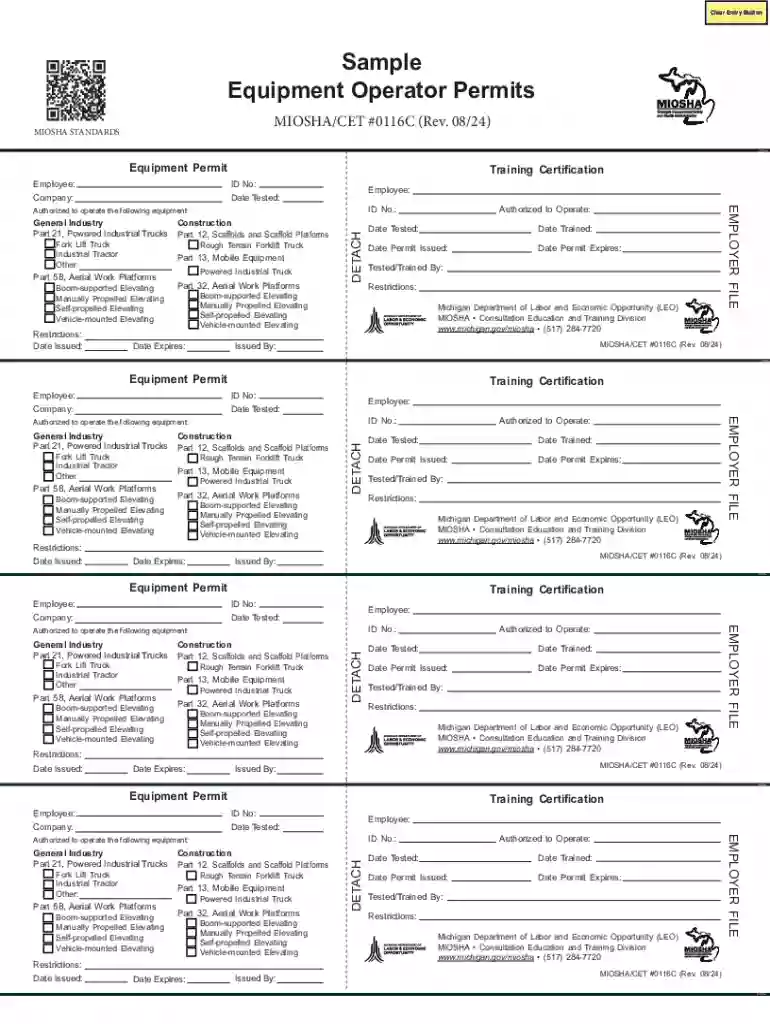
Definition & Purpose of the Sample Powered Industrial Truck Operator Permits - Michigan
The Sample Powered Industrial Truck Operator Permits - Michigan is a document issued under the guidelines of MIOSHA that certifies an individual's qualification to operate powered industrial trucks safely. These permits are crucial for maintaining high safety standards in workplaces where industrial vehicles like forklifts are used. The document details both the operator's training history and their approval to operate specific equipment types within Michigan. For employers, this permit ensures compliance with state-specific safety regulations.
How to Use the Sample Powered Industrial Truck Operator Permits
To effectively utilize the Sample Powered Industrial Truck Operator Permits - Michigan, you should follow these steps:
- Verification: Ensure the operator has undergone the necessary training and assessment procedures specified by MIOSHA.
- Documentation Completion: Record the operator's personal details and training history on the permit.
- Storage and Display: Keep the permit accessible on the premises where the equipment is used. It may also be displayed on the industrial truck itself for clarity.
- Regular Audits: Periodically review and update permits in accordance with new training or equipment use changes to maintain compliance.
How to Obtain the Sample Powered Industrial Truck Operator Permits
The process to obtain these permits involves multiple steps:
- Training Program Enrollment: Operators must enroll in a certified training program specializing in powered industrial truck operation as per MIOSHA standards.
- Completion of Training: Successfully complete both the theoretical and practical components of the training.
- Testing and Evaluation: Operators need to pass evaluations that test their understanding and proficiency in using industrial trucks.
- Permit Issuance: Upon successful completion of training and testing, the permit is issued by the employer, documenting the operator’s eligibility.
Steps to Complete the Sample Powered Industrial Truck Operator Permits
Completing this form involves several key activities:
- Gather Information: Begin by collecting the operator’s personal information, type of training completed, and the date of assessment.
- Fill Permitted Equipment Details: Specify the types of powered industrial trucks the operator has been trained to handle.
- Document Verification: Ensure signatures from authorized personnel who confirm the operator's competency.
- Finalize and Maintain Records: Finalize the permit by stamping it with the company’s seal and storing it in the company’s records.
Key Elements of the Sample Powered Industrial Truck Operator Permits
The permits encompass various sections that include:
- Personal Identification Details: Full name, employee ID, and contact information of the operator.
- Training and Certification History: Document describing the type and duration of training undertaken.
- Authorized Equipment List: Specific machines the operator is certified to handle.
- Approval Signatures: Sign-off from trainers and supervisors who have overseen the operator’s competency assessments.
Why You Should Use the Sample Powered Industrial Truck Operator Permits
Utilizing these permits serve several purposes:
- Safety Assurance: Ensures only qualified operators handle industrial trucks.
- Compliance: Meets legal requirements under Michigan’s occupational safety laws.
- Accident Prevention: A well-trained operator is less likely to cause workplace accidents, thereby increasing overall safety.
- Documentation: Provides a reliable record of training history and equipment authorization, vital during audits.
Important Terms Related to the Sample Powered Industrial Truck Operator Permits
Several terms are essential for understanding this permit:
- MIOSHA: Michigan Occupational Safety and Health Administration, setting safety standards.
- Powered Industrial Trucks: Includes equipment like forklifts and pallet jacks used for material handling.
- Certification: Acknowledgement that an operator is adequately trained to handle specific equipment safely.
- Safety Compliance: Adhering to rules set forth by employer and state safety regulations.
State-Specific Rules for the Sample Powered Industrial Truck Operator Permits
Operating industrial trucks in Michigan requires adherence to particular state rules:
- Training Requirements: Mandates specific training standards for operators, differing slightly from federal rules.
- Renewal Policies: Periodic renewal of permits to ensure ongoing compliance and safety.
- Workplace Safety Checks: Regular safety audits to validate operator permits and inspect equipment conditions.
Real-World Examples of Using the Permits
In practice, these permits are used in diverse environments:
- Manufacturing Plants: Ensuring operators with permits handle heavy machinery to move large inventories.
- Warehousing Operations: Certification proves operators can safely manage logistical tasks involving pallet trucks.
- Construction Sites: Operators with permits efficiently maneuver industrial trucks amidst dynamic work environments.
By understanding these sections thoroughly, the utility and importance of the Sample Powered Industrial Truck Operator Permits in maintaining safety and compliance standards can be realized fully.