




01. Edit your mutual legal assistance criminal online
Type text, add images, blackout confidential details, add comments, highlights and more.

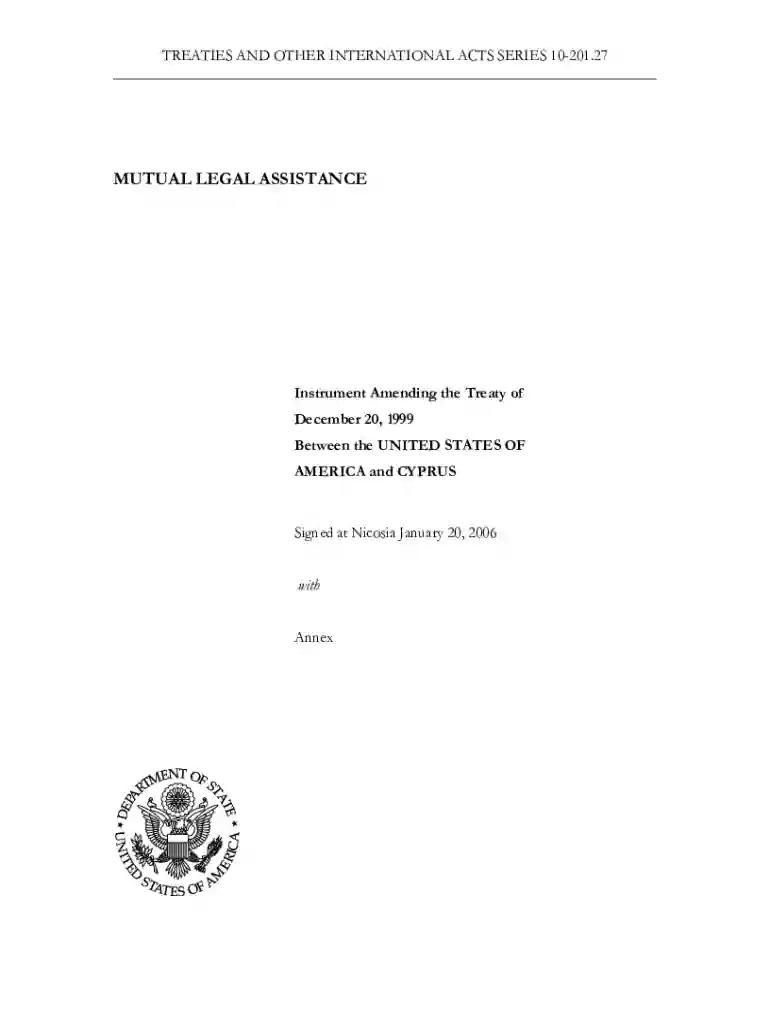
Type text, add images, blackout confidential details, add comments, highlights and more.

Draw your signature, type it, upload its image, or use your mobile device as a signature pad.

Send it via email, link, or fax. You can also download it, export it or print it out.
The document known as "Treaties in Force - United States Department of State" is an authoritative record that catalogues all treaties and international agreements currently active and binding for the United States. It is a comprehensive source defining the legal relationships between the U.S. and other nations, documenting commitments made by the government in various sectors such as trade, defense, and human rights. Understanding its content is essential for legal professionals, international relations experts, and government officials.
Using the "Treaties in Force" document involves navigating its structured format to extract pertinent legal information. The document is designed for ease of use, allowing users to quickly find relevant treaties and gain insights into the nature and scope of agreements involving the U.S.
Accessing the "Treaties in Force" document is straightforward, as it is publicly available through several channels. Researchers and practitioners often require easy access to verify and apply treaty obligations in various contexts.
When conducting an analysis or utilizing the "Treaties in Force" document, a methodical approach ensures a comprehensive understanding.
The "Treaties in Force" list serves a variety of professionals and organizations needing precise information on international agreements.
Understanding the structure and key elements of the "Treaties in Force" document can greatly enhance its utility for users.
The legal application of the "Treaties in Force" document is vast, impacting how treaties are interpreted in legal proceedings.
Adherence to the treaties listed in the "Treaties in Force" document is crucial to maintain international credibility and avoid repercussions.
These eight sections provide a detailed, comprehensive view of the "state treaties-in-forceTreaties in Force - United States Department of State," maximizing the utility for users and ensuring clarity and depth in understanding its structure, usage, and significance.
We've got more versions of the mutual legal assistance criminal form. Select the right mutual legal assistance criminal version from the list and start editing it straight away!
| Versions | Form popularity | Fillable & printable |
|---|---|---|
| 2006 | 4.9 Satisfied (56 Votes) |
At DocHub, your data security is our priority. We follow HIPAA, SOC2, GDPR, and other standards, so you can work on your documents with confidence.
Jul 23, 2026 Treaties in Force is an indexing tool for starting research on in-force treaties and agreements. Published annually by the Department of State
Treaties in Force, which lists treaties and other international agreements currently in force for the United States.


