




01. Edit your form online
Type text, add images, blackout confidential details, add comments, highlights and more.

Type text, add images, blackout confidential details, add comments, highlights and more.

Draw your signature, type it, upload its image, or use your mobile device as a signature pad.

Send it via email, link, or fax. You can also download it, export it or print it out.
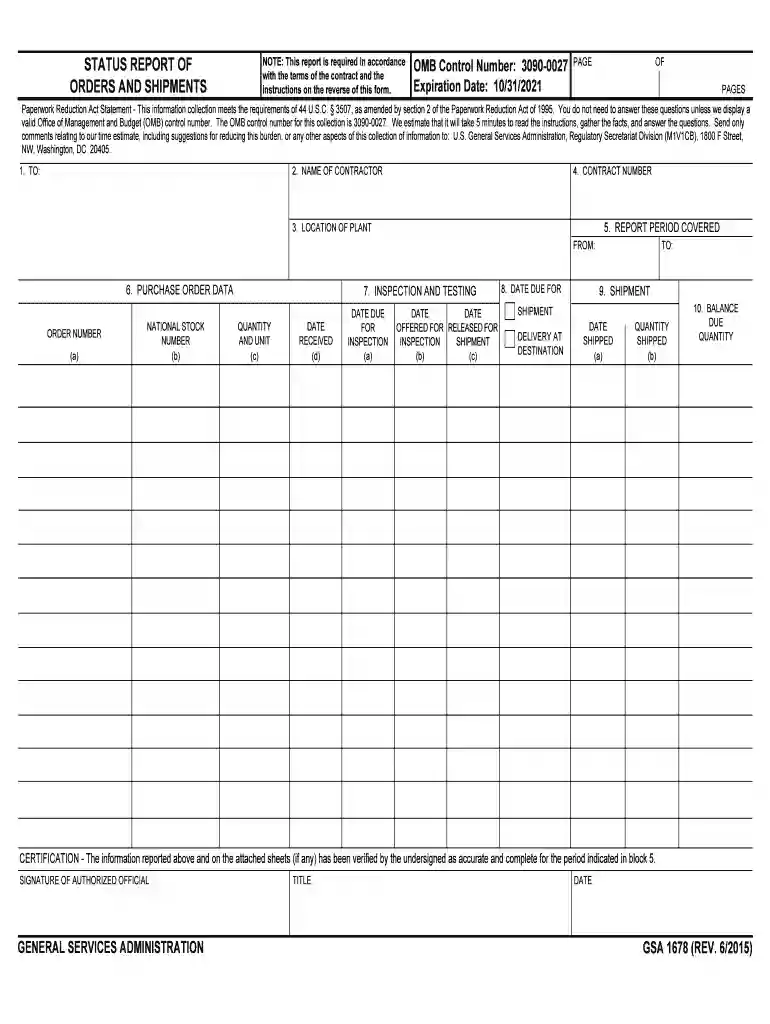
The "Status Report of Orders and ShipmentsGSA" is a structured document template required by the General Services Administration (GSA). This report serves as a detailed log concerning orders and shipments associated with contracts managed under GSA guidelines. The report captures vital information such as contractor details, purchase order numbers, shipping dates, and inspection results. The primary objective of the report is to ensure compliance with contract obligations by maintaining a comprehensive record of all transactions and shipments. This aids both contracting entities and the GSA in tracking and verifying the fulfillment of contractual terms.
A comprehensive understanding of the report's structure is critical for accurate completion. Essential elements of the Status Report include:
Contractor Information: The report captures the name, address, and contact information of the contractor. This ensures clear communication and identification of the responsible party.
Purchase Order Data: Essential details such as purchase order numbers and descriptions of items ordered are included to track the procurement process efficiently.
Inspection and Testing: This section provides information about the inspection and testing status of the products. Details include test results and acceptance criteria that the products must meet.
Shipping Details: Records shipment dates, methods, and carriers used, offering a timeline for delivery processes.
Certification of Accuracy: The contractor must certify that the information contained in the report is accurate and complete, serving as an accountability measure.
Completing the report requires attention to detail. The following steps outline the process:
Gather Required Information: Compile all necessary data, including contractor and order details, before beginning the report.
Input Contractor Information: Accurately enter details in the designated sections.
Enter Purchase Order Details: List all relevant purchase information, ensuring accuracy to avoid compliance issues.
Document Inspection Results: Record any inspection or testing results thoroughly, including any deviations from expected outcomes.
Update Shipping Information: Include all relevant shipment data, ensuring that dates and contact details are correct.
Verify and Certify: Review the report comprehensively for any errors before certifying its accuracy to the GSA standards.
The report must adhere to specific legal requirements outlined by the GSA to maintain compliance. Contractors are required to submit these reports monthly until all contracted shipments are finalized. Non-compliance can result in penalties, including contract termination or legal action. Therefore, understanding and adhering to legal stipulations is imperative for successful contract fulfillment.
Primarily, contractors engaged with the GSA are responsible for completing and submitting the report. These contractors may range from small businesses to large corporations involved in providing goods and services to government entities. The report is used by the GSA to monitor contract adherence and by contractors to maintain transparency and accountability in their operations.
Practical scenarios where the report proves essential include:
Vendor Inventory Tracking: Contractors use the report to manage and reconcile inventory against shipments to the GSA.
Contract Compliance Auditing: The GSA uses the report in audits to ensure all contractual obligations are being met without discrepancies.
Dispute Resolution: In cases of disagreement or non-delivery claims, the report serves as an official document providing evidence of compliance or necessary corrective actions.
There are multiple methods for submitting the report:
Online Submission: Contractors may use the GSA's official portal to submit reports electronically, which streamlines processing and reduces errors.
Mail Submission: Traditional mailing remains an option, though less common due to potential delays.
In-person Delivery: Direct delivery can be utilized when digital or postal services are unavailable, although it is not the standard practice.
Failing to submit the report, or submitting incorrect information, can lead to severe consequences, such as:
Fines and Penalties: Financial repercussions are common for failure to comply with reporting requirements.
Contract Termination: Persistent non-compliance may result in the cancellation of contracts with the GSA.
Legal Action: Deliberate falsification of information can lead to legal proceedings, emphasizing the importance of accuracy and honesty.
The thorough completion and timely submission of the Status Report of Orders and ShipmentsGSA is crucial for maintaining contractual integrity and legal compliance within GSA-related operations.
We've got more versions of the Status Report of Orders and ShipmentsGSA form. Select the right Status Report of Orders and ShipmentsGSA version from the list and start editing it straight away!
| Versions | Form popularity | Fillable & printable |
|---|---|---|
| 2015 | 4.8 Satisfied (256 Votes) |
At DocHub, your data security is our priority. We follow HIPAA, SOC2, GDPR, and other standards, so you can work on your documents with confidence.


This subpart prescribes policies and procedures for making awards of indefinite-delivery contracts and establishes a preference for making multiple awards
Apr 9, 2015 Status Report. □ Produce a final Stock Status Report after completing the inventory adjustments. □ Upon completing the physical inventoryRead more


