
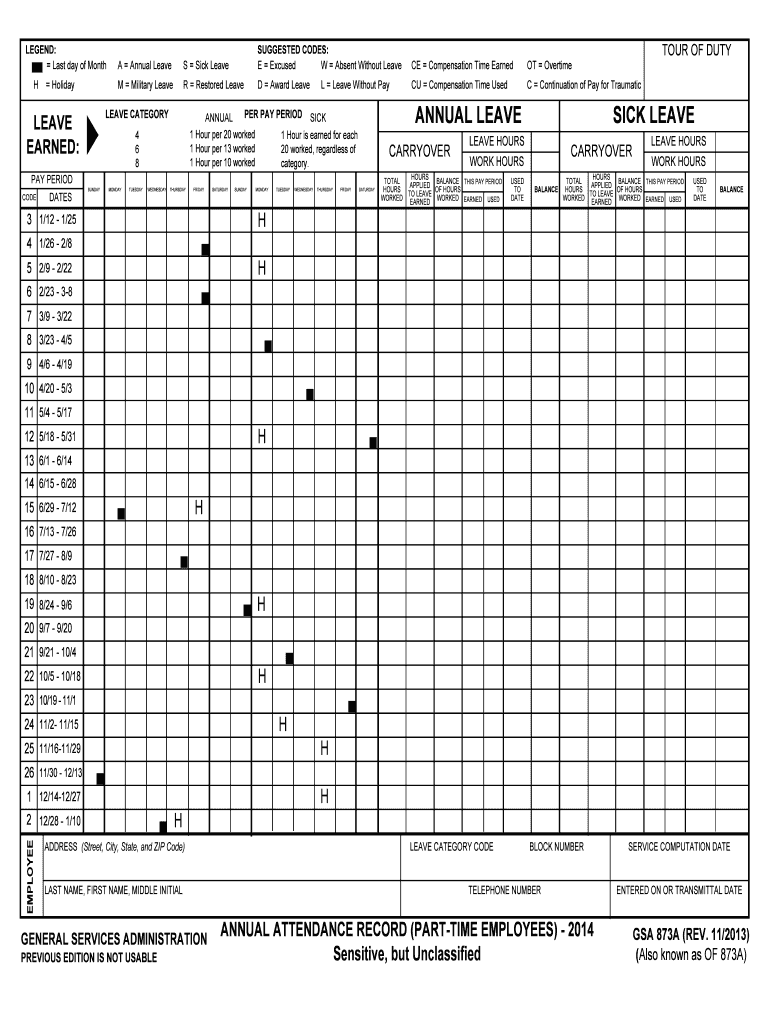







Definition and Meaning of PER PAY PERIOD SICK
The term PER PAY PERIOD SICK refers to a structured component in employee payroll systems, specifically tracking sick leave accrued or taken by employees during each pay period. This concept is significant for part-time employees and those under the General Services Administration (GSA) as it standardizes the method of documenting sick leave. It ensures consistent recording in alignment with company policies and government regulations.
Importance in Payroll Management
- Consistency: Offers a standardized approach for recording sick leave across pay periods.
- Accuracy: Ensures precise tracking and reflects actual employee leave entitlements.
- Compliance: Helps in aligning with labor laws and organizational policies related to employee rights.
Example Scenarios
- An employee accrues four hours of sick leave per pay period, which is documented using this form.
- A timekeeper uses this form to update the payroll system after confirming the employee’s sick leave for that period.
How to Use the PER PAY PERIOD SICK Form
The use of the PER PAY PERIOD SICK form involves several steps and guidelines to ensure accurate documentation and compliance with policies.
Steps to Utilize Effectively
- Access the Form: Retrieve the form from the human resources department or access it digitally through employee portals.
- Enter Employee Details: Fill in personal information such as employee name, ID, and department.
- Record Sick Leave: Document the amount of sick leave accrued or taken within the designated pay period.
- Verification: Submit the form for verification by a supervisor or timekeeper.
- Integration into Payroll: The approved form is entered into the payroll system to adjust leave balances accordingly.
Practical Usage Examples
- Employees submit this form bi-weekly to record any sick leave taken, ensuring their leave balances are updated accurately.
- HR departments use this form to audit sick leave balances during payroll processing.
Steps to Complete the PER PAY PERIOD SICK
Completing the PER PAY PERIOD SICK form requires attention to detail and compliance with organizational processes.
Detailed Steps
- Gather Necessary Information: Before starting, ensure you have all employee details and prior leave records.
- Complete Mandatory Fields: Enter all required information accurately in the designated fields.
- Calculate Sick Leave: Determine the amount of sick leave used and include appropriate dates.
- Review for Accuracy: Check for any errors or omissions before submission.
- Submit for Approval: Once completed, submit the form to the appropriate department for approval.
Key Considerations
- Double-check dates to ensure they match actual periods of absence.
- Ensure all fields are filled to avoid delays in processing.
Who Typically Uses the PER PAY PERIOD SICK
The primary users of the PER PAY PERIOD SICK form are employees, HR professionals, and payroll administrators.


Typical Users
- Employees: Use the form to officially document sick leave per pay period.
- HR Departments: Manage and process these forms to maintain accurate leave records.
- Timekeepers: Ensure that the information on the form is in sync with payroll systems and employee entitlements.
Usage Scenarios
- In large organizations, timekeepers use this form to regularly update employee records in the payroll system.
- HR professionals may use the form to explain sick leave balance discrepancies to employees.
Legal Use of the PER PAY PERIOD SICK
The PER PAY PERIOD SICK form ensures adherence to labor laws and organizational policies regarding sick leave.
Legal Compliance
- Regulation: Assists in complying with federal and state labor laws regarding sick leave entitlements.
- Documentation: Provides documented evidence of sick leave, protecting both employees and employers in legal contexts.
Case Studies
- A company facing litigation over unpaid sick leave successfully used these forms to demonstrate compliance with labor laws.
- An HR audit used these forms to identify discrepancies in employee leave processing, leading to database corrections.
Key Elements of the PER PAY PERIOD SICK
The form consists of crucial components that facilitate systematic tracking and management of sick leave.
Key Components
- Employee Information: Includes essential personal and contact details.
- Leave Details: Records the amount of sick leave taken or accrued during a pay period.
- Approval Section: Requires verification and approval by a supervisor or HR representative.
Detailed Breakdown
- Use of specific codes to denote different leave categories.
- Sections designed for additional comments or special instructions.
Required Documents
To accurately complete the PER PAY PERIOD SICK form, certain documents are needed.
Essential Documents
- Employee Identification: Employee ID or similar verification.
- Previous Leave Records: Access to prior leave balances ensures accuracy.
Additional Requirements
- Medical certificates or doctor's notes if applicable.
- Employment contract clauses regarding leave entitlements.
Form Submission Methods: Online and Offline
Submission of the PER PAY PERIOD SICK form can occur through various channels, making it adaptable to different organizational structures.
Online Methods
- Employee Portals: Digital submission via HR systems integrated with payroll software.
- Email: Sending scanned copies to HR if portals are unavailable.
Offline Methods
- In-Person Submission: Direct handover of physical forms to HR departments.
- Mail: Use of postal services for submission in organizations with decentralized HR systems.
By following these guidelines and processes, users can effectively manage and document sick leave, ensuring compliance and accuracy in employee records and payroll systems.




