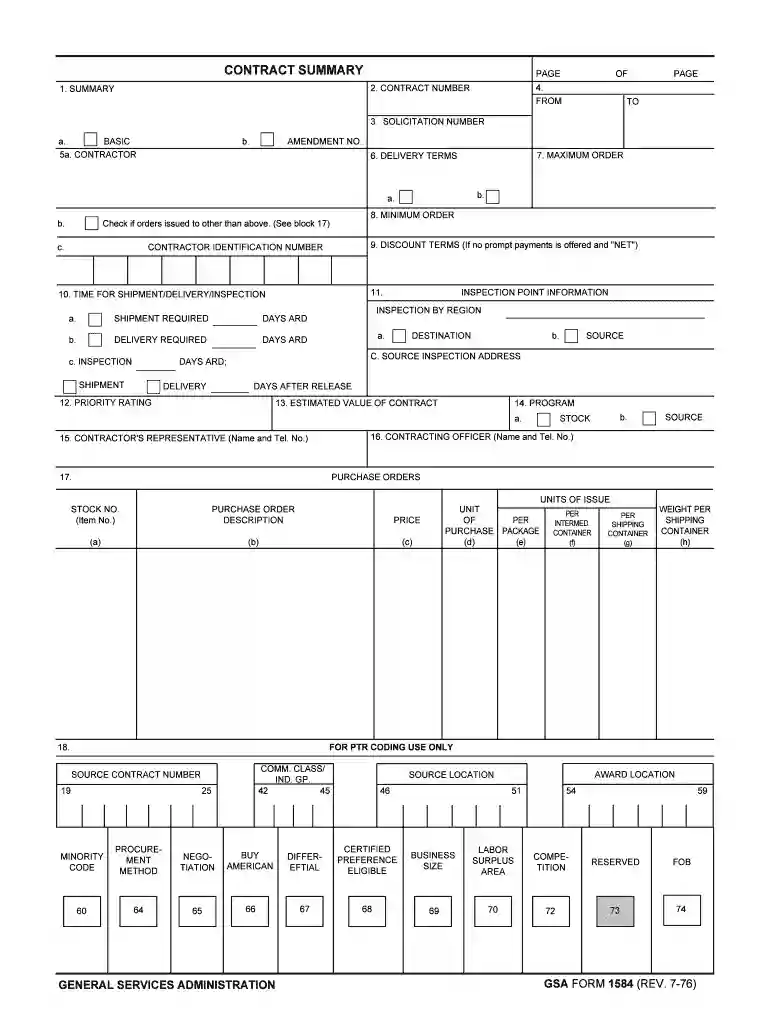
Check if orders issued to other than above 2026

Get Form
Check if orders issued to other than above Preview on Page 1

Here's how it works

01. Edit your form online
Type text, add images, blackout confidential details, add comments, highlights and more.

02. Sign it in a few clicks
Draw your signature, type it, upload its image, or use your mobile device as a signature pad.

03. Share your form with others
Send it via email, link, or fax. You can also download it, export it or print it out.

Definition & Meaning

The "Check if orders issued to other than above" form is generally utilized within organizations to verify whether specific orders have been directed to entities other than the initially specified ones in a given contract or agreement. This ensures clarity and accountability in transactional processes. By cross-checking such orders, businesses can maintain a precise record of order distribution, thereby minimizing errors and discrepancies in procurement or fulfillment activities.

Distinction from Similar Forms

While there are many forms related to order verification, this specific document focuses on identifying deviations in issued orders from their original intended recipients. It serves to confirm legal compliance and accuracy in business operations, setting it apart from general order forms that don't require such detailed validation.

Steps to Complete the Check if Orders Issued to Other Than Above

Completing the form requires attention to detail to ensure all information is correctly evaluated and recorded. Follow these steps to ensure accuracy:

  1. Gather Relevant Contracts: Ensure access to original contracts to verify details against the orders.
  2. Identify Orders: Highlight orders that need verification. This could include orders with large quantities or high value, ensuring priority is given to potentially impactful transactions.
  3. Match Orders to Original Recipients: Use relevant databases or spreadsheets to confirm orders were executed according to the original plan.
  4. Record Deviations: If any orders deviate from the intended delivery target, note these discrepancies clearly on the form.
  5. Submit for Review: Once completed, submit the form to the appropriate department for further scrutiny and final approval.

Common Challenges

  • Contractual Ambiguities: If order details are ambiguous in contracts, verification may become challenging. Ensure clarity by consulting legal teams if necessary.
  • Data Availability: Lack of immediate access to order data can delay form completion. Utilize centralized systems for data retrieval to streamline the process.

Important Terms Related to Check if Orders Issued to Other Than Above

Understanding specific terminology related to this form is crucial for accurate completion:

  • Recipient: The intended and actual receiver of the order, as stipulated in the contract.
  • Deviation: Any change from the originally planned order flow, including different quantity or alternate delivery location.
  • Procurement: The process of acquiring goods or services. This form helps ensure procurement activities align with organizational policies.

Terminology Importance

Each term holds substantial weight in ensuring legal compliance and precise documentation. Familiarity with these can reduce processing errors and subsequent contractual disputes.

Legal Use of the Check if Orders Issued to Other Than Above

This form is essential for organizations aiming to adhere to legal requirements regarding contract execution and order documentation. It acts as a safeguard against unintentional breaches of contract, which can result in legal disputes.

Compliance and Documentation

  • Contract Adherence: Verifying orders prevents unintended breaches that could lead to litigation.
  • Audit Trails: Creates a verifiable record that can protect companies during audits by regulatory bodies or internal reviews.

Key Elements of the Check if Orders Issued to Other Than Above

Several critical components are vital to this form, ensuring it serves its purpose effectively:

  • Order Identification: Includes exact order numbers and details.
  • Contract References: Contains references to original contracts to which the orders are linked.
  • Deviation Documentation: Breaks down specifics of any discrepancies found between intended and actual order recipients.

Significance of Elements

Each element is pivotal in mapping the order's lifecycle, offering clear insight into any changes made in the transaction process — crucial for maintaining organizational transparency.

Digital vs. Paper Version

Organizations can choose between digital or paper formats for this form, each with unique benefits and challenges.

Advantages of a Digital Format

  • Efficiency: Electronic forms can be processed quicker than paper, allowing for rapid corrections and timely submissions.
  • Accessibility: Digital formats can be accessed and completed remotely, enhancing flexibility.

Paper Format Use Cases

While less common now due to digital advancements, paper forms might still be preferred in situations involving signatory requirements where digital signatures are not accepted or for organizations with limited technological capabilities.

Software Compatibility (TurboTax, QuickBooks, etc.)

Certain software solutions enhance the ease of using this form, especially regarding business accounting and tax preparation.

Compatible Software

  • Document Management Platforms: Helps in keeping track of completed and pending forms, such as DocHub or Adobe Acrobat.
  • Accounting Software: Solutions like QuickBooks can integrate order verification processes, easing financial reconciliation.

Integration Benefits

By using compatible software, organizations can automate form tracking and completion processes, reducing manual errors and improving overall workflow efficiency.

Business Types That Benefit Most from Check if Orders Issued to Other Than Above

The form is particularly beneficial for various business types, each with distinct needs regarding order verification and compliance.

Beneficiary Business Entities

  • Manufacturing Firms: Ensures components are delivered to specific plants without deviation, avoiding production delays.
  • Retail Chains: Helps verify inventory distribution across different locations, critical for maintaining stocking levels.
  • Logistics Companies: Monitors transport and delivery specifics, aligning with client contracts for precise service delivery.

Practical Impact

By ensuring order accuracy, businesses enhance their operation's reliability, maintaining client trust and upholding contractual obligations.

be ready to get more

Complete this form in 5 minutes or less

Get form

Got questions?

We have answers to the most popular questions from our customers. If you can't find an answer to your question, please contact us.
Contact us
The FAR is the primary regulation for use by all executive agencies in their acquisition of supplies and services with appropriated funds.
The information must be posted not later than the date the solicitation is issued, and must remain posted for at least 10 days or until after quotations have been opened, whichever is later.
Simplified Acquisition Procedures Policy The simplified acquisition threshold (SAT) is $250,000. The SAT can vary depending on the particular acquisition situation.
Part 12: Acquisition of Commercial Items Part 12 of the FAR ensures that contractors and government alike avoid the time-consuming and formal process of a fully negotiated procurement process for (1) purchases of a relatively small value, or (2) where the goods and services are already available in general commerce.

Security and compliance

At DocHub, your data security is our priority. We follow HIPAA, SOC2, GDPR, and other standards, so you can work on your documents with confidence.

Learn more
ccpa2
pci-dss
gdpr-compliance
hipaa
soc-compliance