




01. Edit your form online
Type text, add images, blackout confidential details, add comments, highlights and more.

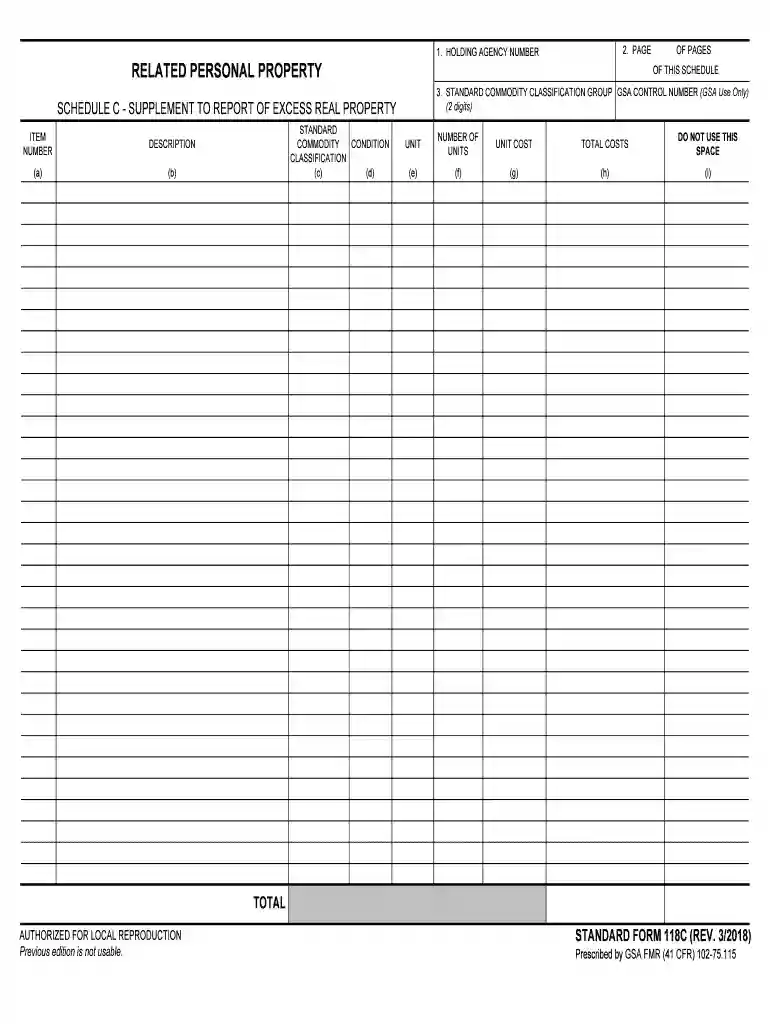
Type text, add images, blackout confidential details, add comments, highlights and more.

Draw your signature, type it, upload its image, or use your mobile device as a signature pad.

Send it via email, link, or fax. You can also download it, export it or print it out.
The term "related personal property" as used by the General Services Administration (GSA) refers to items that are associated with real property and are typically used in conjunction with the real property. These items are integral to the operation, maintenance, or use of the property. Examples include equipment, machinery, or furniture that enhances the functionality of a building or site. This designation helps streamline the management and disposal process when the related real property is declared excess to the federal government's needs.
The related personal property form under GSA is designed to facilitate the identification and reporting of items linked to real property. This form ensures that all related personal property is accounted for when a property is declared surplus. Users should ensure all details such as item descriptions, quantities, and current condition are accurately completed to avoid discrepancies.
Completing the related personal property - GSA form involves several critical steps to ensure compliance and accuracy. Here is a detailed breakdown of the process:
Gather Necessary Information:
Complete Each Section of the Form:
Review and Verify:
Submit to GSA:
The related personal property - GSA form is primarily utilized by federal agencies and departments responsible for managing government-owned properties. These entities are often required to maintain precise documentation of personal property connected to real property.


Legally, the form is used to ensure adherence to federal property management regulations. The form aids in declaring related personal property when a property is considered excess and is part of the legal procedures for property disposition by GSA.
Understanding the terminology used in the form is crucial for proper completion and compliance. Here are some key terms:
The form consists of several essential components that must be accurately completed:
Examples can illustrate how federal agencies utilize the related personal property - GSA form to streamline property management and ensure legal compliance.
The form can be submitted through various channels, offering flexibility and ease of use for different agencies.
We've got more versions of the related personal property - GSA form. Select the right related personal property - GSA version from the list and start editing it straight away!
| Versions | Form popularity | Fillable & printable |
|---|---|---|
| 2018 | 4.8 Satisfied (237 Votes) |
At DocHub, your data security is our priority. We follow HIPAA, SOC2, GDPR, and other standards, so you can work on your documents with confidence.

Jun 2, 2026 Our Office of Personal Property Management helps federal agencies dispose of personal property that is no longer needed. At the same time, itRead more
GSAs policy is to. (a) Manage excess and surplus real property, including related personal property, by providing only those minimum services necessary to


