




01. Edit your form online
Type text, add images, blackout confidential details, add comments, highlights and more.

Type text, add images, blackout confidential details, add comments, highlights and more.

Draw your signature, type it, upload its image, or use your mobile device as a signature pad.

Send it via email, link, or fax. You can also download it, export it or print it out.
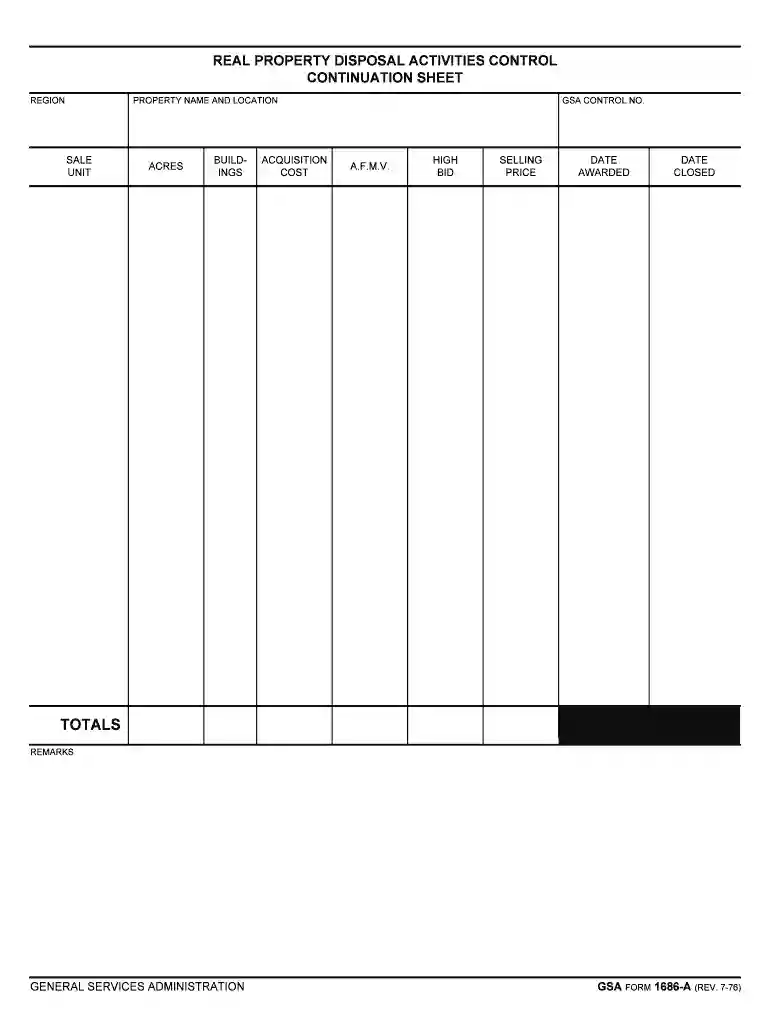
Real Property Disposal Activities Control refers to the oversight and management of transactions involved in the sale or disposal of real property assets under the administration of the General Services Administration (GSA) in the United States. This form captures critical information about properties that are being disposed of, including details about the location, financial value, and administrative processes surrounding these transactions. Understanding the precise role of this document is essential for ensuring compliance with federal regulations and efficient administration of public resources.
Gathering Property Information:
Valuation Details:
Financial Transaction Records:
Remarks and Additional Information:
Property Identification:
Financial Metrics:
Transaction Timeline:
Administrative Tracking:
Using this form ensures structured oversight and complete reporting of real property disposal activities. It supports the transparent utilization of public assets and helps maintain the integrity of sales processes. Organizations and departments involved in asset management adhere to compliance measures and facilitate accountability through comprehensive reporting.
This form is predominantly used by federal employees working within the General Services Administration and other federal entities responsible for managing government property assets. It is also crucial for contractors, appraisers, and auctioneers engaged by the federal government to manage or oversee property transactions.


Adherence to Federal Regulations:
Comprehensive Reporting:
Secure Transactions:
An example scenario involves the disposal of a decommissioned federal office building. The form would be used to document the building's appraisal, bidding process, final sale price, and transaction closure. Another common use is for surplus land sales, where this form captures necessary details for transparency and compliance.
Failure to accurately complete or file the REAL PROPERTY DISPOSAL ACTIVITIES CONTROL could lead to administrative delays, potential financial penalties, and increased scrutiny by auditing bodies. Non-compliance might result in the requirement to halt sale processes or a reevaluation of the disposal strategy altogether.
We've got more versions of the REAL PROPERTY DISPOSAL ACTIVITIES CONTROL form. Select the right REAL PROPERTY DISPOSAL ACTIVITIES CONTROL version from the list and start editing it straight away!
| Versions | Form popularity | Fillable & printable |
|---|---|---|
| 1976 | 4.8 Satisfied (273 Votes) |
At DocHub, your data security is our priority. We follow HIPAA, SOC2, GDPR, and other standards, so you can work on your documents with confidence.
102-75.335 Where asbestos is identified, what information must the disposal agency incorporate into the offer to purchase and the conveyance document?Read more
Real property disposal Dispose or acquire excess federal real property including buildings or land.


