01. Edit your form online
Type text, add images, blackout confidential details, add comments, highlights and more.

Type text, add images, blackout confidential details, add comments, highlights and more.

Draw your signature, type it, upload its image, or use your mobile device as a signature pad.

Send it via email, link, or fax. You can also download it, export it or print it out.
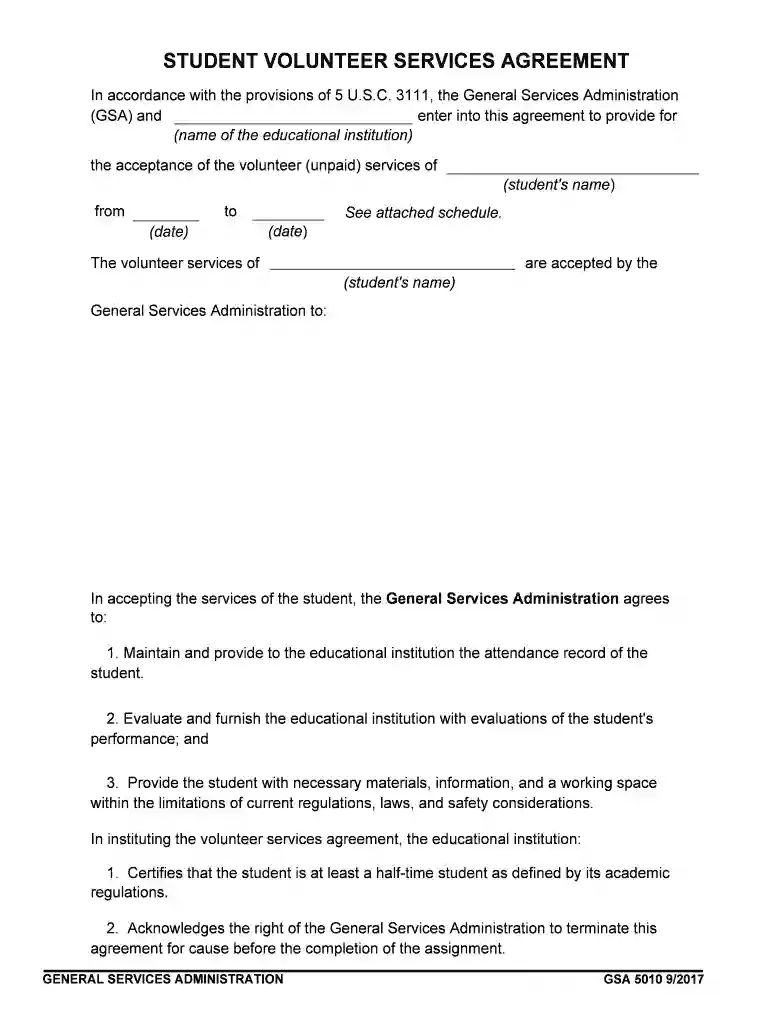
The "5 U.S. Code 3111 - Acceptance of Volunteer Service" pertains to the regulations and guidelines that govern the acceptance of unpaid volunteer services by federal agencies within the United States. It defines the permissible conditions under which federal institutions can engage volunteers without monetary compensation, specifying that such volunteers are not considered federal employees. This code helps ensure that volunteer engagements maintain a clear distinction from paid federal employment, particularly relating to fiscal responsibilities and benefits.
Federal agencies looking to engage volunteers in their operations can rely on this code to structure their volunteer programs. Utilization involves ensuring that all engagements are documented, interpreting the definition of services that do not substitute federal employees, and organizing programs in compliance with outlined federal guidelines. Agencies must also ensure that volunteers understand their rights and liabilities under this statute.
Eligibility under the 5 U.S. Code 3111 generally involves individuals willing to volunteer without the expectation of pay, recognition as employees, or benefits. Volunteers can be students, retirees, or individuals seeking experience within federal agencies, provided they fit within the constraints of not replacing paid employees and not being employed in a reduction-in-force status.


The legal use of this code ensures that volunteers are appropriately engaged without any implications of federal employment. It requires compliance with existing federal labor laws regarding voluntary service. Agencies are responsible for safeguarding volunteers and must ensure that their engagement terms legally distinguish them from employees, which includes informing them of their rights and limitations.
While the primary focus of this code is on federal agencies, certain states may have additional regulations that interact with federal guidelines, such as reporting and documentation procedures that align with state-specific employment laws. It is important for agencies to consult local legal resources to ensure their volunteer programs meet state-level requirements as well.
In summary, the "5 U.S. Code 3111 - Acceptance of Volunteer Service" provides a robust framework for federal agencies to engage with volunteers. The code offers clear guidelines to maintain legal distinctions between volunteers and employees, safeguarding both the institution and the individuals offering their time and skills.
We've got more versions of the 5 U S Code3111 - Acceptance of volunteer serviceU S form. Select the right 5 U S Code3111 - Acceptance of volunteer serviceU S version from the list and start editing it straight away!
| Versions | Form popularity | Fillable & printable |
|---|---|---|
| 2017 | 4.9 Satisfied (58 Votes) |
At DocHub, your data security is our priority. We follow HIPAA, SOC2, GDPR, and other standards, so you can work on your documents with confidence.