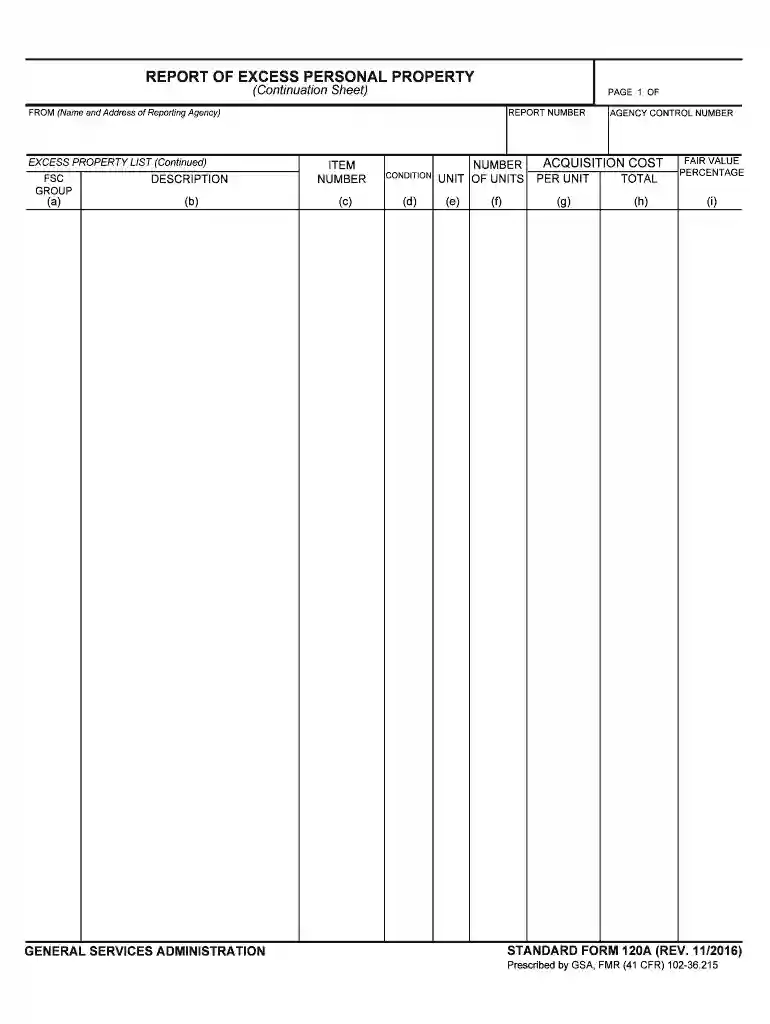
FROM (Name and Address of Reporting Agency) 2026

Get Form
FROM (Name and Address of Reporting Agency) Preview on Page 1

Here's how it works

01. Edit your form online
Type text, add images, blackout confidential details, add comments, highlights and more.

02. Sign it in a few clicks
Draw your signature, type it, upload its image, or use your mobile device as a signature pad.

03. Share your form with others
Send it via email, link, or fax. You can also download it, export it or print it out.

Definition and Meaning of FROM (Name and Address of Reporting Agency)

The "FROM (Name and Address of Reporting Agency)" is a crucial component within various forms used in documentation processes. This designation identifies the original source of information or materials being reported. Frequently utilized in legal, tax, and business contexts, this section ensures that data origins are clearly established, maintaining the integrity and traceability of the documents.

  • Purpose: Establishes the authenticity of the information being communicated by indicating its source.
  • Context: Often found in official reports, legal documents, and forms related to compliance or regulatory reporting.

How to Use the FROM (Name and Address of Reporting Agency)

Understanding how to correctly use this section is essential for ensuring the accuracy and reliability of the document.

  1. Accurate Entry: Double-check the name and address of the reporting agency to prevent any clerical errors that could lead to miscommunication or legal issues.
  2. Verification: Consult the agency's official records or their designated representatives to confirm details if there is any uncertainty.
  3. Consistency: Maintain uniformity in how the agency’s name and address are presented throughout related documents to avoid discrepancies.
  • Example: A company filing an environmental report would use this section to list their location and the internal department responsible for data collection, ensuring accountability.

Steps to Complete the FROM (Name and Address of Reporting Agency)

Filling out this section accurately involves several key steps to ensure correctness:

  1. Gather Information: Collect the full and legally recognized name of the agency along with its official address.
  2. Confirm Details: Verify that the information aligns with official listings or registration documents.
  3. Fill Out Clearly: Use legible handwriting if the form is physical, or type clearly if digital. Avoid abbreviations unless standard and recognized.
  4. Cross-Check: Revisit the entered information for typos or omissions before submission.
  • Nuances: Ensure address format complies with designated standards, such as including ZIP codes for U.S.-based agencies.

Who Typically Uses the FROM (Name and Address of Reporting Agency)

This section is primarily utilized by entities that need to provide or verify data origin, such as:

  • Government Departments: For regulatory compliance reports.

  • Corporations: Within internal and external auditing processes.

  • Non-Profits: During grant applications or donor reporting.

  • Educational Institutions: In accreditation documents or federal program participation.

  • Real-World Scenario: A financial institution reporting to regulatory bodies would include this section to ensure clarity about where financial data is sourced.


decoration image ratings of Dochub

Key Elements of the FROM (Name and Address of Reporting Agency)

Several components must be included to ensure this section is comprehensive and effective:

  • Full Name: The complete, legal name of the reporting entity.

  • Official Address: Including street, city, state, and ZIP code.

  • Contact Information: Sometimes a phone number or email for official use is necessary.

  • Identifying Numbers: Such as a business registration number, if applicable.

  • Case Study: A federal contractor preparing compliance documentation would meticulously fill this section to avoid legal complications in audit situations.

Legal Use of the FROM (Name and Address of Reporting Agency)

Legal precision is crucial when dealing with this section, as inaccuracies can lead to serious repercussions. It defines legal obligations, responsibilities, and rights associated with the reported information.

  • Compliance: Required by regulatory agencies to uphold transparency and accuracy.

  • Documentation Integrity: Ensures the integrity of official documents, which may be used in legal proceedings.

  • Example: When submitting evidence in legal cases, the FROM section reinforces the authenticity and admissibility of the documentation.

State-Specific Rules for the FROM (Name and Address of Reporting Agency)

State regulations can vary, impacting how this section is completed and interpreted.

  • Variations: Some states require additional identifying information or specific address formatting.

  • Consultation: Agencies should consult state-specific guidelines or legal advisors to ensure compliance.

  • Examples: Taxation forms may vary in address details due to differing state requirements for business identifiers.

  • Illustration: A company operating in multiple states might need to adjust their FROM information to meet regional regulatory expectations.

Filing Deadlines and Important Dates

Different documents have varying submission timelines, often tied to regulatory or fiscal calendars.

  1. Deadline Awareness: Knowing the submission deadlines prevents legal penalties or lapses in compliance.
  2. Reminders: Set up reminders or automated calendar entries to keep on schedule.
  3. Adjustment Notices: Stay informed about any changes in deadlines announced by governing bodies.
  • Typical Deadlines: Quarterly reports may need submission by the end of each quarter, while annual reports are often due within the first month of the new year.

Digital vs. Paper Versions of the Form

With technological advancements, many forms have both digital and paper versions, each offering different benefits.

  • Digital Forms: Allow for easier data entry, editing, and submission. They often come with features for digital signatures and encryption.

  • Paper Forms: Some entities still prefer or require these for archival reasons or due to lack of digital access.

  • Benefits: Digital versions reduce paper use and storage space, while paper forms provide a tangible record that some find more secure or reliable.

Software Compatibility

Certain software can be used to handle digital forms effectively, enhancing management and processing.

  • Examples:

    • Document Management Systems: Ensure compatibility with platforms such as TurboTax or QuickBooks for financial reports.
    • Integration: Systems like DocHub allow seamless editing and storage capabilities.
  • Important Consideration: Ensure that any software used complies with legal standards for digital records and signatures.

be ready to get more

Complete this form in 5 minutes or less

Get form

Got questions?

We have answers to the most popular questions from our customers. If you can't find an answer to your question, please contact us.
Contact us
The three major credit bureaus, Equifax, Experian and TransUnion, all use scoring models to generate a credit score. While Experian is the largest bureau in the U.S., its not necessarily more accurate than the other credit bureaus.
Credit bureaus are used for different services, including credit reports, credit scores and tools like identity monitoring. Experian, Equifax and TransUnion are all respected, credible bureaus that are used widely.
Of the three main credit bureaus (Equifax, Experian, and TransUnion), no particular bureau is considered better than another. A lender may rely on a report from one bureau or all three bureaus when deciding whether to approve a loan.
Did you know there are actually six agencies? The additional four agencies are PRBC, SageStream, Advanced Resolution Service (ARS), and Innovis. While there are a total of six official consumer credit reporting agencies, only four are widely used. Innovis is the fourth agency used in addition to the main three.
Although Experian is the largest credit bureau in the U.S., TransUnion and Equifax are widely considered to be just as accurate and important. When it comes to credit scoring models, however, there is a clear winner: FICO Score is used in roughly 90% of lending decisions.

Security and compliance

At DocHub, your data security is our priority. We follow HIPAA, SOC2, GDPR, and other standards, so you can work on your documents with confidence.


Learn more
ccpa2
pci-dss
gdpr-compliance
hipaa
soc-compliance
be ready to get more

Complete this form in 5 minutes or less

Get form

People also ask

Is Experian or FICO more reliable? Your VantageScore and your FICO Score are two different credit scores that use two different credit models. Both are considered to be reliable. But lenders may prefer to use one model over the other, depending on which one best fits their needs.
Your credit report may show any address, past or present, that youve listed on an account with your name on it, even if you didnt live there. This could include post office boxes, work addresses, home addresses or the address of someone you have a joint account with.
By law, you can get a free credit report each year from the three credit reporting agencies (CRAs). These agencies include Equifax, Experian, and TransUnion.

Related links