
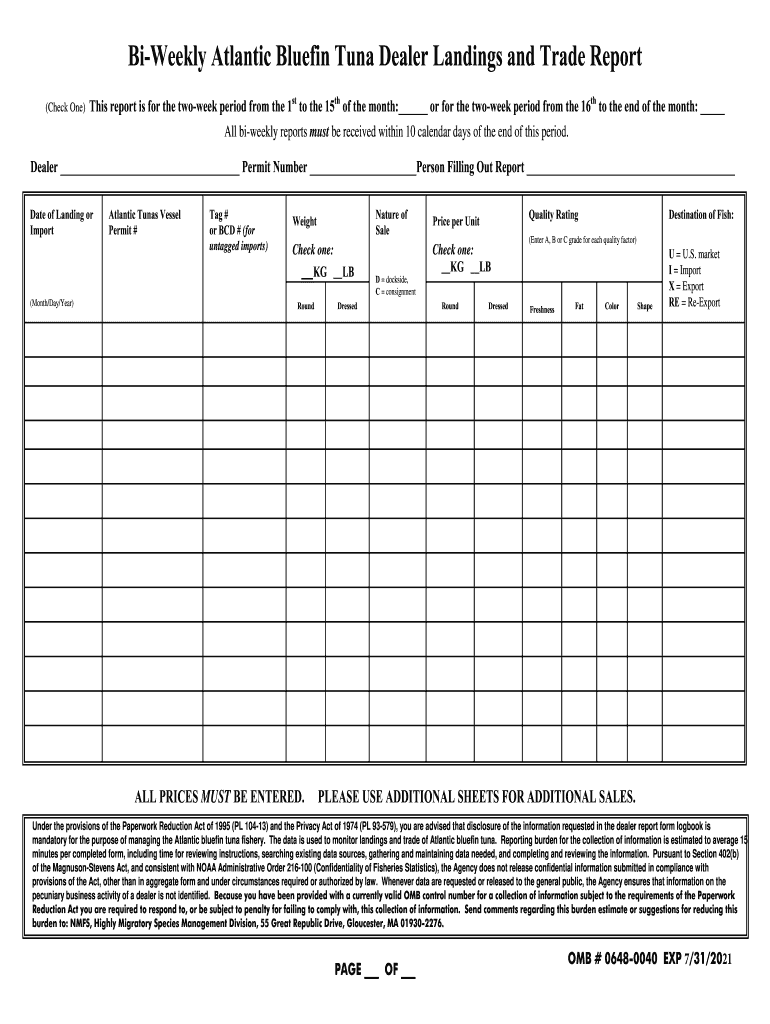







Definition and Purpose of the Bi-Weekly Atlantic Bluefin Tuna Dealer Report Form
The Bi-Weekly Atlantic Bluefin Tuna Dealer Report Form is a crucial document required by dealers involved in the purchase, landing, or import of Atlantic bluefin tuna. This form must be submitted every two weeks and is designed to track and report detailed information about tuna transactions. It plays a significant role in ensuring compliance with regulations outlined in the Magnuson-Stevens Act, which governs marine fisheries management in U.S. federal waters. Information typically recorded includes dealer specifics, tuna weight and price, and the destination of the fish. Understanding its purpose can aid dealers in maintaining compliance with federal mandates.
How to Obtain the Bi-Weekly Atlantic Bluefin Tuna Dealer Report Form
To access the Bi-Weekly Atlantic Bluefin Tuna Dealer Report Form, dealers can typically reach out to the regulatory body overseeing fisheries within their jurisdiction. It might also be available through official websites dedicated to fishery management or trade compliance. While obtaining the form is straightforward, dealers should ensure they have the latest version, as requirements can be updated periodically to reflect regulatory changes or advancements in fishery management practices.
Steps to Complete the Bi-Weekly Atlantic Bluefin Tuna Dealer Report Form
-
Gather Required Information: Before beginning, dealers should collate all necessary data, including their contact information, the weight of bluefin tuna procured, transaction details, and sale conditions.
-
Fill in Dealer Information: Start with sections that collect the dealer's name, address, and relevant identification numbers. Accuracy is vital to avoid compliance issues.
-
Document Transaction Details: Record specifics about each purchase or import, such as the weight of the tuna, unit price, and any distinctive sales terms. Detail is key for regulatory compliance.
-
Provide Quality Ratings and Destination: Include assessments of tuna quality and intended delivery locations. These sections assist in tracking the quality and distribution of the fish.
-
Review for Accuracy: Go through each entry to check for errors or omissions. Inaccuracies can lead to penalties or delays in processing.
-
Submit the Form: Depending on the issuing body’s guidelines, submission might be via mail, online, or in-person delivery. Be aware of deadlines to ensure timely compliance.
Why You Should Use the Bi-Weekly Atlantic Bluefin Tuna Dealer Report Form
Utilizing the Bi-Weekly Atlantic Bluefin Tuna Dealer Report Form is not just a regulatory necessity but also a means to contribute to sustainable fishery practices. The form allows authorities to monitor the bluefin tuna population closely, ensuring that fishing activities remain within sustainable limits. Additionally, accurate submissions can protect dealers from legal repercussions, enhance their reputation as compliant stakeholders, and promote fair practices within the fishing industry.
Typical Users of the Bi-Weekly Atlantic Bluefin Tuna Dealer Report Form
This form primarily serves dealers engaged in the trade of Atlantic bluefin tuna, including wholesalers, processors, and distributors. These entities must comply with federal regulations to legally operate within the industry. By filling out this form bi-weekly, they provide essential data for fisheries management, contributing to the broader objective of sustainable marine resource utilization.
Key Elements of the Bi-Weekly Atlantic Bluefin Tuna Dealer Report Form
- Dealer Identification: Ensures traceability and accountability.
- Tuna Weight and Price Information: Provides crucial data for economic and ecological assessments.
- Transaction Dates and Methods: Essential for tracking the timeliness and nature of sales.
- Quality Ratings and Destination Information: Aids in assessing market trends and compliance with trade regulations.
Legal Use and Compliance with the Bi-Weekly Atlantic Bluefin Tuna Dealer Report Form
Adhering strictly to the compliance aspect of the Bi-Weekly Atlantic Bluefin Tuna Dealer Report Form is essential. Incorrect or delayed submissions can result in legal penalties, fines, or even restrictions on future trade. Compliance ensures that dealers align with the guidelines of the Magnuson-Stevens Act, protecting both their business interests and contributing to sustainable fishery management.
Form Submission Methods: Online, Mail, and In-Person
Dealers have multiple options for submitting the form, which include online submissions, mailing the form physically, or delivering it in person at designated offices. Online submissions are often preferred for their convenience and speed, but dealers should confirm that they are eligible to submit electronically. In areas where technology or access is limited, traditional methods like mail or in-person submission remain viable. Maintaining familiarity with submission requirements and deadlines is crucial to ensure adherence to reporting obligations.
Penalties for Non-Compliance with the Report Form
Failure to submit the Bi-Weekly Atlantic Bluefin Tuna Dealer Report Form accurately and on time can lead to significant penalties. These may include fines, restrictions on trade activities, or further legal action. Compliance is not only an obligation but a proactive approach to avoiding business disruptions and ensuring legal operations within the tuna trade sector. It reinforces the importance of having robust internal systems for tracking and reporting to safeguard against non-compliance repercussions.




