







Definition and Meaning
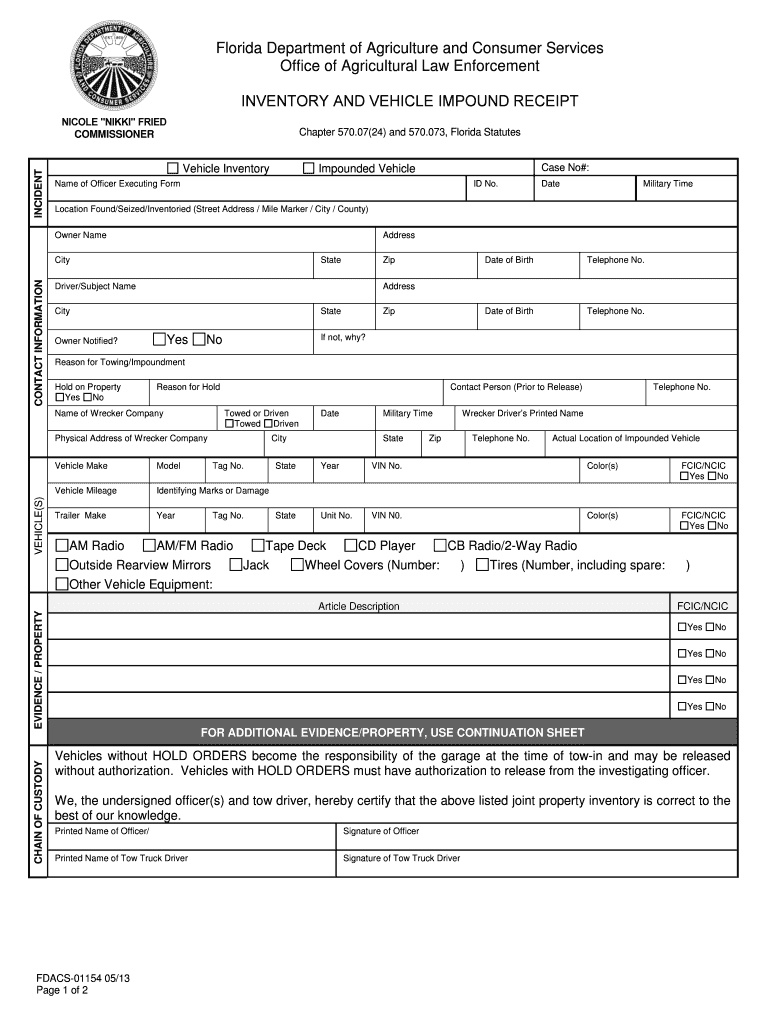
The Inventory and Vehicle Impound Receipt is a formal document used to detail the process of seizing or impounding vehicles. This document is essential for ensuring transparency and accountability when a vehicle is taken into custody, typically by law enforcement or a related agency. It serves multiple purposes, such as recording the vehicle's condition at the time of seizure and listing personal property found within. The receipt also provides critical legal and logistical information related to the vehicle's impoundment.
Purpose of the Receipt
- Documentation: Captures details like vehicle identification number (VIN), make, model, and year.
- Accountability: Includes signatures from involved parties to verify the documented condition and contents.
- Legal Reference: Used as evidence in legal contexts to show the state of the vehicle upon impoundment.
Key Elements of the Inventory and Vehicle Impound Receipt
This form includes several critical components that are crucial for its proper execution and validation.
Vehicle Identification
- VIN: Unique identifier for each vehicle.
- Make and Model: Specifies the production details.
- Plate Number: Identification for verification against records.
Owner Information
- Name and Contact: Essential for notifying the owner.
- Address: Where potential legal documents can be sent.
Reason for Towing
- Legal Justifications: Such as a vehicle being involved in a crime or parked illegally.
- Specific Violations: Detailed explanation of why the vehicle was seized.
Chain of Custody
- Signed Verification: Ensures the transfer of custody is recorded accurately.
- Officer and Driver Signatures: Confirms all participants in the process have acknowledged the recorded information.
Steps to Complete the Inventory and Vehicle Impound Receipt
Filling out this document requires attention to detail and adherence to protocols.
-
Fill Out Vehicle Details:
- Ensure VIN, make, model, year, and plate numbers are documented accurately.
-
Owner and Contact Information:
- Gather information from the vehicle's registration documents, if available.
-
State the Towing Reason:
- Clearly document the legal basis for impoundment, such as violations.
-
Conduct a Vehicle Inventory:
- List all notable contents within the vehicle at the time of impoundment.
-
Obtain Required Signatures:
- Signatures from the involved officer and towing party to validate the form.
State-Specific Rules for the Inventory and Vehicle Impound Receipt
Each state may have unique guidelines that affect the completion and use of the receipt.
Variations in Regulations
- State-Mandated Forms: Some states provide a standardized version of the receipt.
- Additional Documentation: Requirements for additional legal documents may differ.
Examples
- Florida: Tightly regulated with requirements documenting the chain of custody.
- California: May require environmental considerations for vehicle handling.
Legal Use of the Inventory and Vehicle Impound Receipt
This document holds significant legal weight and implications, especially in disputes over vehicle seizure.
Evidentiary Function
- Proof of Condition: Captures the vehicle's state, potentially affecting legal proceedings.
- Chain of Custody Records: Important for court cases involving impoundment.
Compliance
- Required by many jurisdictions as part of the legal process when impounding vehicles.
- Could be referenced in legal disputes or challenges related to the seizure.
Who Typically Uses the Inventory and Vehicle Impound Receipt
Various entities and professionals rely on this receipt in their operations.


Primary Users
- Law Enforcement Agencies: To document legal impoundments.
- Towing Companies: For procedural transparency and accountability.
Secondary Users
- Legal Professionals: Act as evidence in disputes and clarifications.
- Vehicle Owners: Provides official record for recovering a vehicle from an impound.
Digital vs. Paper Version
The method of using the Inventory and Vehicle Impound Receipt can vary between digital and traditional formats.
Benefits of Digital Versions
- Efficiency: Rapid input and data handling.
- Security: Digital storage prevents loss and facilitates easy retrieval.
Limitations of Paper Versions
- Vulnerability: Risk of physical damage and loss.
- Accessibility Issues: Requires physical presence for signing and viewing.
Important Terms Related to the Inventory and Vehicle Impound Receipt
Understanding these terms can aid in navigating the processes associated with vehicle impoundment.
Glossary of Terms
- VIN (Vehicle Identification Number): Unique serial number for vehicle identification.
- Impoundment: The process of legally seizing a vehicle.
- Chain of Custody: Documentation of every transfer of possession.
Practical Implications
- These terms are often used in legal and procedural documentation.
- Proper understanding can help in effectively handling the receipt during impoundment procedures.




