





Definition and Importance of the Appeal Request
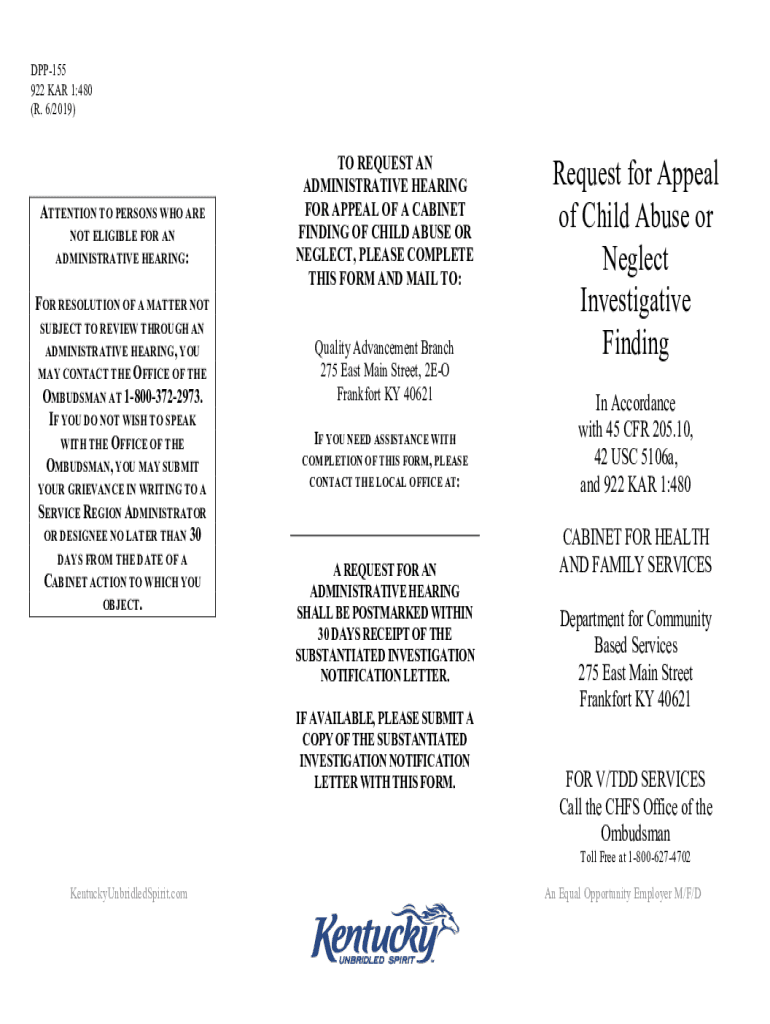
The "Request for Appeal of Child Abuse or Neglect Investigative" form is a critical tool for those who wish to challenge a finding related to child abuse or neglect. Typically issued by state child welfare agencies, this form allows individuals to appeal against findings that they believe are incorrect or have been reached without due process. Its significance lies in offering a formal pathway to contest decisions that may have serious personal and legal consequences.
Key Elements of the Appeal Request
- Detailed Personal Information: Full name, contact details, and relationship to the child need to be provided.
- Case Details: Specifics about the case number, date of the initial finding, and the agency involved.
- Grounds for Appeal: Clear explanation of why the original decision is contested, supported by evidence if possible.
- Desired Outcome: Indication of the preferred resolution sought from the appeal process.
Understanding these elements is essential for effectively completing the form and ensuring that the appeal is both clear and comprehensive.
Steps to Complete the Request for Appeal
Completing the "Request for Appeal of Child Abuse or Neglect Investigative" form involves several critical steps:
- Acquire the Form: Obtain the form from the relevant state agency's website or physical office. Many states offer downloadable versions for convenience.
- Provide Personal Information: Fill in personal details accurately to ensure the agency can process your appeal efficiently.
- Detail the Case Information: Include precise dates and descriptions of the events leading to the appeal.
- State the Grounds for Appeal: Clearly articulate the basis of the appeal, including any new evidence or errors in the initial investigation.
- Submit the Form: The form can be submitted via mail, online, or in person, depending on the agency’s guidelines.
Properly following these steps ensures that the appeal is processed in a timely and effective manner.
Who Typically Uses the Appeal Request
The form is primarily used by:
- Parents and Guardians: Individuals directly responsible for the child involved in the investigation.
- Legal Representatives: Attorneys representing clients seeking to contest investigative findings.
- Relatives and Other Caregivers: Extended family members or others with a vested interest in the child’s welfare and who have legal standing to appeal.
Understanding who can use this form is critical in determining the right to appeal and ensuring that the appropriate parties are involved in the process.


Filing Deadlines and Important Dates
Meeting deadlines is paramount in the appeal process:
- Initial Filing Deadline: Usually, the appeal must be filed within a specified period following the initial decision, often ranging from 30 to 60 days.
- Notification of Decision: Agencies typically provide a timeframe within which they must respond to the appeal, often within 30 days.
- Hearing Dates: If applicable, the date for an administrative hearing will be scheduled, which is crucial for presenting the case.
Failing to adhere to these deadlines can result in dismissal of the appeal, underscoring the importance of prompt and timely filing.
State-Specific Rules and Differences
Each state in the U.S. can have distinct rules regarding the appeal process:
- Kentucky: Offers alternative grievance submissions for those ineligible for a formal hearing, enhancing accessibility to the appeals process.
- California: May require additional documentation or evidence, reflecting the state’s specific child protection laws.
- Texas: Implements specific procedural rules that affect the appeal’s processing times and outcomes.
It is vital to consult local regulations to fully understand the requirements and implications of filing an appeal in a specific state.
Legal Implications and Context
The legal framework surrounding the appeal is substantial:
- Administrative Hearings: These provide a venue for appellants to present their cases comprehensively.
- Burden of Proof: Typically rests on the appellant to show why the initial finding was incorrect.
- Potential Outcomes: Ranging from overturning the original decision to upholding it, based on the evidence and arguments presented.
Having a clear understanding of the legal context helps prepare appellants for potential scenarios and consequences during the appeal process.
Required Documents for Submission
When submitting the appeal, certain documents are often required:
- Original Investigation Report: Acts as a reference point for the appeal.
- New Evidence: Any additional information that may support the appeal.
- Identification Documents: To verify the identity of the appellant and their relation to the child.
Compiling these documents in advance can aid in a smoother submission process.
Examples and Case Studies
Real-world scenarios highlight the utility of this form:
- In Kentucky, a parent successfully rebutted a neglect finding by presenting new evidence overlooked in the original investigation.
- In California, a legal representative used the appeal process to clarify misinterpretations in the case file, leading to a reversal of the initial decision.
These examples illustrate the pivotal role of the appeal form in resolving disputes over child safety and welfare findings.