




01. Edit your ac 135 44 online
Type text, add images, blackout confidential details, add comments, highlights and more.

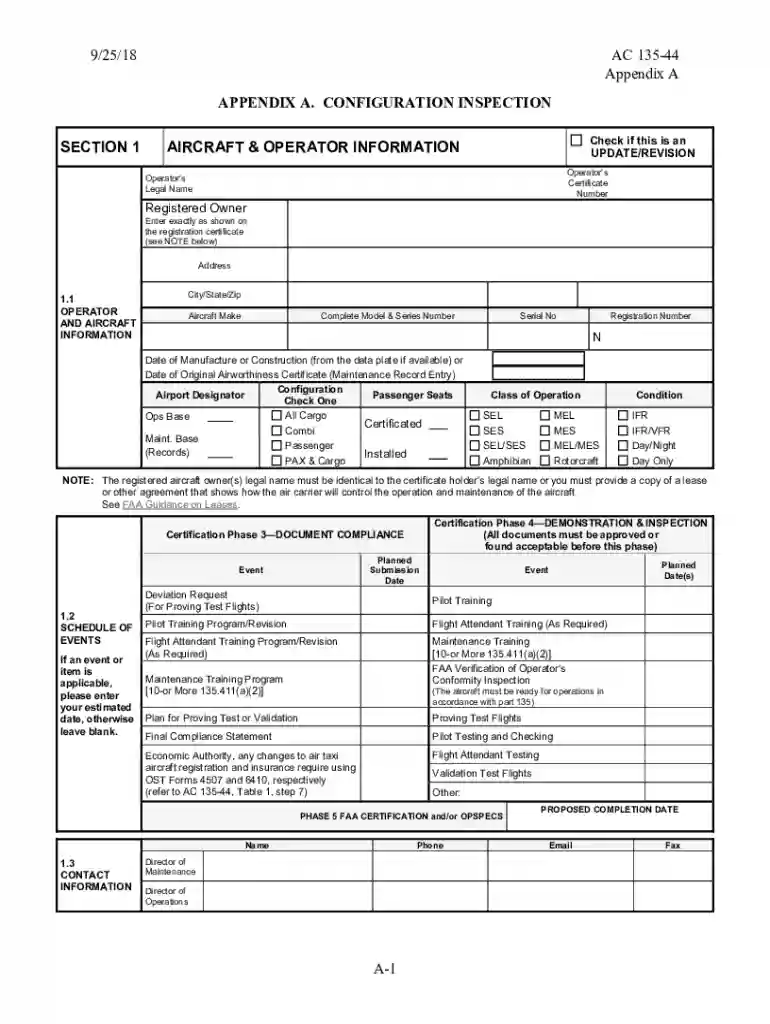
Type text, add images, blackout confidential details, add comments, highlights and more.

Draw your signature, type it, upload its image, or use your mobile device as a signature pad.

Send faa advisory circular aircraft via email, link, or fax. You can also download it, export it or print it out.
Advisory Circular 135-44, issued by the U.S. Department of Transportation's Federal Aviation Administration, serves as a comprehensive guide for operators conducting commuter and on-demand operations under Part 135 of Title 14 of the Code of Federal Regulations. This document provides essential guidance on procedures for inspecting aircraft configuration and ensuring compliance with operational requirements. While the recommended practices within the AC are not mandatory, they are recognized as best practices for maintaining airworthiness and effective management of aviation operations.
Operators can utilize AC 135-44 to streamline their aircraft maintenance and inspection processes. The advisory circular outlines detailed steps for verifying the airworthiness of an aircraft, ensuring proper documentation maintenance, and conducting necessary inspections. By following these guidelines, operators can efficiently manage their fleets and ensure compliance with federal regulations.
Adopting the practices suggested in AC 135-44 provides several benefits:
The primary users of AC 135-44 are operators of charter flights and air taxi services under Part 135 regulations. This includes:


The advisory circular emphasizes several critical aspects crucial for ensuring compliance and operational efficiency:
Understanding the terminology used in AC 135-44 is crucial for effective implementation:
While adherence to AC 135-44 is not legally mandatory, it is strongly recommended for legal compliance with FAA regulations. Operators who follow the guidelines within this advisory circular are better positioned to demonstrate their commitment to safety and regulatory compliance, thereby minimizing legal risks and enhancing their operational credibility.
Consider a charter company using AC 135-44 to optimize their operations:
By strictly adhering to the processes outlined in advisory circular AC 135-44, operators can effectively maintain their aircraft’s airworthiness, ensuring both safety and compliance.
We've got more versions of the ac 135 44 form. Select the right ac 135 44 version from the list and start editing it straight away!
| Versions | Form popularity | Fillable & printable |
|---|---|---|
| 2018 | 4.6 Satisfied (34 Votes) |
At DocHub, your data security is our priority. We follow HIPAA, SOC2, GDPR, and other standards, so you can work on your documents with confidence.


This AC provides information concerning the placement of aircraft into service for Title 14 of the Code of Federal Regulations (14 CFR) part 135 commuter and
DQ0. 123. DQ5. 44. VSS. 164. CB6,NC. 84. DQS4. 204. NC,DQS13. ,TDQS13. 4. DQ1. 124. VSS. 45. CB2,NC. 165. CB7,NC. 85. DQS4. 205. VSS. 5. VSS. 125. DM0,DQS9. ,


