Definition and Meaning
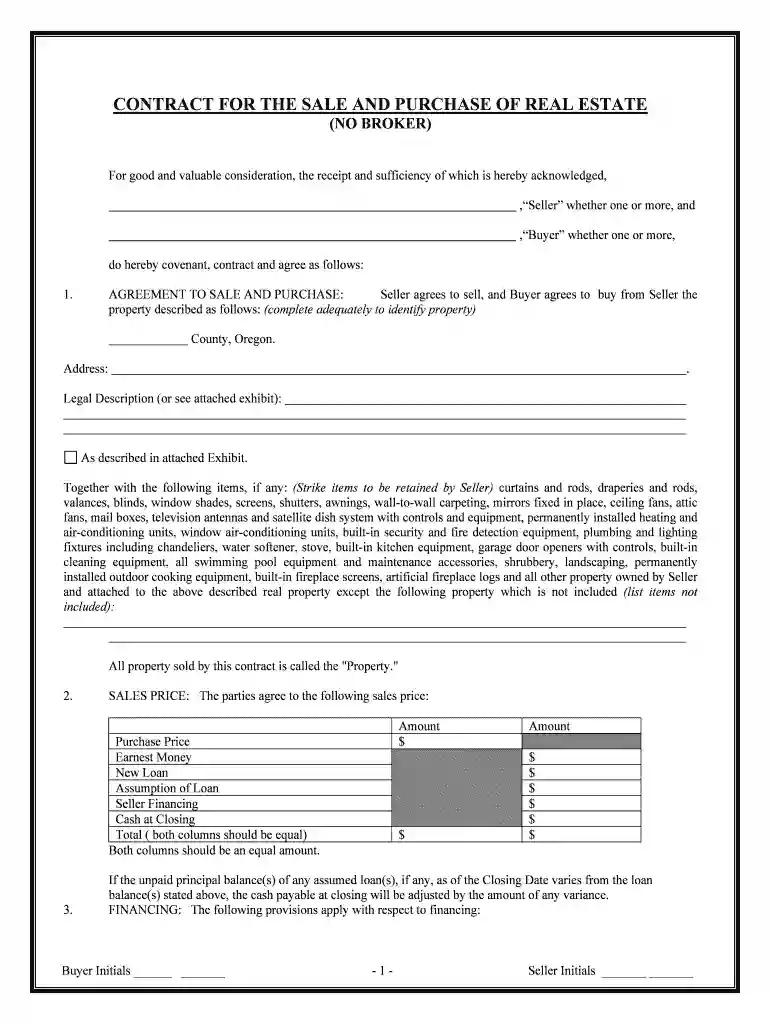
The Oregon Contract for Sale and Purchase of Real Estate with No Broker for Residential Home Sale Agreement is a legal document used in the state of Oregon for transacting sales involving residential properties without the mediation of a real estate broker. This contract captures the agreement between the seller and buyer regarding essential terms such as sale price, property description, and key responsibilities. As it is specifically structured for transactions without a broker, parties are left to directly handle negotiations and disclosures as per Oregon real estate laws.
Key Components
- Parties Involved: Clearly identifies the seller and buyer, stipulating their responsibilities.
- Property Details: Includes a precise description of the property being sold.
- Sale Terms: Outlines the agreed-upon price and payment logistics.
- Closing Information: Details the process and conditions for finalizing the sale.
- Contingencies and Disclosures: States conditions such as inspection contingencies and mandatory disclosures.
Steps to Complete the Oregon Contract
Completing this contract involves a meticulous review and fulfillment of various sections to ensure legality and enforceability. Below is a step-by-step guide:
- Identify Parties: Enter detailed information about both the buyer and seller, including legal names and addresses.
- Describe Property: Specify the property being sold, providing the full legal description and address.
- Set Terms and Price: Define the sale price and the financial terms agreed upon. Include details on earnest money.
- Specify Contingencies: Include any conditional clauses, such as those for home inspections or sale of the buyer's current home.
- Outline Closing Procedures: Document expectations and timelines for concluding the sale, including any title transfers.
- Add Necessary Disclosures: Ensure all legally required disclosures, such as for lead-based paint, are included and acknowledged.
- Sign and Date: Both parties must sign and date the contract, ensuring the document's validity.
Who Typically Uses This Form
This contract is vital for several groups looking to carry out real estate transactions in Oregon without a broker:
- Homeowners Selling Independently: Those choosing to handle the transaction themselves to save on brokerage fees.
- Buyers Directly Negotiating with Sellers: Individuals who prefer direct communication and negotiation with sellers.
- Real Estate Investors: Professionals engaged in acquiring property who may choose to bypass broker fees.
Applicable Scenarios
- Private Sales: Often used in sales between family members or known parties.
- Investment Properties: Employed by investors familiar with property assessments and negotiations.
Advantages of Using This Contract
Opting for this form offers several benefits:
- Cost Savings: Eliminates brokerage fees, often resulting in significant savings.
- Direct Negotiations: Empowers buyers and sellers to handle negotiations personally, offering more control over terms.
- Simplified Process: Streamlines transactions for those familiar with real estate dealings.
Important Terms Related to the Agreement
Understanding terms within this context strengthens the functional use of the contract:
- Earnest Money: A deposit made to indicate a buyer's serious intent to purchase.
- Contingency Clause: A condition that must be fulfilled for the contract to become binding.
- Title Conveyance: The formal handing over of the legal title from seller to buyer upon payment and closing.
- Disclosure Statement: A legal document informing buyers of any defects or specific information concerning the property.
Examples of Key Terms in Use
- Inspection Contingency: If an inspection reveals major defects, the buyer may exit the contract without penalty.
- Lead-Based Paint Disclosure: Required for properties built before 1978, informing buyers of potential risks.
Legal Use of the Contract
This form is leveraged legally under specific conditions conforming to Oregon state law:
- Statutory Compliance: Ensures adherence to state-specific real estate laws.
- Binding Agreements: Once signed, it forms a legally binding agreement enforceable in court.
Legal Considerations
- Title Examination: Prior to sale, confirm the seller’s ownership and freedom from encumbrances.
- Disclosure Compliance: Failure to meet disclosure requirements can result in penalties or nullify the contract.
State-Specific Rules
Oregon law dictates unique regulations worth noting when using this contract:
- Disclosure Mandates: Comprehensive disclosures are essential, particularly for older properties.
- Form Customization: While a standard form is used, sections may be tailored to align with specific transaction needs.
Enforcement and Penalties
- Non-Compliance Results: Breaching state laws regarding disclosures or contingencies can lead to serious legal repercussions, including fines or contract annulment.
Examples of Using the Contract
Understanding practical applications for this contract helps in real-world usage:
- Family Transactions: Simplifies documentation when transferring property between family members.
- Investment Purchases: Investor acquisitions often lean on this contract for smoother, cost-effective dealings.
Real-World Case Studies
- Investor: Savings on broker fees led to a higher budget for renovations for resell profits.
- Private Sale: Two co-workers transferred property with minimal cost and fast processing using the agreement.
By following these comprehensive guides and examples, a better understanding and utilization of the Oregon Contract for Sale and Purchase of Real Estate with No Broker for Residential Home Sale Agreement are achieved, optimizing real estate transactions properly and legally in Oregon.