







Definition & Meaning
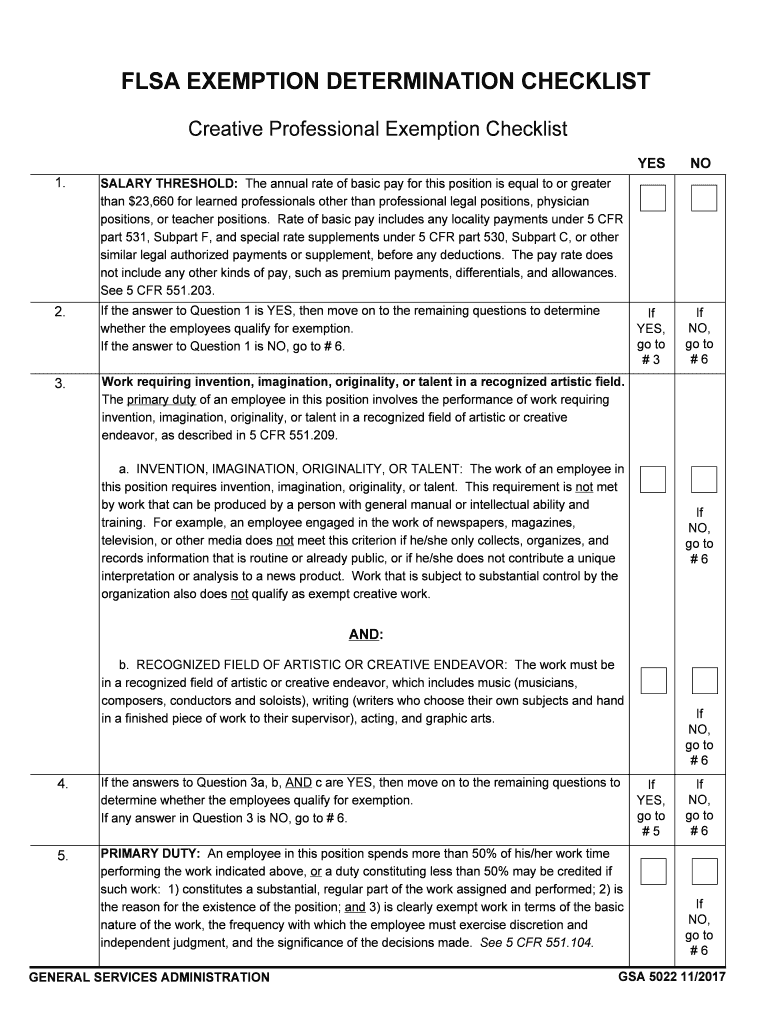
The term "than $23,660 for learned professionals other than professional legal positions, physician" refers to a specific income threshold set for evaluating the Fair Labor Standards Act (FLSA) exemption status for certain professionals. This figure pertains to the minimum salary requirement that a learned professional must earn to qualify for exemption from overtime pay, excluding lawyers and physicians. Learned professionals typically engage in work requiring advanced knowledge in a field of science or learning that is customarily acquired by a prolonged course of specialized intellectual instruction. Meeting this salary threshold is one of the criteria for classifying such roles as exempt under the FLSA.
Eligibility Criteria
For a professional to qualify under the FLSA exemption, several criteria must be satisfied beyond the salary threshold of $23,660. The key considerations include:
- Professional Category: The employee's role must fit within the definition of a learned professional, characterized by advanced knowledge in a field of science or learning.
- Salary Basis: The employee must be paid on a salary basis at a rate not less than $23,660 annually.
- Exclusion of Legal and Medical Professionals: Exemption applies to fields outside of the legal and medical professions.
- Primary Duty: The primary duty must involve the performance of work requiring advanced knowledge.
These criteria ensure that the exception is applied fairly and consistently across professions requiring extensive education and expertise.


Who Typically Uses the Form
Individuals and organizations use assessments tied to the "than $23,660 for learned professionals other than professional legal positions, physician" to evaluate potential FLSA exemptions for employees. This includes:
- Human Resources Professionals: They assess employee roles to ensure compliance with FLSA provisions.
- Managers and Executives: To determine exemption status for their team's roles.
- Compliance Officers: To audit and confirm that salary and role requirements meet legal standards.
The form is particularly relevant for educational institutions, scientific organizations, and businesses with roles heavily reliant on advanced education and training.

How to Use the than $23,660 for Learned Professionals Other than Professional Legal Positions, Physician
This form functions as a checklist to assess if a professional role qualifies for exemption under the FLSA. Key steps in its usage include:
- Identify Role Relevance: Determine if the position involves work that necessitates advanced knowledge in a recognized field.
- Verify Salary: Ensure the role meets or exceeds the $23,660 salary threshold.
- Analyze Duties: Ascertain whether the duties satisfy the primary duty test for learned professionals.
- Perform Self-Evaluation: Assess the role against each exemption criterion for compliance assurance.
Employers should maintain thorough documentation of their compliance evaluations to provide evidence during potential audits or legal examinations.
Key Elements of the than $23,660 for Learned Professionals Other than Professional Legal Positions, Physician
The key elements that underpin this income threshold and its application include:
- Salary Measurement: Ensures compensation meets FLSA standards for exemption.
- Field of Work: Must be recognized as an academic field requiring advanced learning.
- Job Duties: Must primarily consist of intellectual tasks that require specialized education.
- Exclusion Clause: Explicitly excludes legal and medical professions from this particular evaluation.
These elements help maintain a standardized approach to analyzing professional exemptions within the FLSA framework.
State-Specific Rules
Some states may have additional criteria or higher salary thresholds for classifying employees as exempt professionals. Key considerations include:
- State Labor Laws: Local laws may impose higher minimum salary thresholds or different duties tests.
- Dual Compliance: Employers must comply with both federal and state regulations, opting for the stricter standard when differences exist.
- Regional Variations: Employers should consult state-specific labor regulations or legal counsel.
Being aware of these variations is essential for ensuring full compliance across multiple jurisdictions.
Examples of Using the than $23,660 for Learned Professionals Other than Professional Legal Positions, Physician
Several real-world scenarios exemplify its application:
- University Professors: Typically qualify as learned professionals due to advanced degrees and salaried compensation above the $23,660 threshold.
- Engineers: In most cases, meet the criteria based on education and specialized knowledge requirements.
- Research Scientists: Often engage in high-level scientific work that justifies exemption status under the given salary benchmark.
These examples illustrate the diversity of roles that fall under this exemption when each criterion is thoroughly met.
Legal Use of the than $23,660 for Learned Professionals Other than Professional Legal Positions, Physician
Employers must ensure that their use of this form aligns with legal standards:
- Compliance with FLSA: Properly applying the salary threshold and role criteria to determine exemptions.
- Documentation: Maintaining adequate records of assessments and salary benchmarks.
- Periodic Review: Regular reevaluation of roles to confirm ongoing compliance with updated federal or state laws.
This careful adherence to legal protocols helps avoid potential disputes and penalties related to FLSA violations.
Important Terms Related to than $23,660 for Learned Professionals Other than Professional Legal Positions, Physician
Several terms are vital for understanding this form's context:
- FLSA: Fair Labor Standards Act, which governs wage criteria and exemptions.
- Exempt vs. Non-exempt: Distinctions determining overtime pay eligibility.
- Primary Duty Test: Evaluation of the principal work tasks requiring advanced knowledge.
- Salary Basis Test: Checking that compensation meets or exceeds the established threshold.
Familiarity with these terms enhances understanding and informed application of wage and exemption rules across professional roles.




