
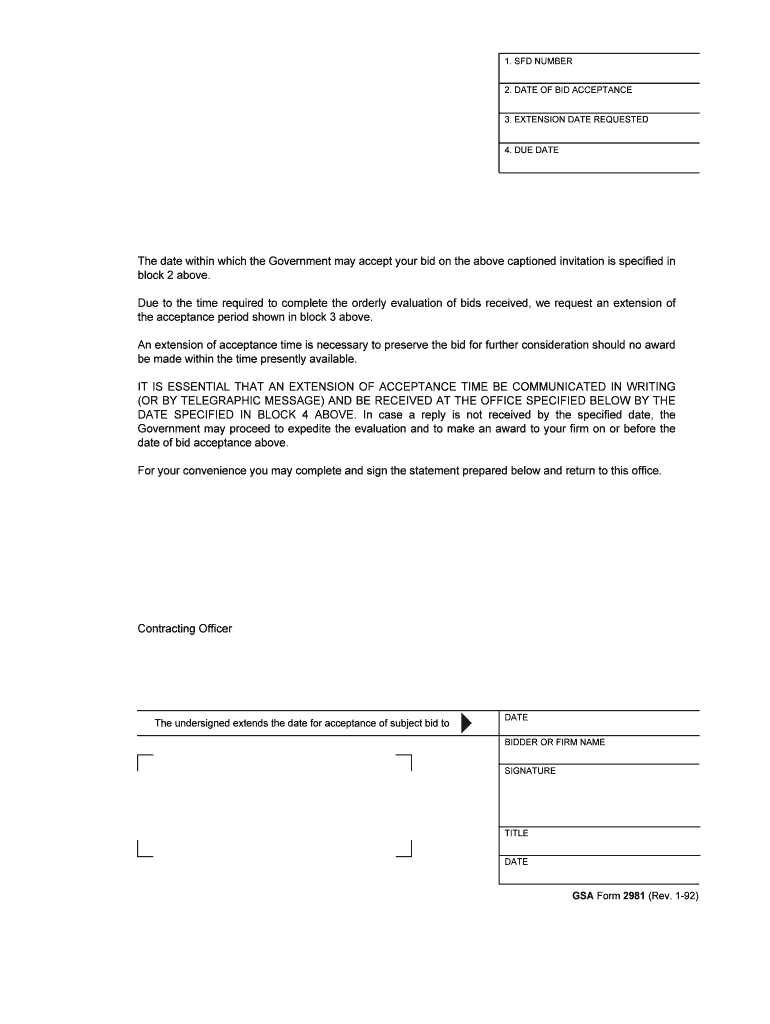







Definition & Meaning
The "Date of Bid Acceptance" refers to the specific date on which an accepting entity formally agrees to a bid submission in response to a request for a proposal or auction. In procurement and contracting scenarios, this date marks the point at which the bid's terms and conditions are legally accepted, setting the foundation for a contractual agreement. Understanding this term is crucial for bidders and organizations as it affects contract timelines, project kickoff, and budget allocation. Typically, this date creates a binding commitment between the parties, barring any additional contingencies or subsequent modifications agreed upon thereafter.
How to Use the Date of Bid Acceptance
The date of bid acceptance is primarily used to manage timelines and project schedules in bidding processes. When a bid is accepted, parties should immediately proceed to draft and finalize the contractual documents reflecting this acceptance. It helps in tracking milestone completions and managing deadlines for project initiation. For bidders, noting this date is crucial in allocating resources and adjusting workflow plans to align with the project's timeline. For contracting firms, it ensures both compliance with proposed project schedules and alignment with any required regulatory or internal documentation processes.
Steps to Complete the Bid Acceptance Process
-
Notification of Acceptance: The accepting entity must formally notify the bidder of their acceptance through written communication, often via email or a formal letter.
-
Preparation of Contract Documents: After acceptance, contract documents reflecting the bid's terms must be prepared and reviewed.
-
Signing the Contract: Both parties must sign the contractual documents to solidify the agreement, making it legally binding.
-
Validation of Details: Ensure all components such as price, delivery timelines, and specifications align with what was initially offered in the bid.
-
Archiving the Documents: Properly store all related documents for future reference and compliance requirements.
Key Elements of the Date of Bid Acceptance
-
Clarity of Terms: Clearly defined terms and conditions in the bid that the accepting entity agrees to.
-
Legal Implications: Understanding the legal obligations that come with the acceptance, impacting both performance and potential liabilities.
-
Impact on Project Schedule: Recognizing how the acceptance date influences project timelines and resource planning.
-
Financial Commitments: The acceptance date typically anchors financial planning tools, from budget allocations to expected revenue inflows, thereby influencing financial forecasting.
-
Notification Protocol: Protocols for notifying both internal and external stakeholders about the acceptance.
Who Typically Uses the Date of Bid Acceptance
The date of bid acceptance is typically used by procurement professionals, project managers, legal teams, and contract administrators. It is crucial for any party involved in the negotiation, finalization, and execution of contracts. Suppliers, vendors, and service providers participating in competitive bidding processes also utilize this date to manage their operational commitments. Furthermore, government agencies, corporations, and non-profit organizations engaged in contracting for goods, services, or construction projects rely on this date for project lifecycle management.


Legal Use of the Date of Bid Acceptance
Legally, the date of bid acceptance is a critical marker that establishes the contract's start timeline. It often signifies readiness to comply with statutory obligations and any associated industry regulations. For government contracts, this date may subject parties to procurement laws, necessitating strict adherence to public procurement policies and ethical guidelines. Misalignment or delay in recognizing this date can lead to disputes or breach of contract lawsuits, making accurate documentation crucial.
Examples of Using the Date of Bid Acceptance
Consider a construction firm that submits a proposal for a municipal infrastructure project. Upon their bid acceptance, they must mobilize resources and commence work per the accepted project timeline. Similarly, in the tech industry, a software vendor's project timeline and deliverables are guided by the acceptance date, ensuring a smooth roll-out in alignment with client requirements, reducing downtime, and optimizing resource allocation.
Important Terms Related to Date of Bid Acceptance
-
Bid Submission Deadline: The final date by which all bids must be submitted for consideration.
-
Acceptance Criteria: The standards or specifications that a bid must meet to qualify for acceptance.
-
Contract Award Date: The date on which the final decision is made and a contract is officially awarded to a bidder.
-
Terms and Conditions: The specific provisions outlining the obligations, rights, and responsibilities of the parties involved in the contract.
Filing Deadlines / Important Dates
In projects involving the bid acceptance process, it is essential to track and adhere to various critical dates:
-
Bid Submission Deadline: The cutoff for submitting proposals.
-
Notification of Acceptance Deadline: The period within which the accepting entity must inform the bidder of their decision.
-
Contract Signing Deadline: A post-acceptance deadline ensuring formal agreement through signed contracts.
Delays or failures to acknowledge these deadlines can impact project execution, lead to missed opportunities, or necessitate renegotiation of terms.




