
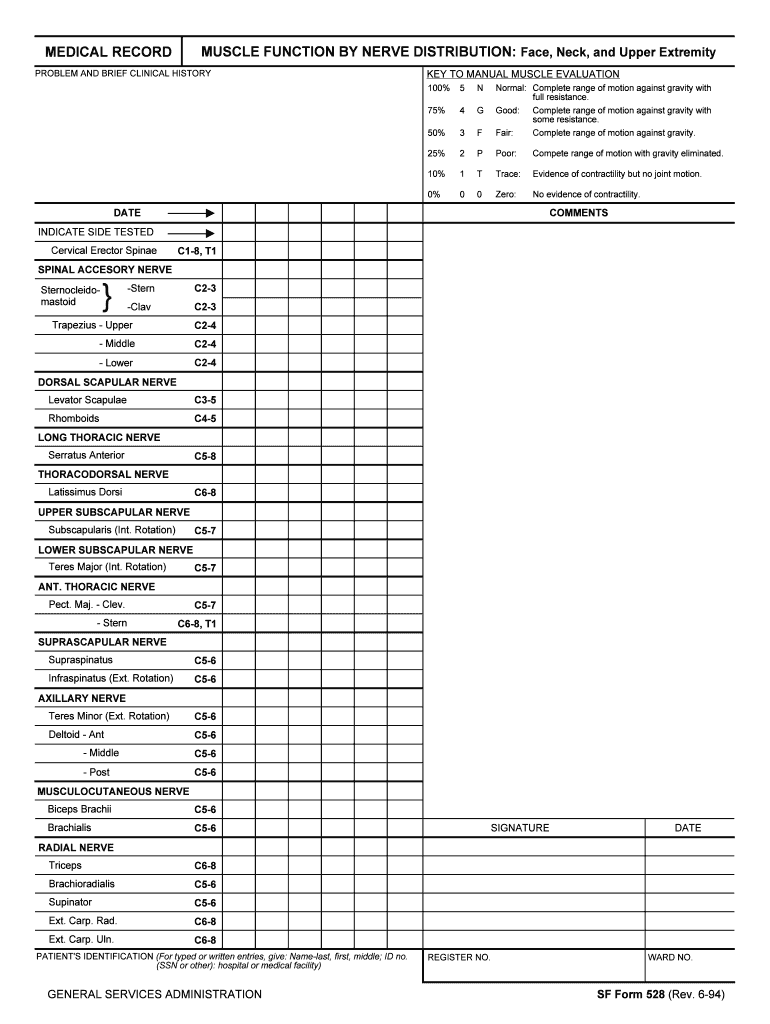







Definition and Meaning
The Medical Research Council (MRC) Muscle Strength scale is a standardized tool used to assess muscle strength in clinical settings. This scale provides a systematic method for evaluating muscle function, allowing healthcare professionals to quantify muscle strength and identify potential neuromuscular issues. The MRC Muscle Strength scale ranges from zero, indicating no muscle contraction, to five, representing normal strength, providing a clear framework for diagnosing and tracking the progression of muscle-related conditions.
How to Use the Medical Research Council Muscle Strength Scale
Using the MRC Muscle Strength scale involves manual muscle testing to accurately assess the strength of specific muscles or muscle groups. Practitioners apply resistance against the muscle's movement and rate the strength based on the patient's ability to resist this force. The scale is used in various medical settings, including physical therapy, neurology, and rehabilitation, to determine muscle strength levels, guide treatment plans, or assess treatment effectiveness.
Steps to Complete the Medical Research Council Muscle Strength Test
-
Preparation: Ensure the patient is comfortable and provide clear instructions about the process.
-
Identification: Determine which muscles or muscle groups need to be tested based on the patient’s symptoms or diagnosis.
-
Positioning: Position the patient and the muscle being tested correctly to ensure accurate resistance application.
-
Resistance Application: Apply resistance gradually, instructing the patient to hold their position against the pressure.
-
Strength Grading: Assign a grade between zero and five based on the muscle's response, using the predefined MRC scale.
-
Documentation: Record the results precisely for future reference and monitoring of muscle strength changes over time.
Who Typically Uses the Medical Research Council Muscle Strength Scale
The MRC Muscle Strength scale is predominantly used by healthcare professionals, such as physiotherapists, neurologists, and occupational therapists, who require precise information about a patient's muscle strength. Additionally, this scale is applied in research studies focusing on muscle function and rehabilitation. Through its use, specialists can develop targeted intervention plans to address specific deficits identified during the evaluation process.


Key Elements of the Medical Research Council Muscle Strength Scale
-
Grading Scale: A six-point scale ranging from zero (no contraction) to five (normal strength) used to objectively assess muscle performance.
-
Nerve Distribution: Assessment of muscles based on nerve innervations, identifying points of weakness related to nerve function.
-
Muscle Groups: Identification of specific muscle groups for focused evaluation based on the patient's presenting condition or symptoms.
-
Documentation: Accurate recording of findings to monitor patient progress and adjust treatment plans accordingly.
Important Terms Related to the Medical Research Council Muscle Strength Scale
-
Manual Muscle Testing (MMT): A method used to evaluate muscle strength through direct resistance applications.
-
Neuromuscular Disorders: Health conditions that affect muscle function directly due to issues with nerves or muscles.
-
Innervation: The supply of nerves to a muscle or muscle group that is critical to its operation and strength.
-
Rehabilitation Protocols: Structured plans formulated based on muscle strength assessments to restore optimal muscle function.
Benefits of Using the Medical Research Council Muscle Strength Scale
-
Objective Measurement: Provides a standardized approach to measuring muscle strength, enhancing the consistency of evaluations across different practitioners and settings.
-
Treatment Planning: Informs the development of personalized rehabilitation programs tailored to specific muscle weaknesses.
-
Progress Tracking: Facilitates the monitoring of a patient's improvement over time, supporting adjustments in therapeutic interventions.
-
Clinical Decision-Making: Aids in making informed clinical decisions based on accurate assessments of muscle strength and function.
Examples of Using the Medical Research Council Muscle Strength Scale
-
Physical Therapy: A therapist uses the MRC scale to evaluate a stroke patient’s arm strength before designing a rehabilitation plan.
-
Neurological Assessment: Neurologists employ the scale to determine muscle weakness patterns in patients with degenerative neuromuscular diseases.
-
Post-Surgical Evaluation: Surgeons assess muscle recovery post-surgery to guide interventions.
-
Longitudinal Studies: Used in research to study the effects of treatments on muscle strength over time in participants with chronic conditions.




