
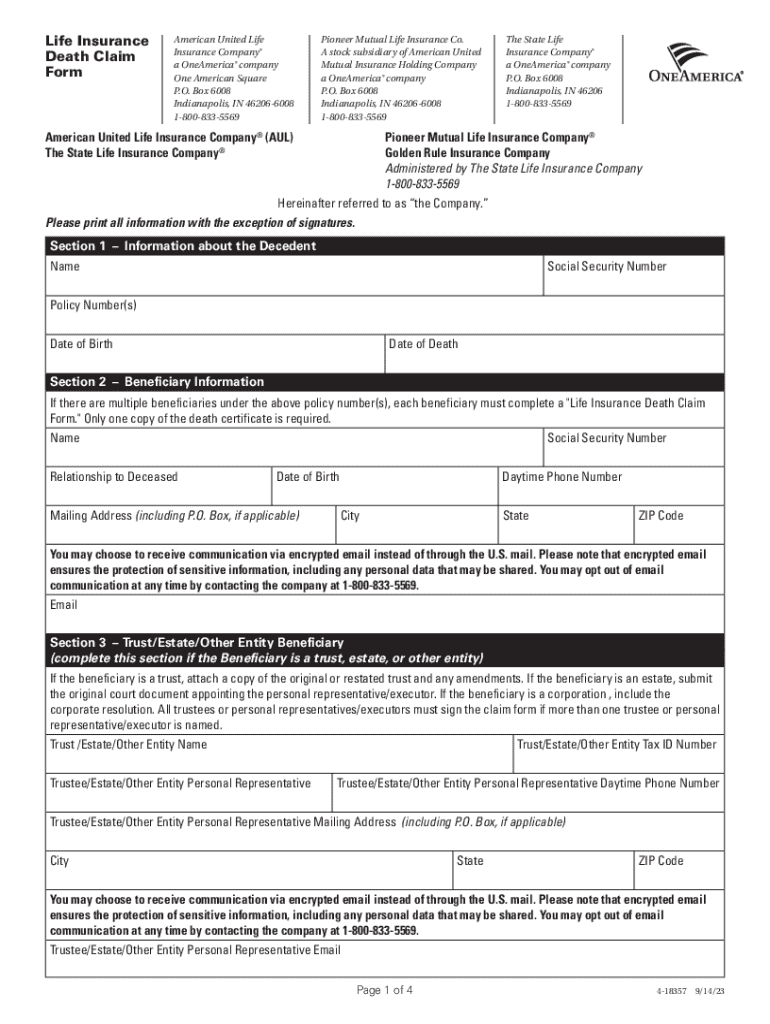







Definition & Meaning
Long-term care claims refer to the process of seeking reimbursement or benefits from an insurance policy covering long-term care services. These services typically include assistance with everyday tasks such as bathing, dressing, and eating, often provided in settings such as nursing homes, assisted living facilities, or through in-home care. Long-term care claims are crucial for individuals who have invested in long-term care insurance, ensuring they receive the necessary financial support when they need assistance with daily living activities due to age, illness, or disability.
Key Insurance Terms
Understanding the terminology used in long-term care claims is essential for navigating the claims process effectively. Terms like "elimination period" refer to the waiting period before benefits begin, while "benefit triggers" are the conditions that must be met for coverage to commence. Familiarity with these terms helps policyholders accurately complete claim forms and avoid potential delays.
Steps to Complete the Long-term Care Claims
Filing a long-term care claim involves several critical steps. First, policyholders should gather all necessary documentation, such as proof of insurance, medical records, and any relevant receipts for services received. Then, the claim form must be meticulously filled out, including detailed information about the care provider and the services rendered. Ensuring accuracy and completeness in each section of the form is vital for avoiding delays or denials in the claims process.
Gathering Required Documents
- Insurance policy number
- Medical records evidencing the need for long-term care
- Invoices or receipts for care services
- Care provider's contact and licensing information
Required Documents
To successfully file a long-term care claim, certain documents are needed to verify eligibility and service details. These documents typically include a signed and completed claim form, copies of the insurance policy, and documentation from healthcare providers detailing the services provided. Accurate and thorough submission of these materials is necessary to expedite the claims approval process.
Filing Deadlines / Important Dates
Long-term care claims often come with specific filing deadlines to ensure timely reimbursement. Policyholders must note the deadlines associated with their policy, as missing these can result in denied claims or delayed payments. Keeping a calendar of important dates related to the claims process helps manage deadlines effectively and maintain eligibility for benefits.
Typical Deadlines to Monitor
- Initial claim filing deadline from the date of service
- Recurring documentation submission timelines
- Follow-up deadlines for additional information requests
Form Submission Methods (Online / Mail / In-Person)
Submitting long-term care claims can typically be done through multiple methods, including online, mail, or in-person submissions. Online portals offer a convenient and quick way to submit claims, often with the added benefit of tracking their status. Mail and in-person submissions may be preferred by those who require more detailed assistance or have complex claims.
Pros and Cons of Submission Methods
- Online: Fast, trackable, secure
- Mail: Ideal for detailed submissions, requires postage
- In-Person: Hands-on assistance, immediate feedback
Eligibility Criteria
Eligibility for long-term care claims typically requires that the policyholder meets specific conditions defined in their insurance contract. Common criteria include a demonstrated need for assistance with Activities of Daily Living (ADLs) or cognitive impairment, and the care must be provided by approved service providers. Understanding these criteria helps ensure that claims are valid and avoid unnecessary denials.

Eligibility Assessment Metrics
- Number of ADLs unable to be performed independently
- Diagnosis of chronic illness or cognitive impairment
- Verification of care service provider's credentials
Key Elements of the Long-term Care Claims
Certain key elements are vital to the processing of long-term care claims. These elements include accurate personal information, detailed service records, and adherence to prescribed guidelines for the method of care delivery. These elements collectively ensure that the claim meets the insurance company's requirements and facilitate prompt reimbursement.
Essential Components
- Accurate personal and policy information
- Comprehensive description of services received
- Adherence to insurance guidelines and regulations
Legal Use of the Long-term Care Claims
Legal compliance is crucial when filing long-term care claims. This involves adhering to state and federal regulations concerning insurance claims, privacy laws under the Health Insurance Portability and Accountability Act (HIPAA), and any specific contractual obligations outlined in the insurance policy. Legal use ensures that the claims process is transparent and safeguarded against potential disputes.
Regulations and Compliance
- HIPAA for privacy and documentation
- State-specific insurance regulations
- Contractual obligations per individual policy
State-Specific Rules for the Long-term Care Claims
While general guidelines govern long-term care claims, state-specific rules can influence aspects such as eligibility, paperwork requirements, and filing procedures. Understanding these localized regulations is crucial for ensuring claims are processed smoothly and in compliance with all relevant legal standards. This can prevent missteps that might delay or negate claim approvals.
Examples of Using the Long-term Care Claims
Real-world scenarios highlight the practical use of long-term care claims. For instance, an elderly individual diagnosed with Alzheimer’s may require full-time in-home care, thus invoking their long-term care insurance to cover these costs. Understanding such use cases can help future claimants gain insight into their policy benefits and the types of services covered.




