
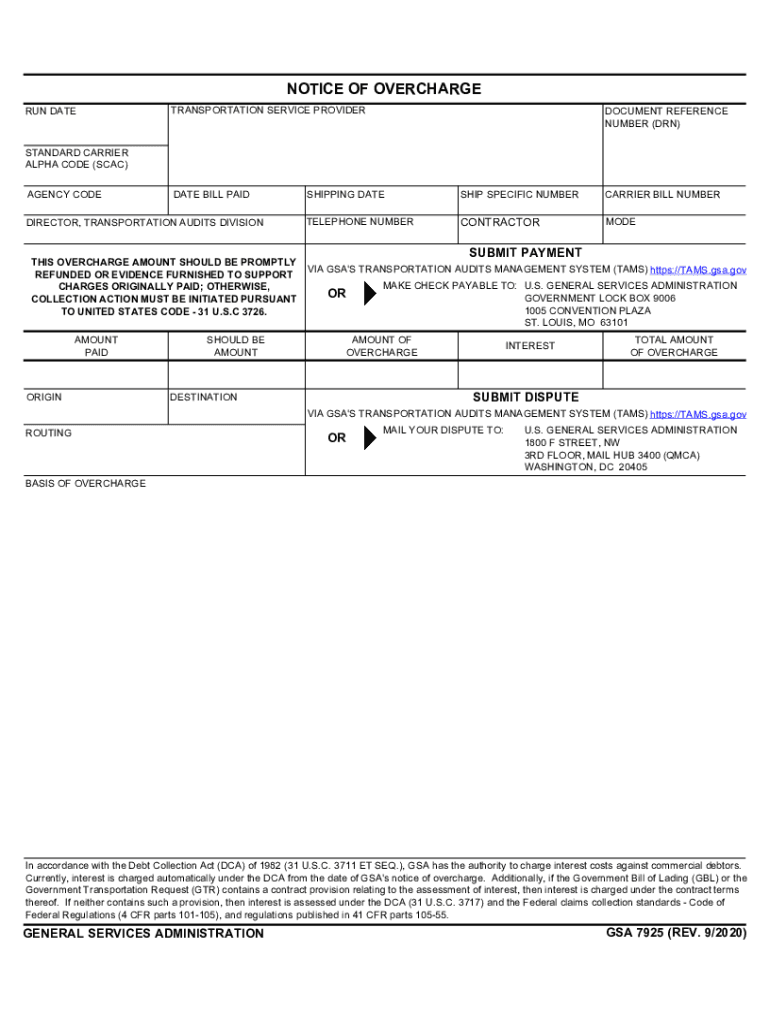







Definition and Purpose of the "Notice of Overcharge - GSA"
The "Notice of Overcharge - GSA" is a formal document issued by the General Services Administration to address billing discrepancies related to services or products procured by government agencies. Its primary purpose is to inform the relevant parties about an overcharge that requires either a refund or proper justification. The document outlines the necessary steps for resolving the issue, including payment submission, and provides information about potential interest charges on overdue amounts in line with U.S. Code regulations. Understanding the meaning and implications of this notice is crucial for maintaining compliance and managing government contracts effectively.
Steps to Complete the "Notice of Overcharge - GSA"
-
Review the Notice: Upon receipt of the notice, carefully review the details provided, including the amount of the overcharge and the specific services or products involved.
-
Gather Supporting Documents: Compile all relevant documents that can support your case, such as invoices, agreements, and previous correspondence with the GSA.
-
Reconciliation Process: Compare the transaction records with the notice details to identify any discrepancies or errors.
-
Response Preparation: Prepare a detailed response, including any justifications for the charges in question or a plan for refunding the overcharged amount.
-
Submit Response: Use the specified submission method—whether online, by mail, or in person—to provide your response along with any supporting documents.
-
Follow Up: Maintain communication with the GSA to track the status of the notice resolution and ensure compliance with any additional instructions.
Key Elements of the "Notice of Overcharge - GSA"
The "Notice of Overcharge - GSA" contains several critical components that recipients should understand:
- Date of Issuance: Indicates when the notice was issued, which is essential for tracking response deadlines.
- Overcharged Amount: Clearly states the amount by which you are alleged to have overcharged the government.
- Description of Overcharge: Provides details about the specific services or products and the nature of the overcharge.
- Legal References: Includes relevant U.S. Code sections that apply to government overcharges and interest penalties.
- Response Instructions: Outlines the procedure and deadlines for addressing the notice through payment or dispute resolution.
Legal Use and Compliance with the "Notice of Overcharge - GSA"
Understanding the legal implications of the "Notice of Overcharge - GSA" is vital for contractors working with government agencies. Recipients are required to comply with specific legal standards when responding to the notice. Failure to do so can lead to interest penalties or further legal action. The notice often cites U.S. Code provisions related to overbilling and interest accrual on overdue payments, providing the legal basis for the actions the GSA may take in response to non-compliance.
Who Typically Uses the "Notice of Overcharge - GSA"
This notice is primarily used by government contractors who provide goods or services to U.S. federal agencies. It applies to a wide range of business types, including:
- Government Suppliers: Entities that offer products for government use.
- Service Providers: Companies that perform services for federal agencies.
- Consulting Firms: Organizations tasked with delivering expert advice to government bodies.
These groups must remain vigilant about billing accuracy to avoid the receipt of a Notice of Overcharge and its potential financial and reputational repercussions.


Important Terms Related to "Notice of Overcharge - GSA"
- Overcharge: The excess amount billed beyond the agreed-upon price or contract terms.
- Interest Penalty: Additional charges imposed for late payment or settlement of overcharges.
- Justification: Documentation or explanation detailing why the charges were appropriate or to be adjusted.
- Refund: A reimbursement to the government for the identified overcharged amount.
A solid understanding of these terms helps in effectively addressing the notice and ensuring the appropriate measures are taken within the stipulated timeframe.
Examples of Using the "Notice of Overcharge - GSA"
Consider a scenario where a defense contractor overbills a federal agency due to a data entry error. Upon receiving the Notice of Overcharge, the contractor might realize they billed for 1,000 units of equipment instead of the actual 100 units delivered. In this case, the contractor would need to correct their billing records, issue a refund for the overcharged amount, and provide a written explanation to the GSA. Another example involves a consultancy firm that inadvertently charged the government for services not rendered due to an overlap in project codes. Here, a reconciliation of service records would reveal the discrepancy, prompting corrective action.
Form Submission Methods for the "Notice of Overcharge - GSA"
The GSA allows multiple submission methods for responding to the notice, ensuring flexibility and convenience:
- Online Submission: A digital platform is available for electronic submissions, providing a quick and efficient method for response.
- Mailing: Traditional mail can be used to send hard copies of your response and supporting documents.
- In-Person: Visit the specified GSA office for a direct handover of the documents if needed for complex cases.
Understanding these options enables contractors to choose the most suitable method for their response, ensuring timely submission and processing.




