







Definition & Meaning
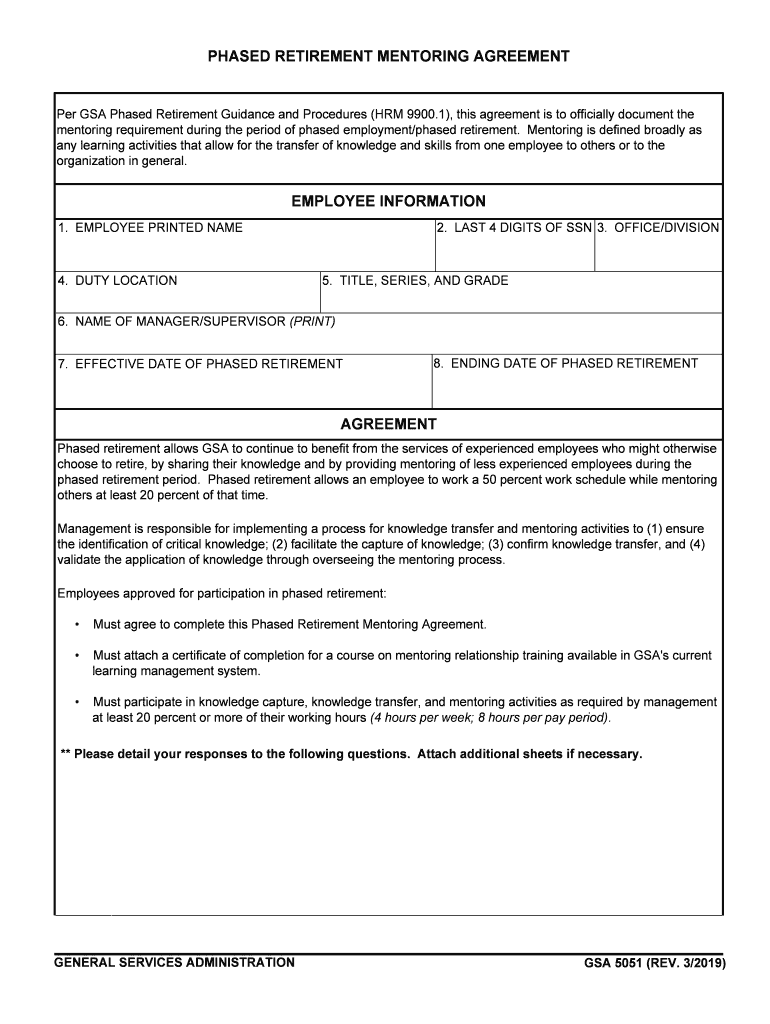
The Phased Retirement Mentoring Agreement for employees within the General Services Administration (GSA) is a formal arrangement that facilitates a structured transition to retirement for employees while leveraging their expertise to mentor less experienced colleagues. This form is integral in ensuring a smooth transfer of knowledge as seasoned employees reduce their working hours and gradually transition into retirement. The agreement outlines specific requirements and responsibilities, highlighting the significance of mentoring for organizational continuity and capacity building.
Eligibility Criteria
The eligibility criteria for participating in the Phased Retirement Mentoring Agreement are crucial for determining which employees can take advantage of this arrangement. Typically, employees nearing retirement who possess valuable skills and experience suitable for mentoring roles are eligible. Participants must express a willingness to allocate at least 20% of their work hours towards mentoring activities. Furthermore, they should have completed or be prepared to complete necessary mentoring training courses to ensure they are equipped to effectively guide their mentees.


Steps to Complete the Phased Retirement Mentoring Agreement Employee - GSA
-
Initial Consultation: Employees interested in phased retirement should consult with their HR department to discuss eligibility and understand the implications of entering phased retirement.
-
Mentoring Training: Eligible employees must complete a designated mentoring training course to prepare for their new role under the agreement.
-
Agreement Drafting: HR will work with the employee to draft the Phased Retirement Mentoring Agreement, detailing specific duties, work hours, and mentoring commitments.
-
Approval Process: The drafted agreement goes through an approval process involving both the employee's direct supervisor and the HR department to ensure all parties are aligned.
-
Implementation: Once approved, the employee begins the phased retirement schedule and starts engaging in mentoring activities as specified in the agreement.
Key Elements of the Phased Retirement Mentoring Agreement Employee - GSA
-
Mentoring Obligations: Employees are required to dedicate a minimum of 20% of their work hours to mentoring activities, which can include coaching, training sessions, and knowledge-sharing meetings.
-
Work Schedule: The agreement specifies the reduced work hours and the schedule that the employee will follow during phased retirement.
-
Performance Metrics: Clear performance metrics and indicators are laid out to evaluate the effectiveness of the mentoring and the employee’s engagement in knowledge transfer activities.
-
Duration and Review: The agreement includes details about the duration of the phased retirement period and scheduled review points to assess progress and make any necessary adjustments.
Why Implement the Phased Retirement Mentoring Agreement Employee - GSA
Implementing the Phased Retirement Mentoring Agreement offers numerous benefits both to the organization and the retiring employees. It ensures that critical knowledge and skills are effectively transferred to less experienced workforce members, thereby maintaining operational continuity. For employees, it provides a gradual transition into retirement, allowing them to reduce their workload while still contributing positively to their workplace. Moreover, the structured mentoring arrangement enhances job satisfaction and provides a sense of purpose post-retirement.
Important Terms Related to Phased Retirement Mentoring Agreement Employee - GSA
-
Phased Retirement: A retirement option allowing employees to transition to retirement gradually by reducing their work hours over a predetermined period.
-
Mentoring: The process of guiding and training less experienced employees, leveraging the retiring employee's expertise and experience.
-
Knowledge Transfer: The systematic dissemination of information, skills, and expertise from the retiring employee to other staff, ensuring that key organizational knowledge is retained.
Examples of Using the Phased Retirement Mentoring Agreement Employee - GSA
-
Case Study: An IT specialist nearing retirement uses the agreement to mentor junior IT staff, helping them understand complex systems and troubleshooting methods. Through regular training sessions and documentation, the specialist ensures a smooth transfer of technical knowledge.
-
Scenario: A senior project manager planning retirement reduces their hours and mentors a team of emerging project leaders. The manager guides them in risk management and strategic planning, ensuring the continuity of ongoing projects.
Legal Use of the Phased Retirement Mentoring Agreement Employee - GSA
The legal use of the Phased Retirement Mentoring Agreement is governed by federal regulations that dictate phased retirement policies within government agencies like the GSA. It is essential that these arrangements comply with employment laws regarding work hours, compensation, and retirement benefits. The agreement must also adhere to confidentiality clauses and non-disclosure agreements to protect sensitive information within the mentorship context.
Software Compatibility
For managing the Phased Retirement Mentoring Agreement, it is important to note compatibility with document management tools such as DocHub. Files can be easily imported, edited, and shared across platforms like Google Workspace, ensuring efficient and secure document handling. This compatibility facilitates the collaboration and tracking of agreement changes and approvals within electronic formats, supporting a smooth phased retirement process.




