







Definition and Purpose of the General Schedule Supervisory Guide - OPM
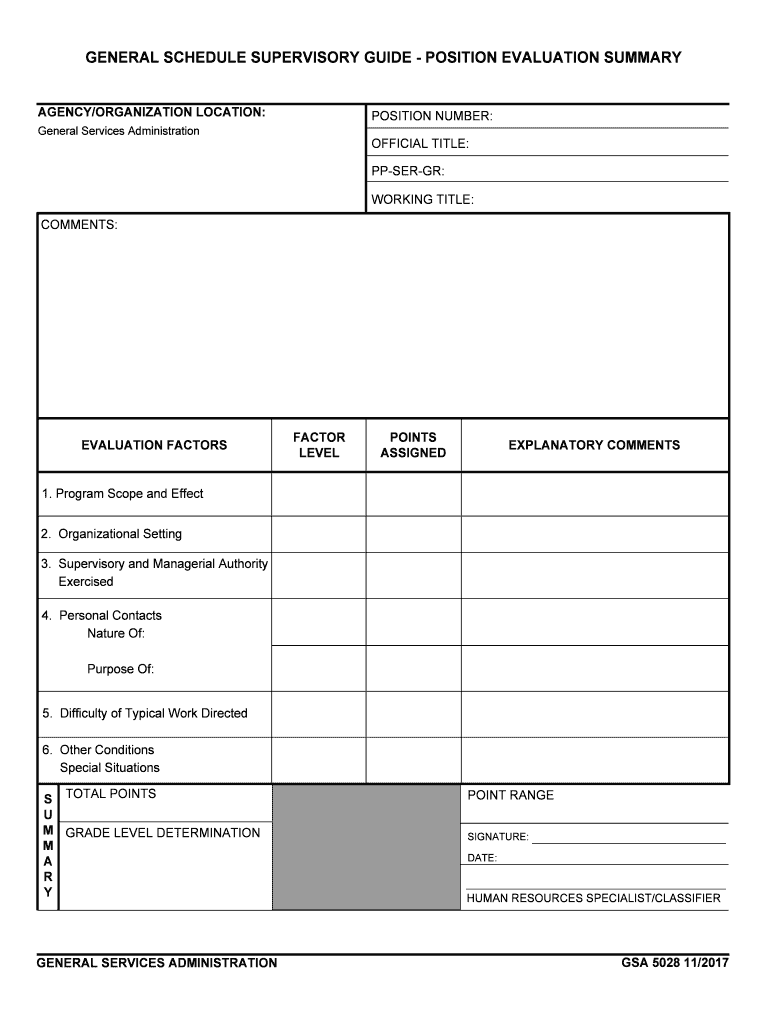
The General Schedule Supervisory Guide (GSSG) is a framework established by the Office of Personnel Management (OPM) to evaluate supervisory positions within federal agencies. This document provides a structured approach to determine the appropriate grade levels for supervisory roles by considering various factors. It serves as a guide for both human resources professionals and supervisors to ensure consistency and fairness in the assessment of supervisory duties across federal jobs.
Key Components of the GSSG
- Program Scope: Analyzes the breadth and impact of the program or work directed by the supervisor.
- Organizational Setting: Considers the hierarchy and organizational context where the supervisory role operates.
- Managerial Authority: Evaluates the level of decision-making power and responsibilities vested in the supervisor.
- Personal Contacts: Assesses the nature and purpose of interactions the supervisor has with others, both within and outside the organization.
- Complexity and Difficulty: Examines the challenges and intricacies associated with the supervisory role.
How to Use the General Schedule Supervisory Guide - OPM
The GSSG is used primarily by human resources personnel and managers in federal agencies to categorize supervisory roles. The process involves:
- Reviewing Position Descriptions: Compare job descriptions against the factors outlined in the GSSG to determine relevance.
- Applying Factor Evaluation: Score each factor based on its presence and significance in the job role.
- Summarizing Points: Calculate the total points gained from all factors to establish the supervisory position's grade level.
- Ensuring Compliance: Double-check the results to ensure alignment with OPM guidelines and agency policies.
Step-by-Step Application Process
- Initial Assessment: Gather all relevant job descriptions and organizational charts.
- Factor Analysis: Work through each evaluation factor, noting examples and evidence for scoring.
- Point Allocation: Assign appropriate points as detailed in the GSSG.
- Final Verification: Conduct a review session with relevant stakeholders to validate the findings.
How to Obtain the General Schedule Supervisory Guide - OPM
Federal agencies can access the GSSG through the Office of Personnel Management's official website. The guide is freely available as a resource for human resources departments and managers. It may also be included in internal agency human resources documentation, ensuring easy access for personnel involved in supervisory evaluations.
Additional Acquisition Methods
- Printed Copies: Obtain bound versions through government document distribution services or internal print requests.
- Training Programs: Attend workshops and training sessions where the GSSG is discussed and distributed for hands-on utilization.
Key Elements of the General Schedule Supervisory Guide - OPM
Understanding the fundamental elements of the GSSG is essential for effective application:
- Factor Evaluation System: Core system used to determine the grade level via structured criteria.
- Program Effectiveness: An emphasis on how a supervisor influences the success and efficacy of agency programs.
- Evolving Duties: Consideration of how a role transforms with changing agency priorities or organizational restructuring.
Detailed Breakdown of Evaluation Factors
- Role Complexity: Analyzes the intricacy of tasks undertaken by the supervisor, including problem-solving and strategic planning.
- Interpersonal Relations: Explores the depth of professional relationships and networking required by the role.
Examples of Using the General Schedule Supervisory Guide - OPM
Imagine a scenario in a federal agency's IT department where a supervisor oversees a team of software engineers:
- Program Scope Example: The supervisor guides a project impacting technology across multiple states, scoring high on breadth.
- Managerial Authority Example: The supervisor has final decision-making power on technological solutions, reflecting substantial managerial authority.
Important Terms Related to the General Schedule Supervisory Guide - OPM
Familiarizing oneself with the terminology used in the GSSG assists users in applying it effectively:
- Factor Levels: Definitions used to rank the significance of each evaluated task.
- Benchmark Positions: Examples of similar roles previously evaluated to establish standards.
Glossary of Common Terms
- Executive Agency: Federal entities governed by the executive branch.
- Grade Level: The rank assigned to positions based on responsibilities and impact.
Who Typically Uses the General Schedule Supervisory Guide - OPM
The use of the GSSG primarily facilitates:
- Human Resources Professionals: Vital in assessing and grading federal supervisory roles.
- Federal Supervisors: To gain insights on their own or prospective positions.


Real-World Utilization
- Performance Reviews: Supervisors and HR personnel apply GSSG criteria for annual performance evaluations.
- Role Reclassification: Determines if roles need grading adjustments due to increased responsibilities or changes in agency priorities.
Legal Use and Compliance
The GSSG provides a legally recognized framework for ensuring consistent application of supervisory criteria across federal agencies, aligning with national labor standards and ensuring fair workplace practices. Adhering to the guide's stipulations helps protect agencies from litigation related to job classification disputes.
Compliance Tips
- Document All Evaluations: Maintain records of all evaluations for audit purposes.
- Training for HR Personnel: Regular refresher courses on GSSG application for consistent grading practices.




