




01. Edit your form online
Type text, add images, blackout confidential details, add comments, highlights and more.

Type text, add images, blackout confidential details, add comments, highlights and more.

Draw your signature, type it, upload its image, or use your mobile device as a signature pad.

Send it via email, link, or fax. You can also download it, export it or print it out.
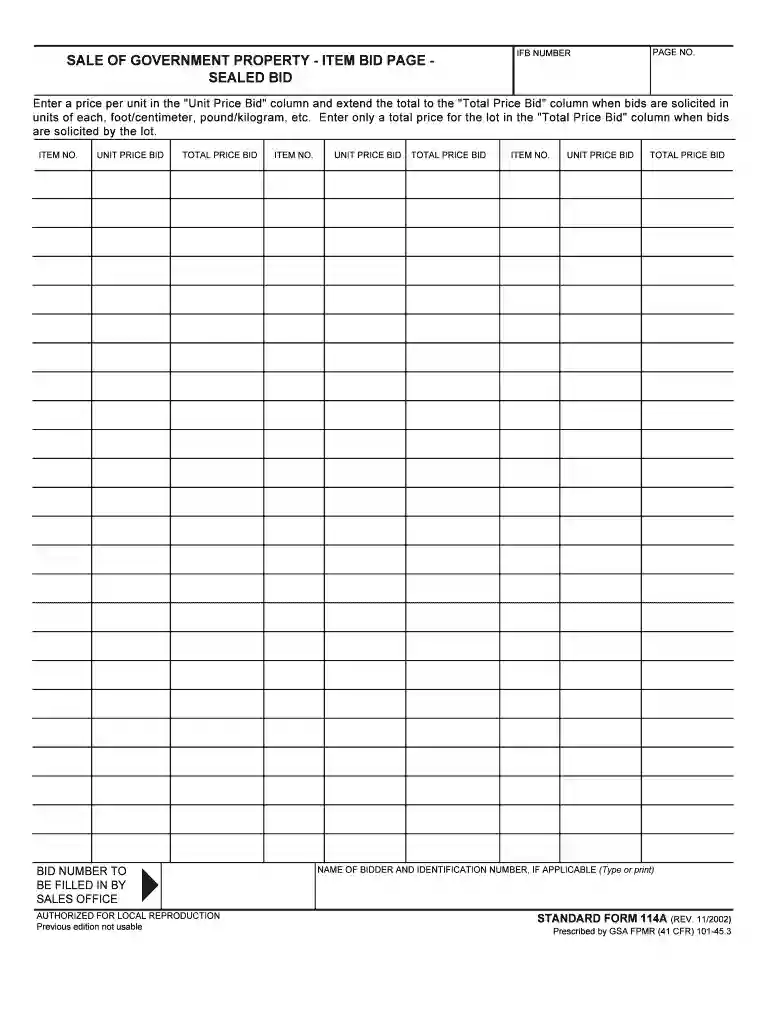
The "sale of government property- bid and award - National Energy" refers to a formal process where government-owned assets related to the National Energy sector are sold through a bidding system. This typically involves interested parties submitting competitive bids to acquire specific government properties, projects, or licenses. The process ensures transparency and fair competition among bidders, with the ultimate aim to award the sale to the highest or most appropriate offer, depending on the criteria set by the government.
To effectively use the "sale of government property- bid and award - National Energy" form, potential bidders must clearly understand their submission requirements and ensure all information is accurately recorded. The form is typically used to register one’s interest in a government property sale and to place a bid. Bidders need to provide detailed identification, list their bid amount for each applicable item, and abide by any specific instructions outlined in the form. Completing this form correctly is crucial as it affects the legitimacy and evaluation of the bid.
Review Instructions Carefully: Begin by reading all instructions provided on the form thoroughly to avoid mistakes that may disqualify your bid.
Provide Accurate Identification: Enter your personal or business identification details as required, ensuring all information matches official records.
Detail Bid Amounts: Clearly state the unit and total prices for each item or lot you are bidding on. Ensure figures are correct and correspond to your intended offer.
Sign and Date the Form: Verify all parts of the form are completed before signing and dating it as per the required format.
Submit by Deadline: Ensure the completed form, along with any supporting documents, is submitted before the deadline via the specified method (online, mail, or in-person).
Different states may impose variations in the procedure, compliance requirements, or tax implications regarding the sale of government property. It is essential to review any state-specific guidelines before submitting a bid. These rules may govern aspects such as environmental regulations, property use restrictions, and tax obligations post-sale. Bidders should consult local regulations or engage legal advice to ensure compliance.
The form must be completed while adhering to legal requirements and guidelines established by the governing body overseeing the sale. It is critical for all participating parties to maintain transparency and honesty throughout the bidding process to prevent legal disputes or accusations of fraud. The form typically includes clauses regarding legal obligations and potential penalties for any deviation.
Accompanying documents may include proof of identity or business registration, financial statements, or any prequalification certifications if required. Some processes may also necessitate a bond or deposit, which serves as security against non-compliance with the terms of the winning bid. Ensure that all documents are updated and accurately reflect the bid and bidder's capabilities.
We've got more versions of the sale of government property- bid and award - National Energy form. Select the right sale of government property- bid and award - National Energy version from the list and start editing it straight away!
| Versions | Form popularity | Fillable & printable |
|---|---|---|
| 2002 | 4.8 Satisfied (133 Votes) |
At DocHub, your data security is our priority. We follow HIPAA, SOC2, GDPR, and other standards, so you can work on your documents with confidence.
Federal coal subsidies are forms of financial assistance paid by federal taxpayers to the coal and power industry. Such subsidies include direct spending,
Feb 22, 2023 This office is offering for sale the following property (Minimum bid $100.00 per container): from March 1, 2023 through December 31, 2023.
Bid means the response submitted by an offeror in the case of the sale or surplus property (including renewable energy certificates) to the highest bidder.


