




01. Edit your form online
Type text, add images, blackout confidential details, add comments, highlights and more.

Type text, add images, blackout confidential details, add comments, highlights and more.

Draw your signature, type it, upload its image, or use your mobile device as a signature pad.

Send it via email, link, or fax. You can also download it, export it or print it out.
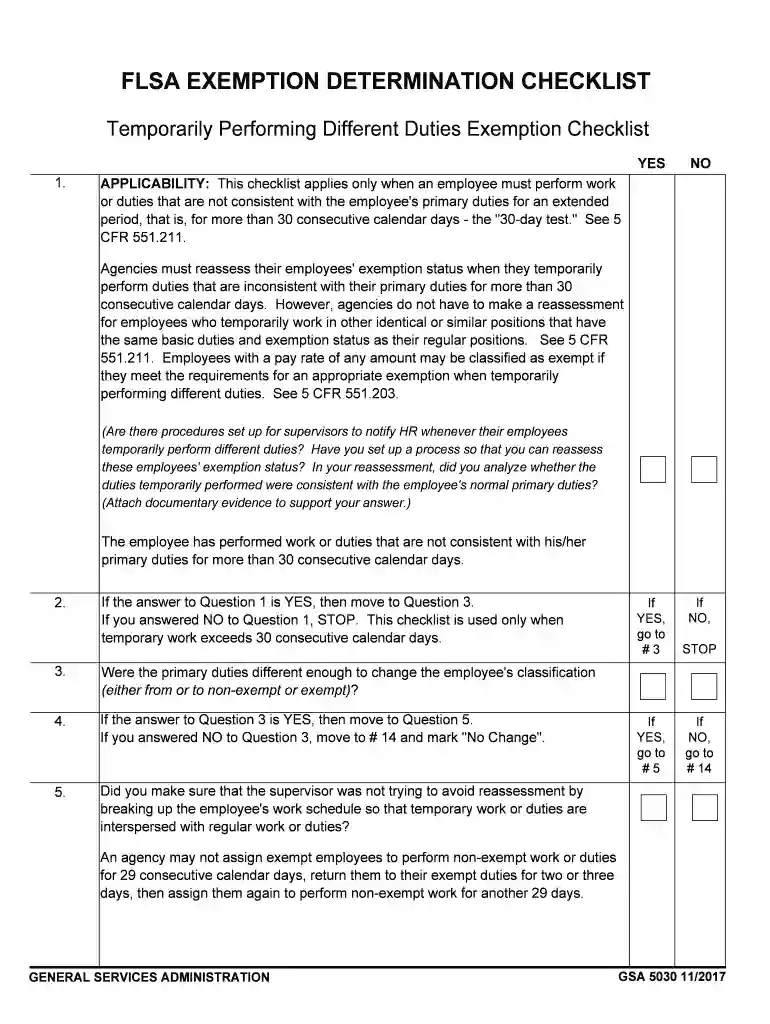
The concept of "duties that are not consistent with the employee's primary duties for an extended" relates to an employee temporarily undertaking tasks outside their traditional role for an extended period. This often requires careful navigation of legal and regulatory frameworks, particularly under the Fair Labor Standards Act (FLSA), which governs wage and hour laws in the United States. Employers must ensure that employees maintain their appropriate classification if they temporarily shift roles. Misclassification can lead to regulatory scrutiny and possible legal consequences.
When an employee performs duties that deviate from their primary job, employers must reassess the employee's exemption status under the FLSA. Legal implications arise if these duties persist beyond thirty consecutive calendar days, potentially altering wage requirements. Employers must adhere to specific regulations and document the change comprehensively for compliance and audit purposes.
Consider scenarios like a healthcare worker taking on administrative duties due to staff shortages. While initially seen as temporary, if these duties persist, the employer must reevaluate their compensation structure to ensure it aligns with the worker’s actual role. Proper documentation and timely reevaluation ensure that employers uphold FLSA rules and maintain fair labor practices.
One of the critical steps in managing duties that vary from standard roles is creating and maintaining accurate job descriptions. These descriptions should reflect expected duties and be regularly updated to ensure consistency across both primary and temporary roles.
Employers should be familiar with specific exemptions under the FLSA that may apply based on job duties and salary levels. Understanding these exemptions helps in the appropriate classification of employees and avoids compliance issues with the labor laws.
For compliance and future reference, detailed records must be kept, documenting the rationale, duration, and nature of the duties performed that differ from primary responsibilities. Employers must maintain these records for the duration legally required by labor laws.
Employers must take proactive measures to regularly assess employee job duties and roles, particularly when deviations from primary duties occur. Careful attention to FLSA guidelines and comprehensive documentation will facilitate compliance and protect against potential penalties, ensuring both legal conformity and the safeguarding of employee rights.
We've got more versions of the or duties that are not consistent with the employee's primary duties for an extended form. Select the right or duties that are not consistent with the employee's primary duties for an extended version from the list and start editing it straight away!
| Versions | Form popularity | Fillable & printable |
|---|---|---|
| 2017 | 4.8 Satisfied (36 Votes) |
At DocHub, your data security is our priority. We follow HIPAA, SOC2, GDPR, and other standards, so you can work on your documents with confidence.
The employees primary duty must be the performance of office or non-manual work directly related to the management or general business operations of theRead more
perform work or duties that are not consistent with the employees primary duties for an extended period, that is, for more than 30 consecutive calendar days


