




01. Edit your form online
Type text, add images, blackout confidential details, add comments, highlights and more.

Type text, add images, blackout confidential details, add comments, highlights and more.

Draw your signature, type it, upload its image, or use your mobile device as a signature pad.

Send it via email, link, or fax. You can also download it, export it or print it out.
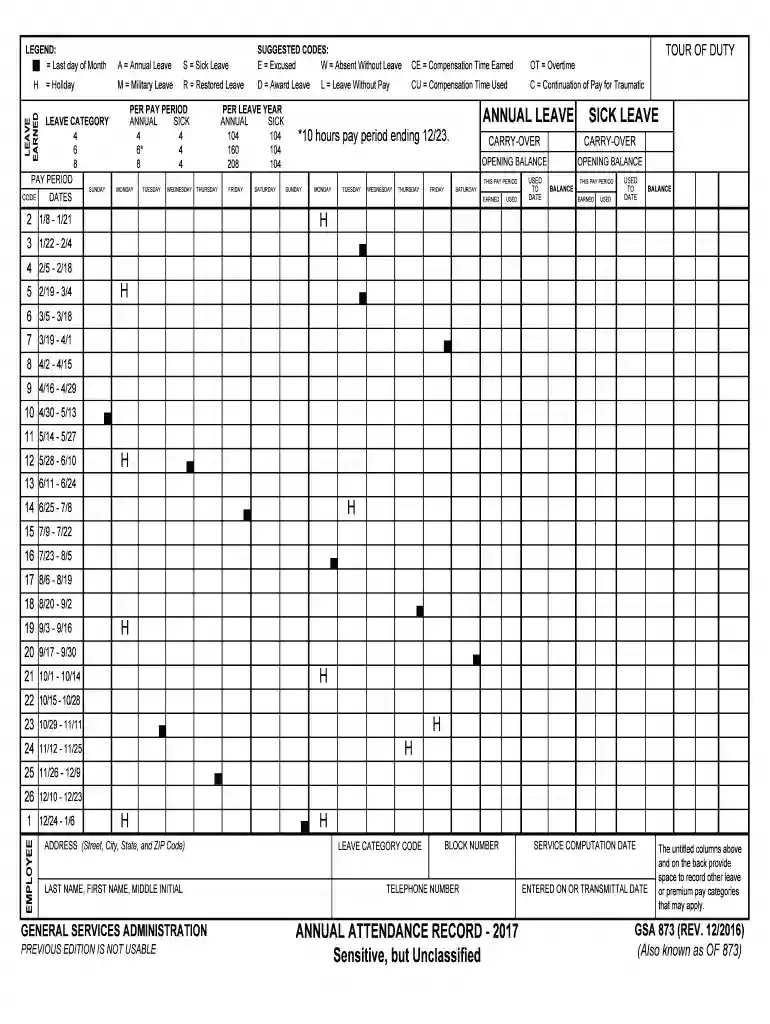
The "*10 hours pay period ending 12 23" form primarily serves as a timekeeping document for employees to report their work hours and any leave taken during a specified pay period. This form ensures accurate payroll calculations by capturing various types of leave, such as annual, sick, military, and compensatory leave. It functions as a record-keeping tool to support the official payroll system in tracking and managing employee compensation data efficiently.
Using the "*10 hours pay period ending 12 23" involves several crucial steps to ensure accurate completion. Employees should start by entering their personal information, including name and employee ID. They must then record their total work hours for each day within the pay period. It is essential to document any leave taken by using the appropriate leave codes provided on the form. Once all entries are completed, the form should be reviewed for accuracy before submission to the payroll department.
Completing the form requires attention to detail and adherence to specific instructions. Ensuring that all sections of the form are correctly filled out is vital for proper payroll processing. Employees should ensure that all work hours and leave codes are correctly entered, as mistakes may lead to incorrect pay calculations.
Understanding the terminologies used in the "*10 hours pay period ending 12 23" can significantly simplify the form completion process. Key terms often include pay period, leave codes, and work hours.
Accurate completion of the "*10 hours pay period ending 12 23" is critical for timely and precise payroll processing. This form ensures that employees are compensated correctly for their work and any approved leave. Additionally, it serves as an official record for employment verification and auditing purposes. For employers, this form provides a systematic way to manage workforce productivity and payroll expenses.
The "*10 hours pay period ending 12 23" is legally significant as it adheres to labor laws and regulations that govern employee compensation. This form serves as an official record for both employees and employers, providing evidence of hours worked and leave taken. It plays a crucial role in ensuring compliance with wage and hour laws, reducing the risk of legal disputes related to payroll discrepancies.
Recognizing the key elements of this form is essential for proper execution. These elements ensure that all necessary information is captured accurately.
Consider a scenario where an employee needs to report working eight hours daily while also taking two sick days within the pay period. The employee would fill out the form by entering eight work hours for each applicable day and use the code for sick leave on the designated days. This straightforward entry ensures that the payroll department accounts for both work and leave accurately.
By integrating these detailed guidelines and examples, the structured completion of the "*10 hours pay period ending 12 23" is both efficient and effective, ensuring all relevant data is captured and reported accurately.
We've got more versions of the *10 hours pay period ending 12 23 form. Select the right *10 hours pay period ending 12 23 version from the list and start editing it straight away!
At DocHub, your data security is our priority. We follow HIPAA, SOC2, GDPR, and other standards, so you can work on your documents with confidence.
Pay Period Ending Manager Hours Certification Due by 10 a.m. Pay Date 1 12/21/25. Catholic University of America Payroll Schedule
Oct 18, 2018 Pay Period Group the pay period group associated with this Period Cut Off Time the time to cut off punches at the end of the pay period.
The beginning and ending dates of the leave years shown below apply to most employees. However, some agency payroll systems use a different pay period schedule.Read more


