




01. Edit your form online
Type text, add images, blackout confidential details, add comments, highlights and more.

Type text, add images, blackout confidential details, add comments, highlights and more.

Draw your signature, type it, upload its image, or use your mobile device as a signature pad.

Send it via email, link, or fax. You can also download it, export it or print it out.
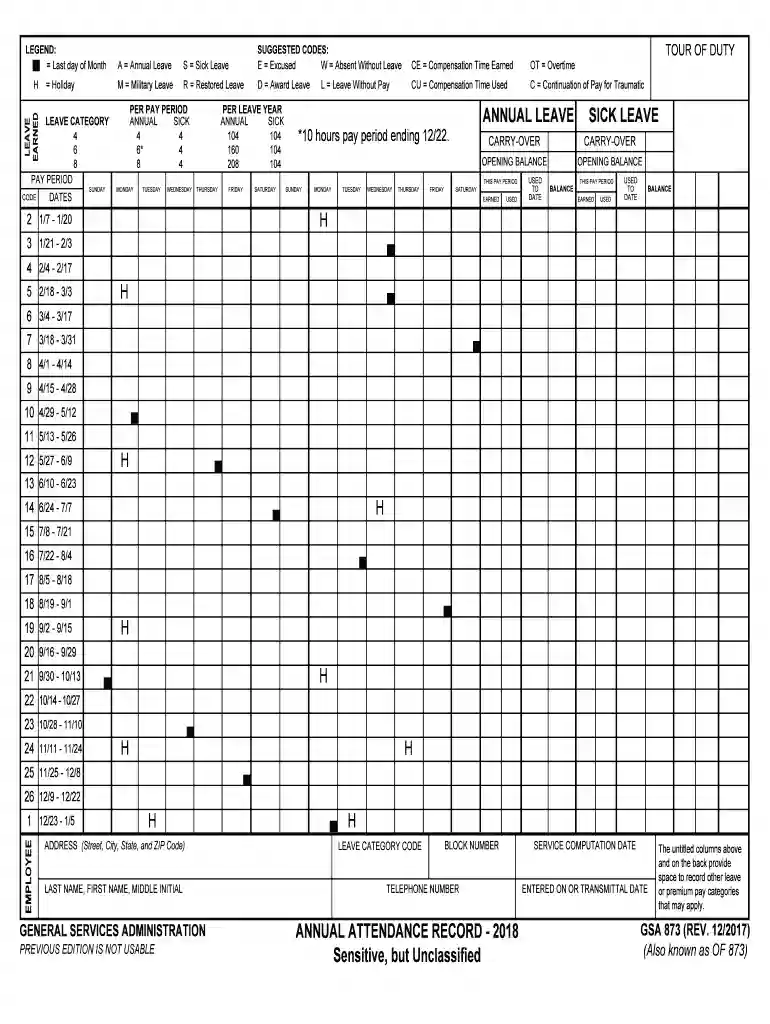
The "*10 hours pay period ending 12 22" form is a specialized timekeeping document used primarily by employees and employers to record work time and categorize different types of leave—for instance, sick leave, military leave, or annual leave—within a specific pay period ending on December 22. This document plays a vital role in ensuring that payroll accurately reflects the actual hours worked and any applicable leave taken during this timeframe.
This form includes several key components that ensure comprehensive tracking of employee work and leave hours. Accurate completion of this document is crucial for maintaining payroll fidelity.
Understanding the terminology used in this form is critical for its accurate completion.
Properly completing this document can offer numerous benefits, both to employees and employers. It ensures transparency and accuracy in the payroll process.
This timekeeping form is usually employed in environments where accurate tracking of work hours and leave is crucial for payroll processing.


Understanding the legal implications of this form can prevent potential compliance issues. It must be filled out accurately and retained according to organizational policies.
Many employers integrate digital tools for easy tracking and submission of timekeeping forms like the "*10 hours pay period ending 12 22."
Real-life scenarios help illustrate the importance and application of this particular timekeeping form across different domains.
The "*10 hours pay period ending 12 22" can be submitted via various methods, depending on company policy.
Providing comprehensive and detailed information about the "*10 hours pay period ending 12 22" form ensures clarity and precision in its application and utility within the workplace.
We've got more versions of the *10 hours pay period ending 12 22 form. Select the right *10 hours pay period ending 12 22 version from the list and start editing it straight away!
At DocHub, your data security is our priority. We follow HIPAA, SOC2, GDPR, and other standards, so you can work on your documents with confidence.
Nov 26, 2025 2025 Leave Year: Ends Pay Period 2026-02, January 10, 2026. Employees in the six-hour leave category will receive their extra four hours in PayRead more
Pay Period Ending Manager Hours Certification Due by 10 a.m. Pay Date 1 12/21/25. Catholic University of America Payroll Schedule


