







Definition and Purpose of CMS-1429-FC
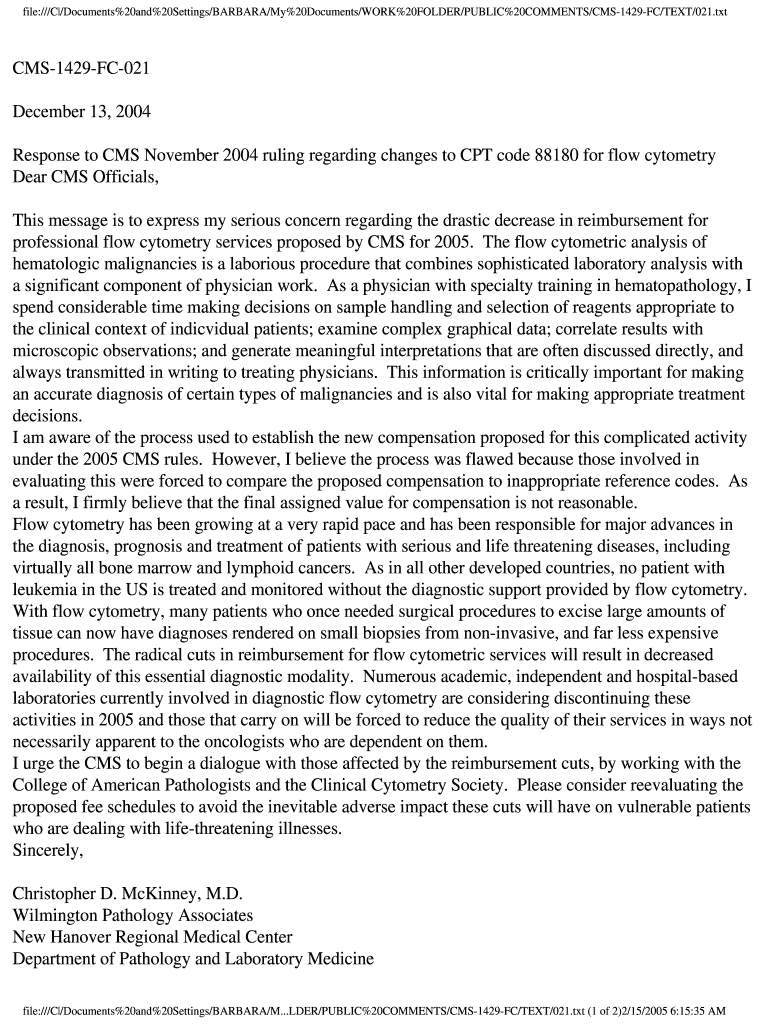
CMS-1429-FC is a rule issued by the Centers for Medicare and Medicaid Services that pertains to reimbursement policies for specific medical services. It plays a crucial role in shaping how healthcare providers are compensated, especially for services like flow cytometry used in diagnosing hematologic malignancies. The rule aims to ensure that payment schedules are reasonable and reflect the current economic landscape while maintaining access to essential medical services.
How to Use CMS-1429-FC
Understanding and utilizing CMS-1429-FC effectively requires familiarity with reimbursement models. Healthcare providers must carefully analyze the rule to apply it to billing practices. This involves reviewing the proposed reimbursement changes and adjusting billing systems accordingly. Providers may need to engage in internal reviews to align their documentation and coding practices with the new policies.
Obtaining CMS-1429-FC Documents
The CMS-1429-FC document can be obtained from the official Centers for Medicare and Medicaid Services website. It is typically available in a downloadable PDF format. Healthcare administrators should regularly check for updates or amendments to ensure compliance with the latest policies.
Steps to Complete the CMS-1429-FC Process
- Review the Rule: Thoroughly analyze the CMS-1429-FC documentation to understand its implications on reimbursement.
- Consult with Experts: Engage with healthcare policy experts or legal advisors to interpret complex sections.
- Adjust Billing Practices: Update billing systems and documentation to align with new reimbursement rates.
- Communicate Changes: Inform stakeholders, including administrative staff and accounting departments, about the changes.
- Monitor Impact: Track financial performance post-implementation to assess economic impact.
Why CMS-1429-FC Matters
CMS-1429-FC significantly impacts medical facilities' financial operations, influencing which services remain viable to offer. The rule aims to balance the need for cost containment in Medicare and Medicaid with the provision of high-quality diagnostic services. It addresses concerns about unsustainable reimbursement rates that could limit patient access to necessary medical procedures.
Target Audience for CMS-1429-FC
The primary users of CMS-1429-FC include healthcare administrators, billing specialists, and medical professionals involved in service delivery that requires Medicare and Medicaid reimbursement. It is especially important for institutions specializing in hematopathology services and other high-cost diagnostic testing.
Legal Considerations for CMS-1429-FC
Adherence to CMS-1429-FC is legally required for healthcare providers participating in Medicare and Medicaid programs. Non-compliance can result in financial penalties or exclusion from these programs. Providers must ensure that their billing practices comply with the rule through meticulous documentation and adherence to the specified reimbursement codes.
Key Elements of CMS-1429-FC
- Reimbursement Rates: Defines allowable charges for specific medical tests and procedures.
- Service Categories: Clarifies which services fall under the rule, such as flow cytometry.
- Amendment Protocols: Outlines the process for modifying the rule in response to stakeholder feedback.
- Compliance Requirements: Details necessary documentation and procedures to meet regulatory standards.
Examples of CMS-1429-FC Implementation
Healthcare institutions that regularly conduct flow cytometry may see significant changes in cash flows due to adjustments in reimbursement rates. A case study could involve a hospital adapting its billing strategy in response to new CMS-1429-FC policies, resulting in a revamped financial model to maintain service delivery while managing costs effectively.




