







Definition & Meaning
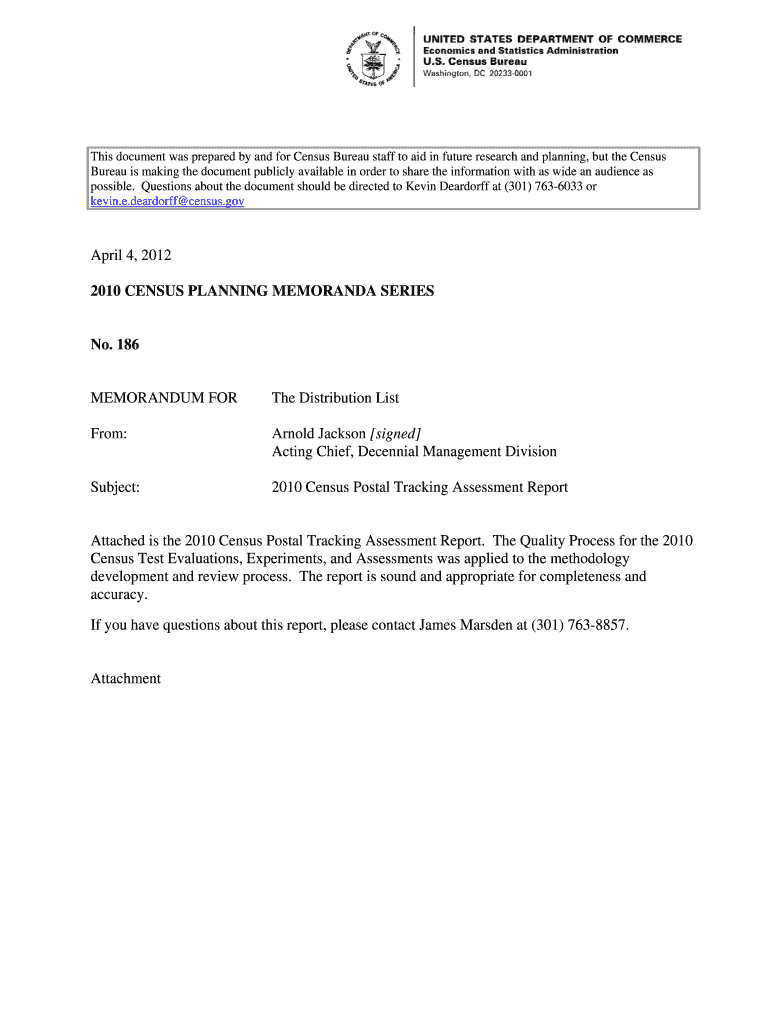
The 2010 Census Postal Tracking Assessment by the Census Bureau is a critical analysis of postal tracking technologies used during the 2010 Census in the United States. This assessment evaluates the effectiveness of such technologies in identifying returning mail and undeliverable addresses. The report provides insights into how these technologies reduced mailing costs and improved operational efficiency by allowing for targeted replacement mailings.
Key Findings
- Reliability of Postal Tracking Data: Demonstrated through its ability to identify undeliverable addresses.
- Cost Reduction: Enabled by preventing unnecessary duplicate mailings.
- Operational Efficiency: Improvements through targeted replacements and risk mitigation.
How to Use the 2010 Census Postal Tracking Assessment
To utilize the 2010 Census Postal Tracking Assessment effectively:
- Understand the Purpose: Recognize that this assessment provides insights into the use of postal tracking tech within census operations.
- Identify Core Technologies: Familiarize yourself with the tracking technologies evaluated in the report.
- Analyze Key Metrics: Use the data for benchmarking future projects or proposals related to postal operations.
Practical Applications
- Future Census Planning: Guide planning strategies for upcoming censuses.
- Operational Improvements: Implement similar technologies for cost and efficiency improvements in other sectors.
Key Elements of the 2010 Census Postal Tracking Assessment
- Technology Evaluation: Focused on the specific postal tracking solutions employed.
- Cost Analysis: Detailed examination of costs saved through the reduction of unnecessary mailings.
- Risk Mitigation Strategies: Insights on how tracking mitigated risks during census operations.
Detailed Analysis
- Implementation Challenges: Understanding constraints and workarounds.
- Data Utilization: How data was used to drive decisions during the census.
Who Typically Uses the 2010 Census Postal Tracking Assessment
The primary users of this assessment report include:
- Census Bureau Officials: For planning and executing future censuses.
- Government Agencies: Interested in mail tracking efficiency improvements.
- Policy Analysts: Evaluating data-driven decision-making processes.
- Research Institutions: Conducting studies on technology applications in large-scale operations.


Steps to Complete the 2010 Census Postal Tracking Assessment
While the assessment itself is a completed report, understanding its contents can be systematized for insights:
- Read the Executive Summary: Gain a high-level understanding of findings and conclusions.
- Examine Specific Sections: Focus on areas relating to technology effectiveness and cost savings.
- Review Recommendations: Analyze the advised practices for future use.
Why Use the 2010 Census Postal Tracking Assessment
Understanding this assessment is crucial for:
- Improving Mailing Processes: It offers a blueprint for enhanced accuracy and cost-effectiveness.
- Adopting Best Practices: The report outlines practical strategies for future application.
- Informing Policy Decisions: Provides a basis for informed decision-making in census operations.
Benefits
- Strategic Insights: Provides strategic knowledge applicable to similar large-scale data operations.
- Economic Efficiency: Offers substantial cost-saving mechanisms relevant to public and private sectors.
Legal Use of the 2010 Census Postal Tracking Assessment
The insights derived from the assessment should be used in compliance with legal norms and Census Bureau guidelines. While the report itself is public, any implementation based on its findings must adhere to relevant legal frameworks, especially those concerning data privacy and handling sensitive information.
Examples of Using the 2010 Census Postal Tracking Assessment
Examples highlight how other entities adapt findings from the postal tracking report:
- Census 2020: Application of learned techniques to improve census accuracy.
- State-Level Surveys: Integration of postal tracking technology for demographic studies.
- Private Sector: Large-scale mail operations adopting similar strategies for cost savings.
Case Studies
- Federal Agencies: Streamlining processes based on assessment highlights.
- Non-Profit Organizations: Efficient resource allocation inspired by report findings.
By exploring the detailed facets of the 2010 Census Postal Tracking Assessment, users can harness its full potential to inform future decision-making and optimize large-scale mailing operations.




