







Definition & Meaning
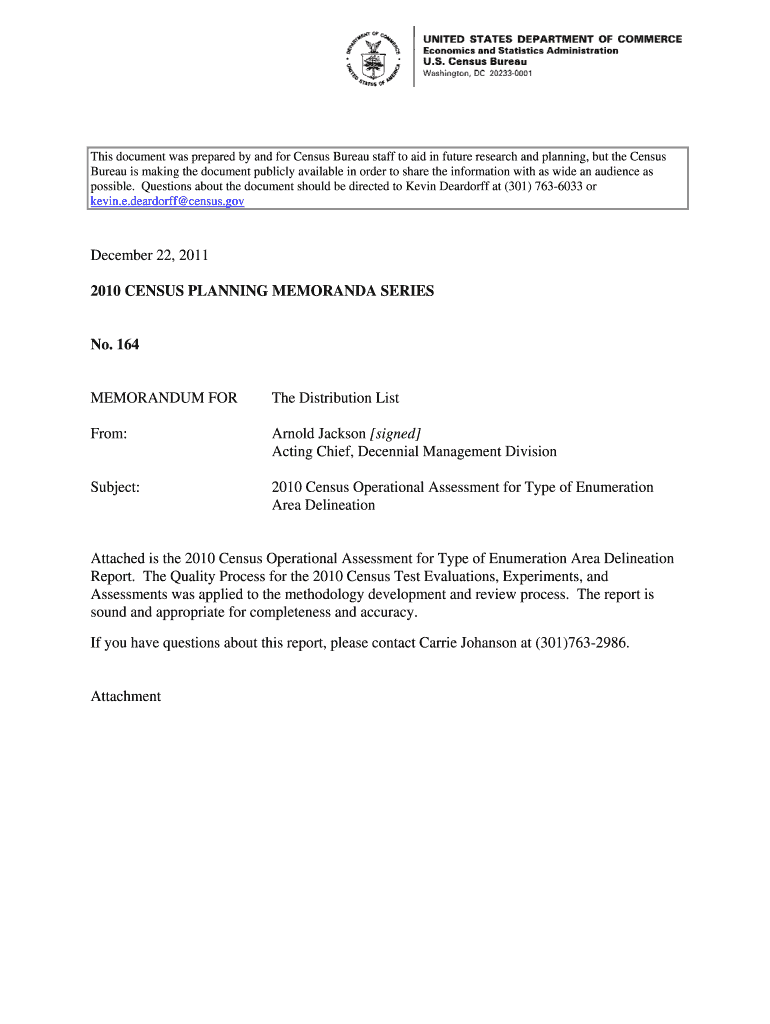
The 2010 Census Operational Assessment for Type of Enumeration Area (TEA) Delineation is a detailed review undertaken by the U.S. Census Bureau. It focuses on assessing how different segments, referred to as TEA, were designated for the 2010 Census. Primarily, this assessment examines the methodology used for assigning TEA values to every census collection block across the United States. It serves to ensure that the census operations are streamlined and effective, thereby enabling accurate demographic data collection. This assessment also provides insights into the success of the assignment processes and highlights areas requiring improvements, especially in addressing issues related to mail delivery and other logistical challenges.
Key Elements of the 2010 Census Operational Assessment
The operational assessment comprises several fundamental components critical to its effectiveness:
- Methodology Evaluation: Analyzes the processes employed for TEA delineation, ensuring they are scientifically sound and robust.
- Results Comparison: Compares current findings with data from previous censuses to determine improvements or declines in efficiency and accuracy.
- Quality Processes: Investigates the implementation of quality control measures throughout the enumeration areas' assignment process.
- Recommendations: Offers actionable advice on refining methodologies and improving communication strategies for future censuses.
Each of these elements plays a vital role in understanding and enhancing the efficiency of census operations.
Steps to Complete the 2010 Census Operational Assessment
Completing the operational assessment involves several steps:
- Data Collection: Gathering extensive demographic and geographic data to inform TEA delineation.
- Methodologies Analysis: Critically examining the techniques and criteria used to identify and assign TEAs.
- Validation of Processes: Implementing quality control measures to ensure accuracy and reliability in TEA assignments.
- Comparison and Evaluation: Cross-referencing outcomes with past census data to identify trends and anomalies.
- Final Reporting: Documenting findings, including strengths and areas for improvement, to inform policy and operational changes.
Each step requires meticulous attention to detail to ensure comprehensive analysis and effective implementation.
Who Typically Uses the 2010 Census Operational Assessment
The primary users of the 2010 Census Operational Assessment include:
- Census Bureau Officials: Utilize the assessment to improve exploration and collection strategies.
- Policymakers: Depend on reliable data to develop informed demographic policies and allocate resources effectively.
- Researchers: Analyze the delineation outcomes for academic and practical insights into improving population surveys.
- Local Governments: Use the data to address community-specific needs and improve local governance planning.
These stakeholders rely on the assessment to guide data-driven decision-making within their respective domains.


Examples of Using the 2010 Census Operational Assessment
Several practical examples illustrate how this assessment is applied:
- Urban Planning: City planners use TEA data to better map population density and infrastructure needs.
- Education Funding: School districts utilize assessment data to justify the allocation of funds based on population shifts.
- Federal Grants: Various government agencies assess data to ensure equitable distribution of federal grants and aid.
- Public Health Initiatives: Health departments leverage insights to address public health concerns specific to different population segments.
These examples highlight the diverse applications and impacts of accurate census assessments.
Important Terms Related to the 2010 Census Operational Assessment
Understanding certain key terms enhances comprehension and utility of the assessment:
- Type of Enumeration Area (TEA): A designation used to optimize census resource allocation based on community characteristics.
- Delineation: The method of assigning specific characteristics or classifications to census blocks.
- Enumeration: The detailed process of counting or assessing populations within designated areas.
- Quality Processes: Techniques put in place to ensure the data collected is accurate and representative.
These terms are crucial to grasping the nuances involved in census assessment and execution.
Form Submission Methods
The U.S. Census Bureau offers various methods for submission and review of census operational assessments:
- Online Platforms: The primary submission and access channel, ensuring quick and efficient processing.
- Hard Copy Submissions: While less common, certain documents may be submitted physically, depending on the type and data sensitivity.
- In-Person Consultations: For stakeholders requiring a detailed review or discussion on specific matters related to TEA data and its implications.
These methods provide flexibility and accessibility for stakeholders engaged in operational assessments.
Digital vs. Paper Version
In the modern era, the digital version of operational assessments has become more prevalent. This form:
- Facilitates Timely Updates: Allows real-time corrections and updates to assessment findings.
- Enhances Accessibility: Ensures that data is easily accessible from various digital devices.
- Reduces Costs: Minimizes the need for printing and distribution of paper documents, lowering overall costs.
Nevertheless, paper versions remain in use for formal records or where digital access is limited, ensuring inclusivity in documentation.




