







Definition & Meaning
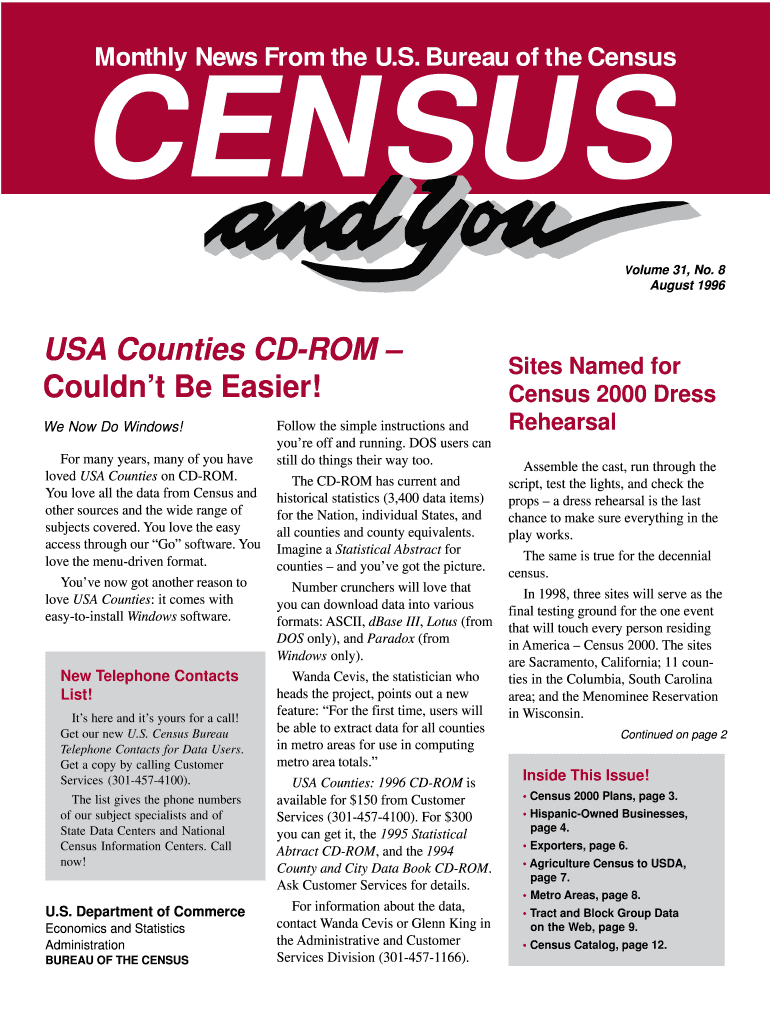
Census records for the United States on CD from Microfilm represent a digital shift from traditional microfilm used to store and access historical population data. These records encapsulate critical information collected by the U.S. Census Bureau, including demographic and socio-economic details. Transitioning from microfilm to compact discs (CDs) allows for easier access and handling by researchers, genealogists, historians, and government agencies aiming to understand population trends over decades. Unlike traditional methods, these CDs facilitate efficient searching and retrieval, ensuring a smoother workflow in data analysis.
How to Use the Census Records for the United States on CD from Microfilm
To effectively utilize these records, users typically rely on compatible computer systems equipped with CD readers. The process begins by inserting the CD into the drive, followed by using indexing software to navigate through the data. Tools available on the CD enable users to search for specific states, counties, or even individual family names. Practically, this involves:
- Locating specific years or demographic categories.
- Extracting data for research projects or reports.
- Analyzing trends in population changes over time.
Having a basic understanding of historical naming conventions and geographical changes is beneficial for users to improve search accuracy and outcomes.
How to Obtain the Census Records for the United States on CD from Microfilm
Acquiring these records involves a few straightforward methods. Interested parties can purchase them directly from government repositories or authorized distributors specializing in historical data distribution. Additionally, they may be accessible through public libraries or educational institutions with robust historical archives. Depending on availability, digital ordering on official platforms may be an option, facilitating direct shipment. Some resources might require membership or institutional affiliation for access.
Steps to Complete the Census Records for the United States on CD from Microfilm
Completing projects or queries using these records typically follows a systematic approach:
- Access the CD: Insert the CD into a compatible drive.
- Utilize Indexes: Load any bundled software or indexing programs.
- Conduct Searches: Input search terms like surname, address, or district.
- Review Results: Navigate through search results to verify relevant entries.
- Extract Data: Export specific records or entire sections for analysis.
- Compile Findings: Use collected data in reports or genealogical projects.
This methodology helps ensure that users can maximize the utility of the information gathered from the records.
Who Typically Uses the Census Records for the United States on CD from Microfilm
These census records are beneficial to a diverse audience:
- Genealogists: Utilize data to trace family histories and lineage.
- Historians and Researchers: Analyze socio-economic trends and shifts in the U.S. demographic landscape.
- Government Agencies: Develop policies based on past demographic data.
- Educational Institutions: Enhance history and sociology curricula with primary data sources.
Individuals or organizations involved in sociological studies, urban planning, or public administration also find these records an invaluable resource.


Key Elements of the Census Records for the United States on CD from Microfilm
Census CDs contain numerous crucial elements that serve varying research purposes:
- Demographic Information: Age, gender, ethnic makeup, and occupation.
- Geographical Data: Details on households and districts.
- Economic Indicators: Income levels, employment statistics.
- Historical Context: Provides snapshots of American life through different census years.
This comprehensive dataset enables a multidimensional analysis of U.S. history and helps in understanding long-term trends.
Importance of Using Census Records for the United States on CD from Microfilm
Utilizing these census records is vital for numerous reasons:
- Accuracy in Research: Offers precise and verifiable historical data.
- Policy Formulation: Informs policy decisions through understanding of historical demographic trends.
- Socio-Economic Analysis: Assesses changes in the socio-economic fabric of the U.S.
Access to detailed census data allows for informed decision-making, broadening the scope and depth of research in various disciplines.
Legal Use of the Census Records for the United States on CD from Microfilm
The legal use of census records is governed by privacy laws and archival access rules in the U.S.:
- Data Privacy: Typically, records older than 72 years are public, ensuring compliance with privacy norms.
- Authorized Access: Access is limited to authorized entities or individuals for research or genealogical purposes.
- Reproduction Rights: Usage may be restricted to personal non-commercial purposes unless specified otherwise.
These guidelines ensure that data use complies with legal standards and respects individuals’ privacy rights.
State-Specific Rules for the Census Records for the United States on CD from Microfilm
While census data is federally managed, state-specific rules may affect access:
- Local Archives: Some states may hold additional data or variant records specific to the state.
- Access Permissions: Different states might have varying access restrictions or requirements.
- Historical Contextual Additions: States might include supplementary data unique to regional history.
Understanding state-specific laws enhances the appropriate and effective use of census records across different jurisdictions.




