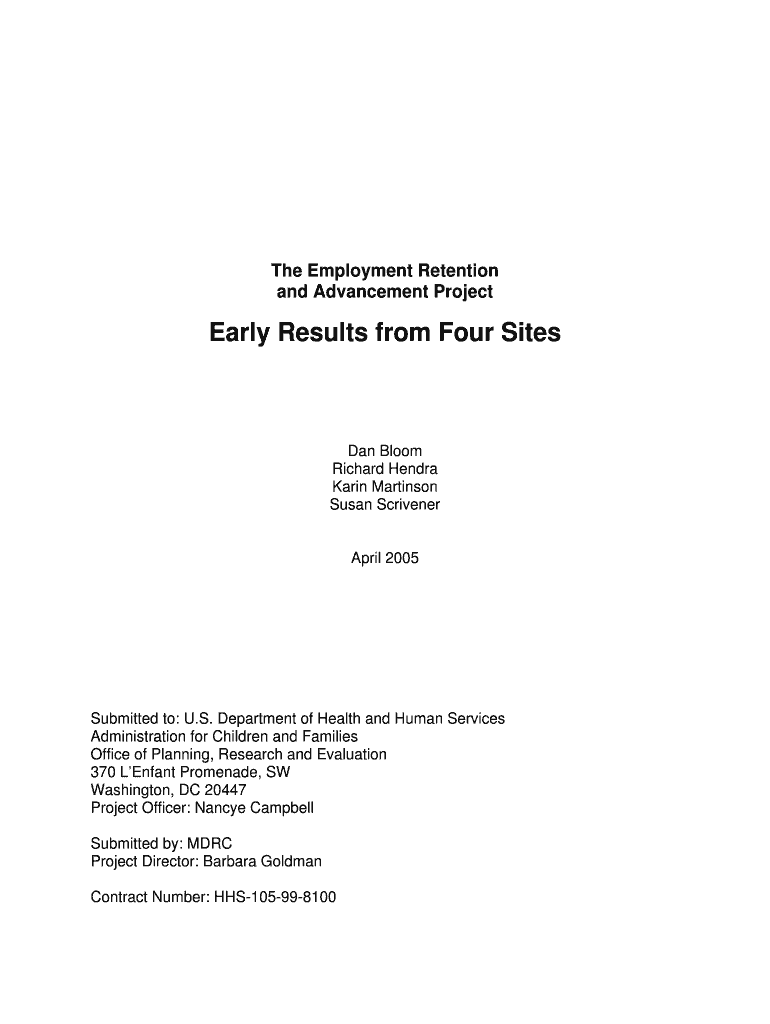







Understanding the Employment Retention and Advancement Project
The Employment Retention and Advancement (ERA) Project was initiated to address the challenges faced by low-wage workers in maintaining stable employment and improving their earnings. Conducted by MDRC under a contract with the U.S. Department of Health and Human Services, the project evaluates various programs across the United States that aim to support welfare recipients. These programs focus on helping participants secure stable jobs and advance in their careers, with a particular emphasis on coaching, workplace assistance, and targeted training programs.
Key Elements of the Employment Retention and Advancement Project
The ERA Project comprises several core components that define its structure and focus. These elements are essential for understanding how the project is implemented and evaluated:
-
Targeted Populations: The project primarily targets welfare recipients and other low-income individuals who need support in achieving job stability and career progression.
-
Program Design: Each program under the ERA Project is designed to offer a combination of employment services, such as job placement assistance, on-the-job support, and skills training.
-
Outcome Measurements: Success is measured through employment retention rates and earnings improvements among participants.
-
Collaborative Implementation: Programs often involve collaboration between local government agencies, employment service providers, and community organizations.
Steps to Complete the Employment Retention and Advancement Project Process
Comprehending and engaging with the ERA Project involves several steps that participants typically follow:
-
Eligibility Assessment: Potential participants are evaluated to determine their eligibility for the programs. This usually involves assessing income level, employment status, and other criteria established by the program administrators.
-
Program Enrollment: Eligible individuals enroll in their respective programs, where they are assigned a caseworker or employment coach.
-
Skill Development and Training: Participants engage in training sessions aimed at enhancing employability skills and gaining job-specific qualifications.
-
Job Placement: After training, support staff assist participants in finding suitable job opportunities.
-
Retention Support: Ongoing support services are provided to help participants maintain their employment, which could include workplace counseling or additional training.
-
Progress Evaluation: Participants' progress is regularly evaluated to assess improvements in employment stability and earnings.
Who Typically Uses the Employment Retention and Advancement Project
Individuals participating in the ERA Project typically come from diverse backgrounds but share one common goal: improving their employment status and financial stability. The project is often used by:
-
Welfare Recipients: Many participants are current or former recipients of welfare benefits seeking to transition to sustainable employment.
-
Low-Income Workers: Those already employed in low-wage jobs but seeking better opportunities for advancement and stability.
-
Employers: Organizations that rely on the skilled workforce developed through these programs often participate as partners offering job placements.


Examples of Using the Employment Retention and Advancement Project
Different geographical locations have implemented the ERA Project with varying levels of success, providing valuable insights into effective employment strategies:
-
Chicago and Corpus Christi: Programs in these cities demonstrated positive impacts on employment stability and increased earnings among participants.
-
Riverside and South Carolina: In contrast, programs in these regions faced challenges and did not produce significant improvements, highlighting the need for tailored strategies and local adaptations.
Legal Use of the Employment Retention and Advancement Project
Participation in the ERA Project is governed by specific legal and regulatory frameworks to ensure that programs are executed fairly and effectively:
-
Funding and Legislation: Programs are typically supported by federal or state funding, complying with applicable laws and regulations to address employment challenges.
-
Data Privacy: The collection and use of personal data from participants follow strict privacy and confidentiality guidelines to protect individual rights.
State-Specific Rules for the Employment Retention and Advancement Project
While the ERA Project is national, state-specific rules can affect program implementation and operations:
-
Eligibility Criteria: States may have different criteria for determining who can participate in the projects.
-
Support Services: The types and extent of support services available can vary, influenced by state-funded resources and partnerships.
Eligibility Criteria for the Employment Retention and Advancement Project
To participate in the ERA Project, individuals must meet specific eligibility criteria, which generally include:
-
Income Level: Participants are typically below a certain income threshold to qualify for assistance.
-
Employment Status: Unemployed or underemployed individuals are often prioritized to help increase job participation and earning potential.
-
Commitment to Program Participation: Participants must demonstrate a willingness to engage with training and employment opportunities provided by the program.