Definition & Meaning
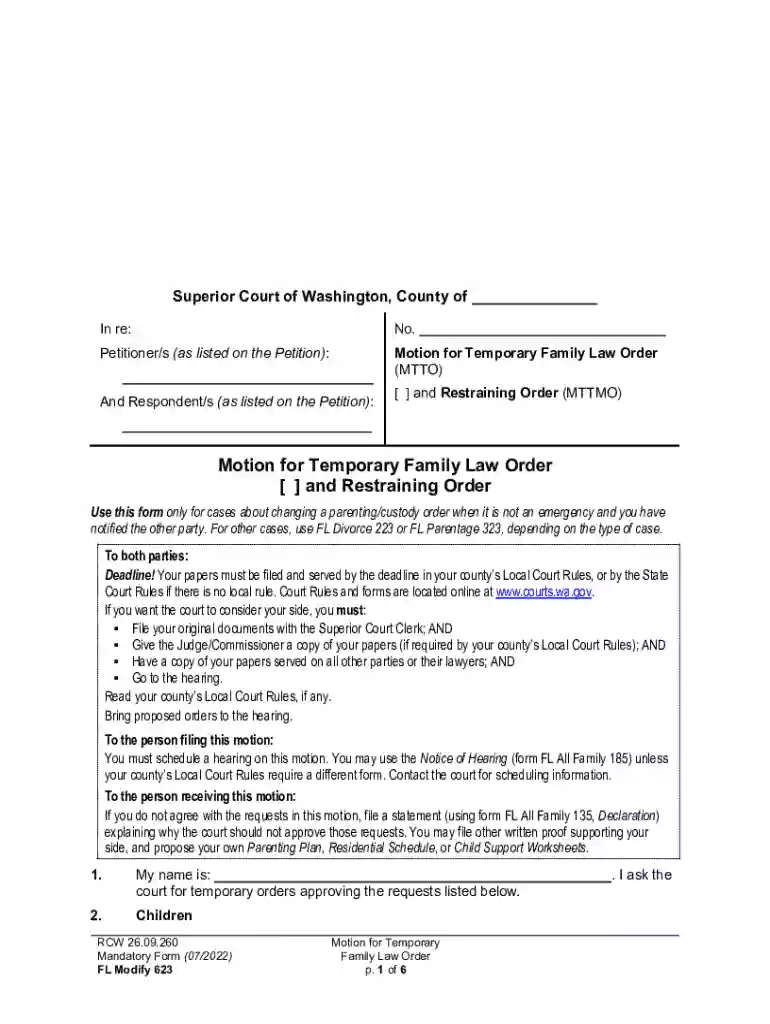
A Motion for Temporary Family Law Order (MTTO) in the Washington State Courts is a legal document filed in the Superior Court. This motion is specifically for temporary orders concerning family law matters such as parenting plans, custody changes, child support, and restraining orders. It is used when there is a need for an immediate but temporary solution to a family law issue, pending a final decision. Importantly, the motion is utilized in non-emergency situations and helps in establishing interim arrangements that are legally binding until the court resolves the primary case.
Key Elements of the Motion
Several critical elements must be included in a Motion for Temporary Family Law Order.
- Identification of Parties: Clearly identify the petitioner and the respondent.
- Specific Requests: Outline the specific temporary orders being sought, such as adjustments to custody arrangements or child support modifications.
- Reasoning: Provide the rationale for why each request is necessary. This may involve detailing the current situation and why temporary changes are warranted.
- Supporting Evidence: Incorporate relevant documents or evidence that supports the requests, such as financial statements or affidavits from witnesses.
- Proposed Orders: Include a draft of the temporary orders that the petitioner is seeking from the court. This helps streamline the judge's ability to decide on the request.
How to Use the Motion for Temporary Family Law - Washington State Courts
Utilizing the MTTO involves several steps:
- Form Completion: Fill out the MTTO form with detailed and accurate information. Each section of the form needs to be completed with clarity, ensuring no essential details are omitted.
- Gather Supporting Documents: Collect all necessary supporting documents. These could include financial records, a proposed parenting plan, or any documentation that supports the order requests.
- Service of Process: After filing the motion, serve a copy to the respondent. This involves legally notifying the other party about the motion and is essential for due process.
- Court Hearing: Attend the motion hearing scheduled by the court. Be prepared to present your case and any supporting evidence to a judge.
Steps to Complete the Motion for Temporary Family Law Order
Filing a Motion for Temporary Family Law Order involves a systematic approach:
- Download the Form: Access the necessary MTTO form from the Washington State Courts website or obtain it from the court clerk's office.
- Fill Out the Form: Complete each section carefully, ensuring that all information is accurate and reflective of your requests.
- Attach Supporting Documents: Compile all necessary documents that corroborate your requests, such as income statements or written declarations from involved parties.
- File with the Court: Submit the completed form and documentation to the appropriate Superior Court. Ensure that filing fees are paid, if applicable.
- Serve the Respondent: Legally serve the respondent with the motion, adhering to Washington state's requirements for service of process.
- Prepare for Hearing: Prepare any arguments or additional evidence needed for the hearing. It may be advisable to consult with a legal professional for guidance.
Legal Use of the Motion for Temporary Family Law Order
The MTTO is used primarily in non-emergency situations where temporary decisions are needed regarding family law matters:
- Child Custody: Address temporary changes in parenting arrangements.
- Child Support: Modify child support payments temporarily due to changes in financial circumstances.
- Restraining Orders: Implement temporary restraining orders if needed to safeguard involved parties.
- Property Use: Determine temporary use of marital property or assets.
Filing Deadlines and Important Dates
Timeliness is crucial in the filing and processing of a Motion for Temporary Family Law Order.
- Filing Deadline: Most motions must be filed well in advance of the hearing, typically several weeks before the court date. The exact timeframe can vary depending on the court.
- Response Time: The respondent is given a specific period, usually around 14 days, to file a response to the motion.
- Hearing Date: A hearing date will be set by the court, and both parties must be notified of this date and time.
Required Documents
To ensure a comprehensive submission, several documents may be required alongside the MTTO:
- Financial Declarations: Statements detailing the financial status of the petitioner and respondent.
- Proposed Parenting Plan: If custody or parenting time is an issue, this plan outlines the desired arrangement.
- Supportive Declarations: Affidavits from witnesses or related parties that support the motion's claims.
Form Submission Methods
Filing can be done through various methods, each with its requirements:
- Online: Some Washington State Courts allow electronic filing through specific online platforms.
- Mail: The forms and supporting documents can also be mailed to the court, ensuring all necessary information and signatures are included.
- In-Person: Direct submission at the court can ensure immediate confirmation of the filing, often the preferred method for those needing direct assistance.