







Key Elements of the Saturn Title Application for Title Insurance
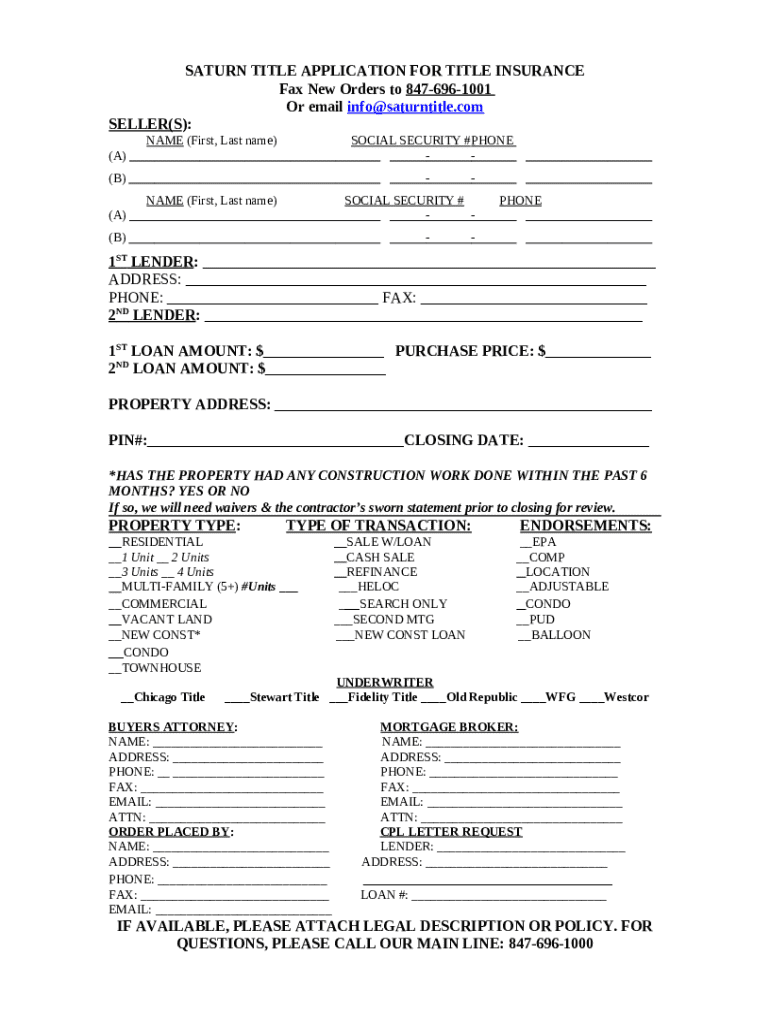
The Saturn Title Application for Title Insurance form is essential for securing title insurance, encompassing vital components for completing the application process effectively. Here are some key elements typically found in the form:
- Personal Identification Information: Includes the applicant's full name, contact details, and Social Security number. This section validates the identity of the parties involved.
- Property Information: Detailed descriptions such as the property's address, legal description, and parcel number ensure clarity and legal accuracy regarding the insured property.
- Loan Details: Information related to any loans, including lender names, loan amounts, and the type of loan, is essential for underwriting purposes.
- Transaction Information: Type of transaction, such as purchase, refinance, or transfer of title, to tailor the title insurance coverage accordingly.
- Endorsements and Coverage Options: Allows applicants to select specific endorsements that provide additional protection tailored to their needs.
- Recent Construction or Improvements: Information on any recent renovations or constructions, affecting the current value and risk assessment of the property.
- Parties to the Transaction: Names and contact information for all individuals and entities involved, including buyers, sellers, agents, and lenders.
This comprehensive data collection is fundamental to evaluating and underwriting the insurance policy.
Steps to Complete the Saturn Title Application for Title Insurance
Filling out the Saturn Title Application for Title Insurance involves a structured procedure that ensures accuracy and completeness:
- Gather Required Documents: Assemble necessary documentation like proof of identity, property deeds, and loan verification papers.
- Enter Personal and Property Information: Fill out sections related to personal details and property description with precise information.
- Specify Transaction Type: Clearly indicate whether it's a purchase, sale, refinance, or another type of transaction.
- Document Loan Information: Include lender details, loan amounts, and other relevant loan particulars.
- Select Endorsements and Coverage: Review available endorsements and choose ones that suit your specific needs and risk considerations.
- Acknowledge Recent Work: Document any new construction or modifications that might influence property value and insurance requirements.
- Review and Sign: Carefully review the completed form, ensuring all information is accurate, and sign where necessary to attest to its correctness.
Following these steps meticulously aids in a smooth application process, reducing delays and ensuring appropriate coverage.
Required Documents for Saturn Title Application for Title Insurance
Submitting the Saturn Title Application for Title Insurance requires an array of documents to substantiate the application, which includes:
- Proof of Identity: Photo identification like a driver’s license or passport for all parties involved.
- Property Deeds: Official documentation detailing ownership and legal description of the property.
- Loan Statements: Recent statements or documentation from lenders outlining loan amounts and conditions.
- Property Tax Information: Current property tax bills or assessments to verify up-to-date payments.
- Construction Permits: Any permits related to recent construction or improvements on the property.
- Purchase Agreements: Signed purchase or sale agreements if applicable, detailing agreed terms between buyer and seller.
These documents ensure the accuracy and completeness of the application, facilitating a thorough assessment by the title insurance company.
Application Process and Approval Time for Saturn Title Application for Title Insurance
Understanding the timeline for processing the Saturn Title Application for Title Insurance can assist applicants in planning and anticipating coverage start dates:
- Initial Submission: After gathering all required documents, submit the completed application.
- Underwriting Review: The insurance company performs a detailed analysis of the provided information, assessing risks and determining coverage limits.
- Title Search and Examination: Conducts a title search to ensure the property title is clear of liens or disputes.
- Approval Notification: Once underwriting is complete and conditions are met, applicants receive a notification of approval.
- Policy Issuance: The title insurance policy is issued, confirming coverage terms and conditions.
Typically, this process takes several weeks, but specific timelines can vary based on the complexity of the transaction and promptness in addressing potential issues.
Importance of the Saturn Title Application for Title Insurance
The Saturn Title Application for Title Insurance plays a crucial role in safeguarding property transactions by providing coverage against unforeseen claims or defects in the title. Here are some key reasons why it's important:
- Protection Against Title Defects: Shields property owners from unexpected legal disputes over ownership rights, ensuring financial protection.
- Risk Mitigation for Lenders: Offers reassurance to lenders by protecting their interests against potential property-related claims.
- Compliance with Legal Requirements: Many lenders necessitate title insurance as part of the mortgage agreement, making it a crucial step in the buying process.
- Peace of Mind for Buyers: Provides peace of mind to property buyers, knowing they are protected against past title issues that could affect their ownership.
This form is an integral part of the due diligence process, securing interests and investments in property transactions.
State-Specific Rules for Saturn Title Application for Title Insurance
Title insurance regulations vary by state, affecting the Saturn Title Application for Title Insurance process. Notable considerations include:
- State-Specific Endorsements: Certain states offer or require unique endorsements that need to be considered during application.
- Regulatory Compliance: Different states have specific legal frameworks that govern title insurance applications, influencing processes and requirements.
- Variations in Fee Structures: Title insurance fees may vary depending on state regulations, impacting the total cost of obtaining coverage.
- Mandatory Inspections: Some states might require additional property inspections or surveys to support the application.
Understanding these variations is crucial to navigating legal compliance and securing comprehensive coverage suitable for local real estate markets.
Software Compatibility for Saturn Title Application for Title Insurance
Handling the Saturn Title Application for Title Insurance efficiently entails understanding compatibility with different software tools and platforms:
- Document Management Systems: Compatible with platforms like DocHub for editing and managing application documents.
- Integration with Cloud Services: Supports document transfers from cloud storage like Google Drive, enhancing accessibility and collaboration.
- PDF Editors: Works seamlessly with PDF editors to fill out and edit the form digitally, ensuring high precision.
- E-signature Platforms: Integrates with electronic signature services to streamline signing processes.
Choosing the right technology tools can enhance efficiency, accuracy, and convenience when completing the application process.
Legal Use of the Saturn Title Application for Title Insurance
The Saturn Title Application for Title Insurance has legal implications and use cases that necessitate proper understanding:
- Contractual Obligations: Forms a vital part of the contractual obligations between buyers, sellers, and lenders, requiring accurate and honest completion.
- Compliance with Security Regulations: Adheres to data protection laws and security protocols to safeguard sensitive information included in the application.
- Prevention of Fraudulent Claims: Legal safeguards within the form help prevent fraudulent claims and title disputes.
Recognizing the legal context and adhering to application requirements ensures compliance and protects the interests of all parties involved in property transactions.




