




01. Edit your form online
Type text, add images, blackout confidential details, add comments, highlights and more.

Type text, add images, blackout confidential details, add comments, highlights and more.

Draw your signature, type it, upload its image, or use your mobile device as a signature pad.

Send it via email, link, or fax. You can also download it, export it or print it out.
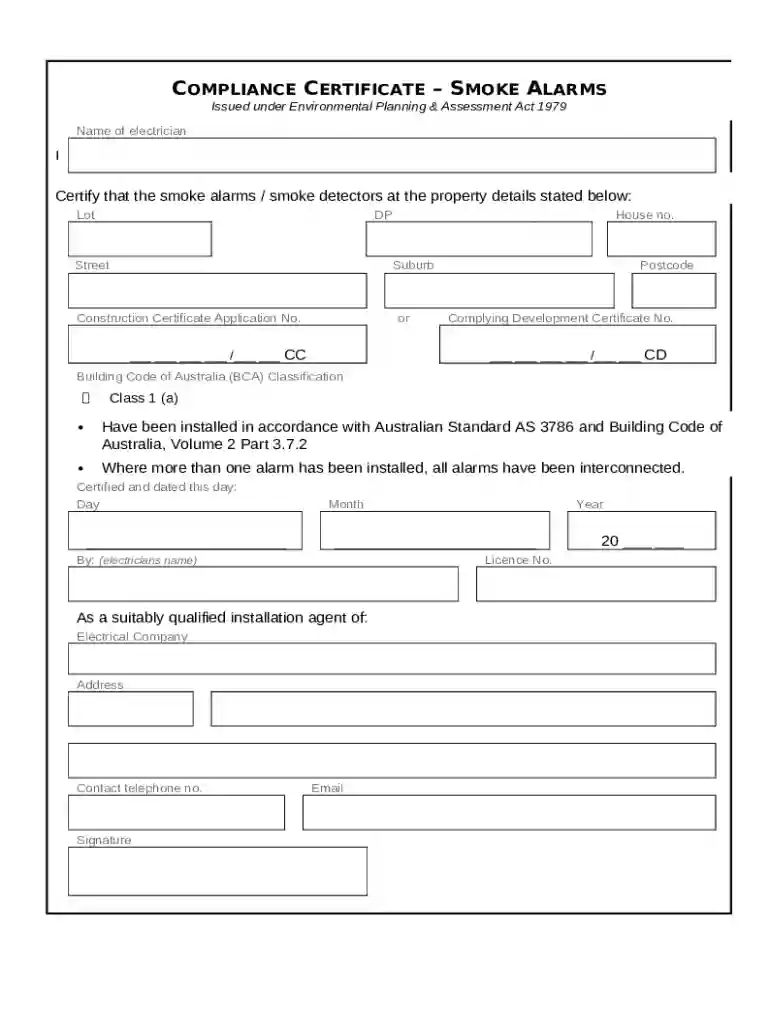
The Smoke Alarms - Compliance Certificate Template is a form issued to certify that smoke alarms within a specified property comply with the relevant safety standards and regulations. This includes adherence to the Environmental Planning & Assessment Act 1979, which mandates installation according to the Australian Standard AS 3786 and the Building Code of Australia. The certificate guarantees that multiple alarms are appropriately interconnected, ensuring the highest safety standards for occupants. This form is essential for property owners and managers, guaranteeing that their premises meet compliance requirements and providing peace of mind regarding fire safety.
Using the Compliance Certificate Template involves several key steps to ensure accuracy and completeness. Property owners or designated representatives should begin by detailing the property's specifics, including the address and the number of units, if applicable. Next, engage a licensed electrician to assess the installation of smoke alarms, ensuring they meet the required standards. The electrician will then fill in their information, including their name, license number, and contact details, confirming the proper installation and functioning of the smoke alarms. Once complete, the certificate should be stored securely and made available for inspection by relevant authorities or for insurance purposes.
Property Information: Begin by entering the property’s complete address along with any specific unit numbers, especially in multi-unit dwellings.
Electrical Inspection: Engage a licensed electrician to inspect the smoke alarms. The electrician should ensure that each alarm is installed correctly and interconnected according to standard guidelines.
Electrician's Credentials: The electrician then enters their full name, license number, and contact information. This ensures accountability and traceability in case further questions arise.
Compliance Verification: The electrician verifies that the installation meets all relevant standards, including AS 3786 and the Building Code, and confirms this on the form.
Final Review and Storage: Double-check the filled form for completeness and accuracy before signing. Store the form securely, and ensure it is accessible for regulatory inspections or insurance claims.
This template is primarily used by property owners, property managers, and licensed electricians. It is a critical document for those responsible for ensuring safety compliance within residential or commercial buildings. Regulatory bodies, such as fire safety inspectors, might also require this form for verifying that properties adhere to mandatory fire safety regulations. Additionally, insurance companies might request a copy when evaluating policies, as having compliant smoke alarms installed can influence coverage conditions and premiums.


The legal use of this certificate centers around compliance with state and local fire safety regulations. By obtaining this certificate, property owners demonstrate due diligence in meeting fire safety standards, which can be crucial during inspections or following fire-related incidents. The document serves as proof that all necessary safety measures have been taken to protect occupants. Non-compliance can result in legal repercussions, including fines, penalties, or more severe consequential liabilities should a failure result in harm or property damage.
While the Smoke Alarms - Compliance Certificate Template aligns with general standards, specific regulations can vary by state within the U.S. For instance, some states might require additional features such as carbon monoxide detectors or mandate specific alarm placement strategies. Property owners should consult local building codes and fire regulations to ensure full compliance. Engaging a local electrician with expertise in regional requirements can help mitigate risks of non-compliance and ensure that the property fulfills all state-specific safety obligations.
Failing to comply with the regulations associated with the Smoke Alarms - Compliance Certificate can have significant consequences. Penalties might include fines from fire safety departments or housing authorities. In some cases, owners might face legal actions, particularly if non-compliance contributes to personal injury or property damage during a fire incident. Non-compliance can also invalidate insurance claims related to fire damage, resulting in substantial financial loss. To avoid these penalties, property owners should ensure the certificate is correctly completed and maintained, reflecting all relevant safety standards.
We've got more versions of the Smoke Alarms - Compliance Certificate Template form. Select the right Smoke Alarms - Compliance Certificate Template version from the list and start editing it straight away!
| Versions | Form popularity | Fillable & printable |
|---|---|---|
| 2023 | 4.1 Satisfied (29 Votes) |
At DocHub, your data security is our priority. We follow HIPAA, SOC2, GDPR, and other standards, so you can work on your documents with confidence.
Provide a certificate to the Tenant stating that all smoke alarms are present, have been inspected, and are in good working order no more than once every 12
by I Mesika 2025 The design and installation of alarm notification devices adhere to the NFPA 72: National Fire Alarm and Signaling Code. Key compliance aspects include:


