




01. Edit your score sheet for art competition online
Type text, add images, blackout confidential details, add comments, highlights and more.

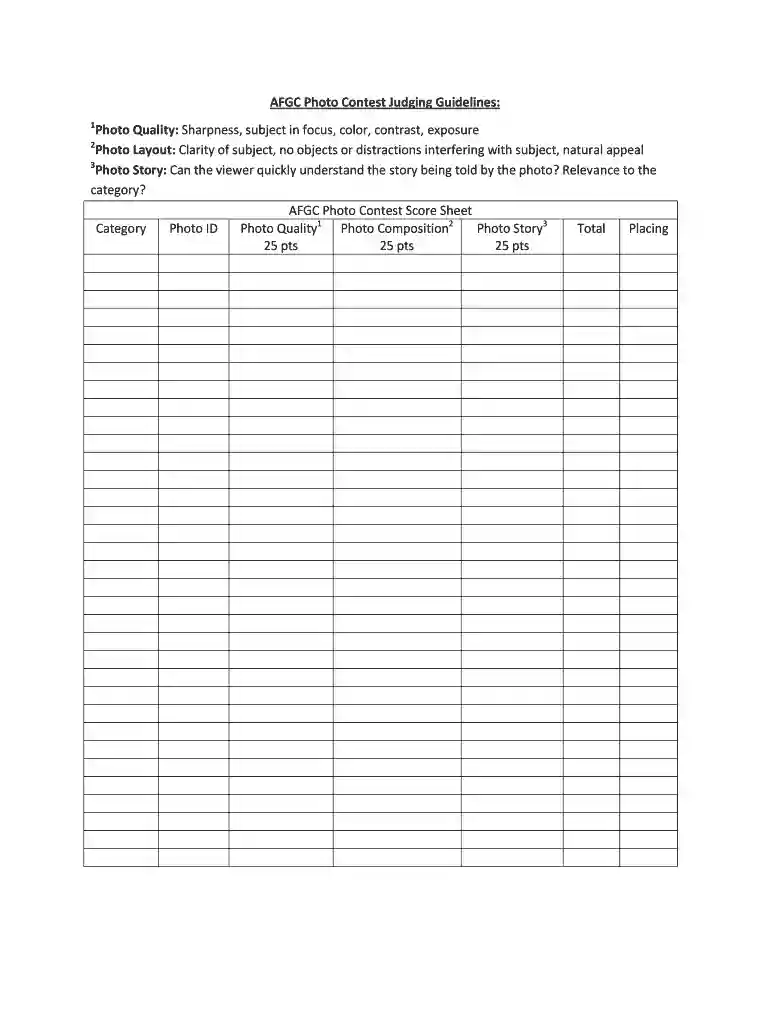
Type text, add images, blackout confidential details, add comments, highlights and more.

Draw your signature, type it, upload its image, or use your mobile device as a signature pad.

Send judgement sheet for drawing competition via email, link, or fax. You can also download it, export it or print it out.
A judgement sheet for drawing competition serves as a formal document used by judges to evaluate and score participants' artwork during competitive events. This sheet typically includes various criteria that judges consider important for determining the quality of the submissions. It acts as a structured tool that helps in systematically assessing each piece of art, ensuring consistency and fairness in the judging process.
The judgement sheet usually categorizes evaluation criteria such as creativity, technique, originality, and adherence to the competition theme. Each of these categories may be assigned specific point values, contributing to a total score for each entry. By organizing feedback in this manner, the sheet not only allows judges to provide a quantitative score but also helps articulate qualitative comments during feedback sessions with participants.
Utilizing the judgement sheet for drawing competition effectively involves a systematic approach. Here are essential steps to follow:
Familiarize with the Criteria: Judges should review all evaluation categories thoroughly before the competition to ensure a comprehensive understanding of what is being assessed.
Prepare the Judgement Sheet: Ensure that all necessary sheets are printed and available for each judging round, including space for scores and comments.
Assess Each Entry: As artworks are presented, judges should evaluate each piece based on the predetermined criteria. It's advisable to score each piece immediately after viewing to ensure impressions are fresh.
Document Scores and Comments: Judges should enter scores into the judgement sheet while also providing constructive feedback. This practice helps artists understand their strengths and areas for improvement.
Calculate Total Scores: After all entries have been evaluated, total scores should be compiled to determine the finalists and winners of the competition.
Understanding terminology related to the judgement sheet is crucial for both judges and participants. Here are some key terms commonly associated with this document:
Each term fosters a clearer understanding of how the judgement sheet functions and its role within the drawing competition.
The judgement sheet is utilized by various stakeholders in an art competition, encompassing:
Understanding the roles of these users helps clarify how the judgement sheet impacts the overall competition structure.


Acquiring a judgement sheet for drawing competition typically involves accessing templates that can be customized according to the competition's specific criteria. Here are common methods for obtaining these sheets:
Utilizing these resources allows judges to focus on the evaluation process rather than bureaucratic details.
Real-world applications of the judgement sheet in various contexts illustrate its utility.
School Art Competitions: In elementary through high school settings, teachers might use judgement sheets to assess student work during art fairs, enabling structured feedback.
Community Art Shows: Local events often provide a platform for amateur and professional artists where judgement sheets are essential for recognizing excellence among diverse submissions.
National Drawing Competitions: Larger events, such as those sponsored by art organizations, implement detailed judgement sheets with multiple judging criteria to ensure a comprehensive evaluation.
In each of these settings, the judgement sheet fosters a recognized standard where artists can aspire and strive for improvement based on informed feedback and structured evaluations.
We've got more versions of the score sheet for art competition form. Select the right score sheet for art competition version from the list and start editing it straight away!
| Versions | Form popularity | Fillable & printable |
|---|---|---|
| 2012 | 4.7 Satisfied (36 Votes) |
At DocHub, your data security is our priority. We follow HIPAA, SOC2, GDPR, and other standards, so you can work on your documents with confidence.
Jun 22, 2024 Include your name, age, and a brief description of your drawing. What did you plan to do? See score sheet for more information. ALL drawingsRead more
(1) What you need to complete the competition: project web page, pre- sentation video, score sheet, and participate in a question-and-answer session with
Apr 21, 2026 The physical size of submitted artwork must be 9 x 12 and less than thick. Image layout must be horizontal. Entries may not be matted orRead more


