







Definition & Meaning
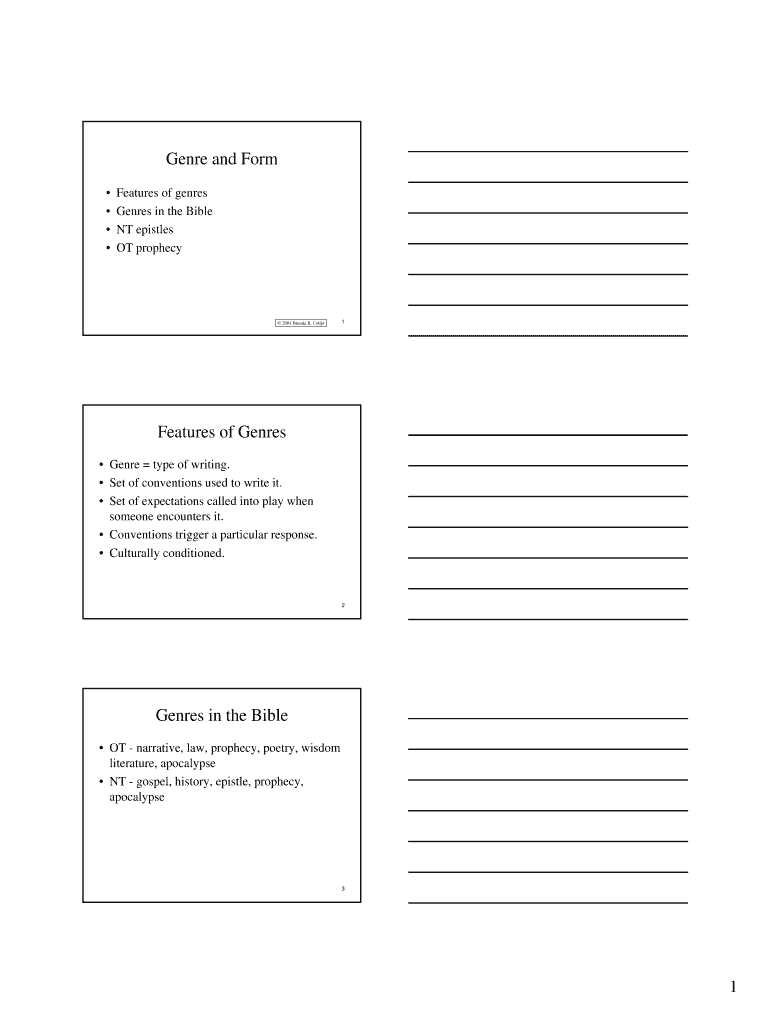
The form "Genre and Form Features of Genres Genres in the Bible - personal ashland" refers to identifying and analyzing the specific literary genres found within biblical texts. These genres include prophecy, epistles, parables, and narratives in both the Old and New Testaments. Each genre has distinguishable characteristics that govern its interpretation, providing insights into the intended message and its impact on audiences. This form focuses on textual features, audience expectations, and how these elements contribute to understanding the Bible's literary diversity.
Key Elements of the Genre and Form Features
Understanding the key elements involves recognizing various genres within the Bible and their defining features. This includes:
- Prophecy: Usually involves foretelling and forthtelling, conveying divine messages and implications.
- Epistles: Letters written for instruction or clarification of doctrine, often addressing specific communities or issues.
- Narratives: Storytelling elements that relay historical or metaphorical sequences, highlighting moral or theological lessons.
- Parables: Short, allegorical stories designed to illustrate ethical or spiritual truths.
These elements highlight the Bible's complex literary structure and guide interpreting its texts accurately.
How to Use the Genre and Form Features
To effectively utilize the form, one should:
- Identify the Genre: Recognize the literary category of the text, using context clues within the scriptural passage.
- Examine Structural Elements: Consider the text’s layout, such as prose or poetic format, and organizational patterns.
- Analyze Audience Expectations: Understand the historical and cultural context in which the genre was expected to be received.
- Interpret Symbolism and Allegory: Recognize metaphorical language and its intended implications for both contemporary and ancient audiences.
This approach fosters a deeper appreciation of biblical texts and enhances interpretive clarity.
Steps to Complete the Genre and Form Features
- Gather Relevant Biblical Texts: Collect sections of biblical passages relevant to the genre of focus.
- Study Background Information: Research historical context and the intended audience's expectations.
- Identify Genre-Specific Features: Look for conventions typical of the genre within the text.
- Analyze Textual Themes: Cross-reference thematic elements with general biblical teachings.
- Consult Scholarly Resources: Use commentaries and academic papers for more nuanced insights.
- Record Findings: Document your analysis and insights for reference or academic purposes.
This systematic methodology aids in comprehensive genre analysis.
Who Typically Uses This Form
Students, theologians, and religious educators often engage with this form. It serves as a tool for:
- Academic Study: Providing a framework for literary analysis in theology courses.
- Religious Instruction: Assisting clergy in sermon preparation and teaching.
- Personal Study: Enhancing individual understanding of biblical teachings within historical and cultural contexts.
This broad usage underscores its versatility and educational potential.
Legal Use of the Genre and Form Features
While analyzing biblical genres typically lacks direct legal implications, the methodology can influence ethical understandings, inform moral teaching, and impact societal norms rooted in biblical interpretation. Adherents might apply insights gained in legal contexts, such as debates on moral issues, societal roles, or ethical mandates derived from scriptural texts.
Examples of Using the Genre and Form Features
- Old Testament Prophecies: Understanding the dual nature of prophecy as both prediction and divine reproof.
- New Testament Epistles: Analyzing how letters like Paul’s address doctrinal disputes and community guidelines.
- Parabolic Teachings of Jesus: Exploring the hidden meanings within parables through their allegorical elements.
These examples reflect the diverse application of genre analysis in understanding biblical literature.
State-Specific Rules for Biblical Interpretation
While biblical genre analysis is universal, its application can vary by cultural or denominational context, sometimes reflecting regional religious practices. For instance:
- Southern U.S. States: Might emphasize prophetic interpretations aligned with evangelical teachings.
- Northeastern States: Could focus more on historical-critical methods prevalent in academic settings.
Understanding regional influences ensures that genre analysis aligns with specific cultural contexts and interpretations.
Business Types That Benefit Most
Religious institutions, academic publishing companies, and educational organizations derive significant value from genre analysis. These groups often require detailed literary examinations for curriculum development, theological publications, and instructional content aimed at students or congregants. The multi-faceted nature of biblical genre and form studies directly supports these sectors.




