







Definition and Purpose of the Medical Information Form - Armstrong
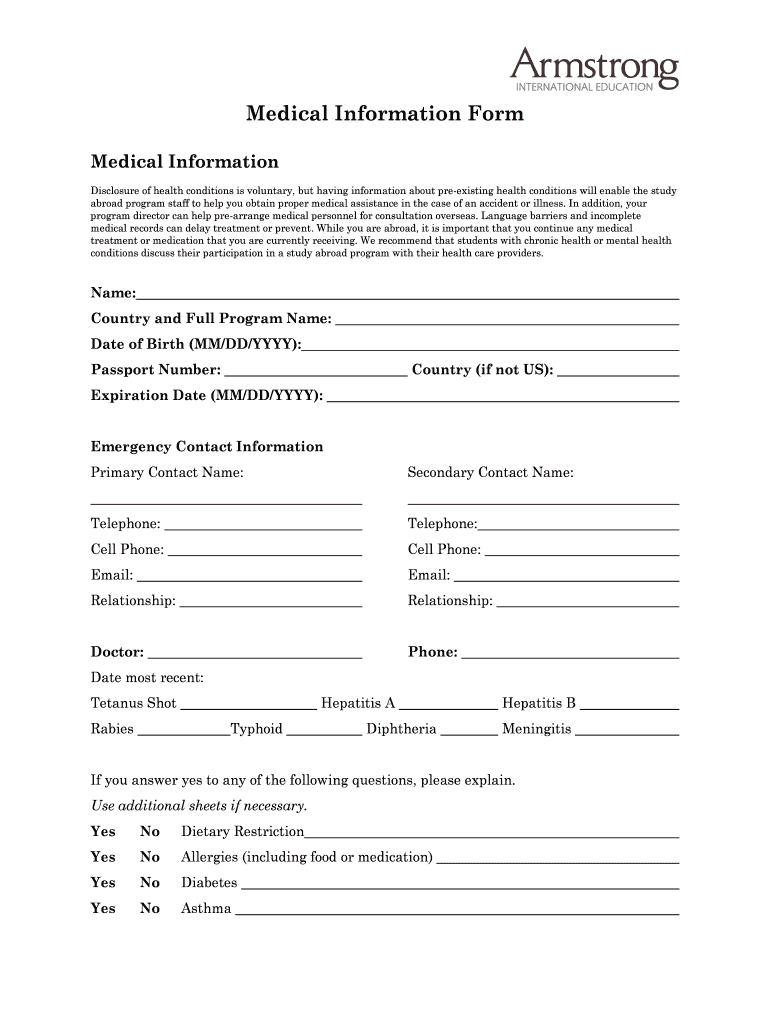
The Medical Information Form - Armstrong is specifically tailored for students participating in study abroad programs. This form serves as a comprehensive document for disclosing health-related conditions, ensuring that participants receive adequate medical assistance during their time overseas. It includes vital sections such as personal information, emergency contacts, vaccination history, dietary restrictions, allergies, chronic conditions, and medications. By facilitating an understanding of the student's health needs, this form becomes essential for educational institutions to provide appropriate support.
Core Elements of the Form
- Personal Information: Includes fields for the student's full name, date of birth, contact details, and passport number.
- Emergency Contacts: Designated spaces for including contact information for immediate family members or guardians.
- Vaccination History: A section dedicated to listing vaccinations and dates administered, crucial for ensuring compliance with study abroad requirements.
- Dietary and Allergy Constraints: Sections to disclose any dietary restrictions or allergies, helping the host institution to cater to special needs.
- Chronic Conditions and Medications: Detailed fields for chronic illnesses and medications being taken, allowing for clear communication of critical health information.
How to Use the Medical Information Form
Filling out the Medical Information Form - Armstrong is a straightforward yet crucial task for students. Here’s a step-by-step guide on how to effectively use and complete this form:
- Gather Necessary Information: Before beginning, collect all relevant medical records, vaccination confirmations, and emergency contact information. Ensure that you have recent details, as outdated information might lead to inaccuracies.
- Complete the Personal Information Section: Input your full name, date of birth, and nationality. These details must match official documents, such as your passport.
- Document Emergency Contacts: List at least two emergency contacts with reliable communication access. This includes phone numbers and, if applicable, email addresses.
- Detail Vaccination Records: Accurately record all vaccinations, including dates and any subsequent boosters. Some countries require proof of specific vaccinations for entry.
- Specify Dietary Restrictions and Allergies: Clearly indicate any dietary or allergy concerns. This information is crucial for meal planning during the program.
- Outline Chronic Conditions and Medications: Provide full details on any ongoing medical treatments or prescriptions. Understanding these needs ensures a proper response in case of emergencies.
- Consult a Healthcare Provider: Before submission, review the form with a healthcare professional for accuracy and completeness, ensuring nothing is omitted or misstated.
Obtaining the Medical Information Form
Acquiring the Medical Information Form - Armstrong involves a straightforward process through which educational institutions ensure all participating students are adequately prepared for their study abroad experiences.
Access Points for the Form
- Study Abroad Office: The most common source is the study abroad department within your educational institution. They often provide printed forms or digital copies via email.
- Institution’s Website: Many universities host essential forms, including the Medical Information Form, on their official website. It's advisable to check the resources or student services sections for downloadable PDFs.
- Email Distribution: Some institutions opt to send forms directly via email alongside other pre-departure resources. Be sure to check your student email account regularly for any updates.
- Orientation Sessions: During pre-departure meetings, forms are frequently distributed to ensure every participant has access to necessary documentation.
Steps to Complete the Medical Information Form
Completing the Medical Information Form - Armstrong requires careful attention to detail, especially regarding health-related entries. Below are guided steps to assist you through the process:
- Initial Review: Begin by reading all instructions thoroughly. Misunderstanding the requirements may lead to omitting critical information or completing sections incorrectly.
- Section-by-Section Completion: Address each section in the order presented. Sequential completion helps avoid missing any components.
- Verification: After filling in all sections, review your entries for accuracy. Double-check spellings and dates to ensure correctness.
- Healthcare Provider Consultation: For sections involving medical history or current treatment, consult a healthcare professional to confirm that all information is both current and comprehensive.
- Form Submission: Depending on your institution’s protocol, submit the completed form either digitally via a secure portal or physically during a designated drop-off period.
Importance of the Medical Information Form
The Medical Information Form - Armstrong is not just a routine document; it plays an essential role in safeguarding student health while abroad. Understanding its significance can influence how comprehensively it is completed and submitted.
- Health Preparedness: Ensures that institutions are prepared for medical emergencies, having full insight into the student’s health history.
- Legal Compliance: Many countries have stringent entry requirements regarding vaccinations and health disclosures. This form helps ensure compliance, avoiding complications.
- Facilitation of Accommodations: By detailing dietary restrictions and allergies, the form facilitates accommodations, allowing students to focus on their studies without concern for unsuitable meals or environments.
- Emergency Responsiveness: The form equips coordinators and healthcare providers with critical information, enabling swift and appropriate actions in emergency scenarios.
Who Typically Uses the Medical Information Form
The primary users of the Medical Information Form - Armstrong are students preparing for overseas educational programs. This group typically includes:
- University Students: Attending international campuses as part of exchange programs or year abroad schemes.
- Study Program Coordinators: Responsible for overseeing the logistics and welfare of participants, ensuring forms are completed and accessible when needed.
- Healthcare Providers: Professionals involved in pre-departure check-ups and consultations often use these forms to guide discussions regarding travel health precautions.
- Emergency Personnel Abroad: In situations requiring local medical intervention, this form acts as a quick reference guide for understanding the student’s medical background.


Legal and Compliance Considerations
Completing the Medical Information Form - Armstrong requires adherence to specific legal and compliance parameters, primarily to protect both the students and educational institutions involved.
Key Legal Aspects
- Data Privacy: Forms must comply with data protection laws, such as HIPAA, ensuring that sensitive medical information is handled confidentially.
- Consent for Disclosure: Students must grant explicit consent for information sharing, particularly when data might be needed by third-party healthcare providers abroad.
- Accuracy Requirement: Providing accurate and truthful information is mandatory. Inaccuracies could lead to medical treatment challenges and potential legal consequences for misrepresentation.
Understanding these elements underscores the importance of the Medical Information Form in fostering secure and compliant study abroad experiences. Each aspect is designed to align with both educational objectives and legal requirements, ensuring students’ health and safety are prioritized.




