




01. Edit your form online
Type text, add images, blackout confidential details, add comments, highlights and more.

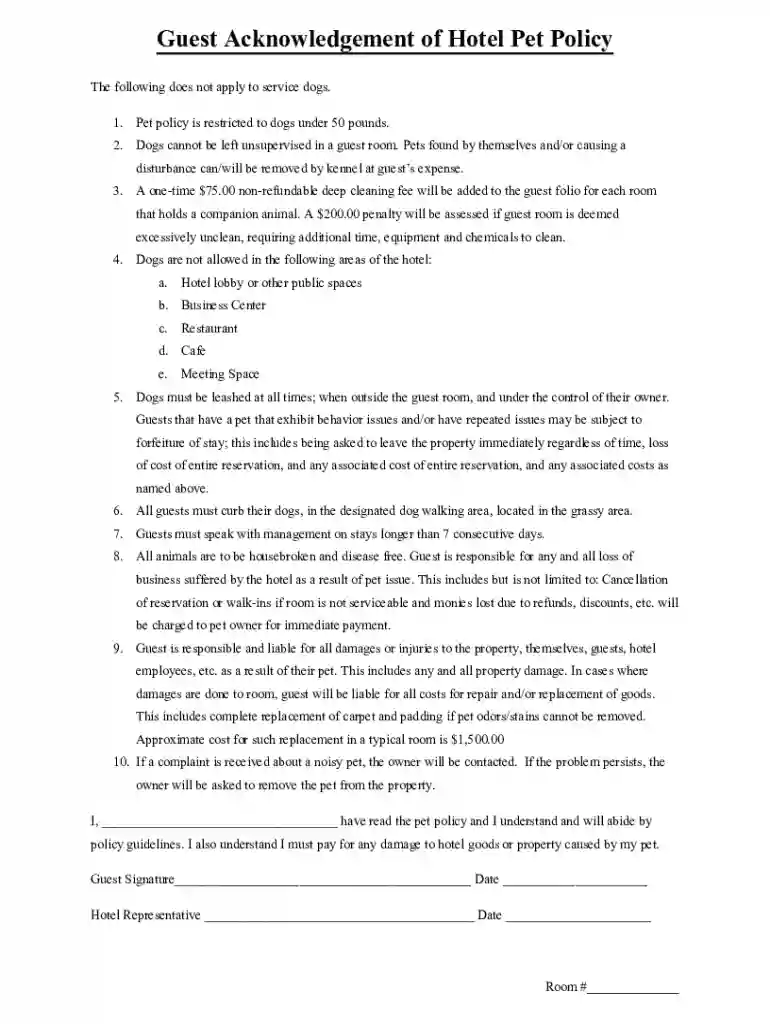
Type text, add images, blackout confidential details, add comments, highlights and more.

Draw your signature, type it, upload its image, or use your mobile device as a signature pad.

Send it via email, link, or fax. You can also download it, export it or print it out.
The term "Military Working Dog, Service Animal, and Personal Pet" encompasses three distinct categories of dogs that serve various roles in human society. Each category is defined by specific duties, legal implications, and levels of training. Military working dogs are specially trained canines employed by armed forces and are often utilized for tasks such as detection, patrol, and search and rescue. Service animals, by contrast, are defined under the Americans with Disabilities Act (ADA) as dogs specifically trained to assist individuals with disabilities in performing essential tasks. Personal pets, meanwhile, are companions kept primarily for pleasure and do not undergo specific training for work or tasks but offer emotional companionship to their owners. Understanding these definitions helps clarify the roles and legal rights associated with each type of animal.
Military working dogs, service animals, and personal pets each serve distinct roles that benefit from proper usage according to their training and legal guidelines. Military working dogs are generally utilized in military operations, including search and rescue missions, explosive detection, and security patrols. They are trained to handle high-stress environments and perform specific tasks upon command. Service animals are used by individuals with disabilities to support a variety of daily functions, such as assisting with mobility, alerting to medical conditions, or providing reminders to take medication. It's crucial that service animals are used in contexts where their assistance directly impacts the well-being of the owner. Personal pets, on the other hand, serve primarily as companions, providing emotional support and leisure interaction without specific working responsibilities. Ensuring appropriate use helps maintain the integrity and effectiveness of each role.
Completing the formal processes for owning and handling a military working dog, service animal, or personal pet involves several key steps. For military working dogs, this generally entails adherence to military protocols and training procedures established by the armed forces. Service animals require an official diagnosis from a healthcare provider and collaboration with a licensed service animal training organization. An application process often follows, which includes verification of the need for the animal and training outcomes. In contrast, acquiring a personal pet often involves steps such as selecting a pet from a breeder or shelter, ensuring vaccinations and health checks, and complying with local pet registration laws. Each of these steps is vital to ensure the animal is appropriately integrated into its respective role.
Different groups of people and organizations typically utilize military working dogs, service animals, and personal pets, reflecting the unique roles these animals play. Military personnel and law enforcement agencies commonly employ military working dogs due to their advanced capabilities in security and operational tasks. Service animals are predominantly used by individuals with disabilities, ranging from veterans with post-traumatic stress disorder (PTSD) to those with physical impairments requiring assistance for mobility or sensory impairments. Personal pets are popular among a wide demographic, serving as household companions for families, singles, seniors, and children, providing emotional support and companionship. Each user group requires specific support and compliance with legal frameworks to ensure the welfare and effectiveness of the dogs in their designated roles.


Adhering to legal guidelines is crucial for the use of military working dogs, service animals, and personal pets. Military working dogs are subject to military regulations and international laws governing the conduct of armed forces. Service animals, particularly under the ADA, have defined rights concerning access to public spaces, housing, and transportation, which must be honored to ensure non-discrimination against individuals with disabilities. Personal pets also have legal considerations, including licensing, leash laws, breed restrictions, and liability for damages they may cause. Understanding and complying with these legal frameworks is essential to uphold the rights and obligations of owners and handlers, ensuring lawful and appropriate use of these animals.
Rules governing military working dogs, service animals, and personal pets can vary significantly by state, impacting ownership and usage. For military working dogs, despite federal oversight, different states might have their own regulations concerning deployment and retirement of these animals. Service animal regulations, while unified under federal law, may have state-specific provisions concerning certification and registration processes. Personal pets often face varied state regulations, including specific health requirements, leash laws, and breed bans. Pet owners and handlers of service animals and military working dogs must be aware of these state-specific rules to ensure compliance and proper care of their animals.
Many real-world scenarios illustrate the diverse roles of military working dogs, service animals, and personal pets. A military working dog might assist in detecting explosives on military bases, ensuring the safety of soldiers and civilians. Service animals could help a veteran with PTSD by signaling anxiety attacks and providing a calming presence through deep pressure therapy. Personal pets, such as a family dog, provide companionship and emotional support, improving the quality of life for their owners during challenging times. These examples underscore the importance of each type of dog and highlight the practical benefits they bring to varied situations, illustrating the significant impact well-cared-for animals have on their human counterparts.
The processes to acquire a military working dog, service animal, or personal pet vary widely, with differing timelines and steps required for approval. Military working dogs typically require a rigorous selection and training process administered by military or law enforcement agencies, which can take several months. For a service animal, applicants must first receive a recommendation from a medical professional, followed by coordination with service animal organizations. This process can take six months to two years, depending on the type of training needed. In contrast, acquiring a personal pet is generally a quicker process, often involving visiting a breeder or shelter, selecting a pet, and completing necessary adoption or purchase paperwork. Recognizing these timelines helps manage expectations and plan appropriately for integrating a dog into one's life or organization.
We've got more versions of the Military Working Dog, Service Animal, and Personal Pet form. Select the right Military Working Dog, Service Animal, and Personal Pet version from the list and start editing it straight away!
At DocHub, your data security is our priority. We follow HIPAA, SOC2, GDPR, and other standards, so you can work on your documents with confidence.


