Definition & Meaning
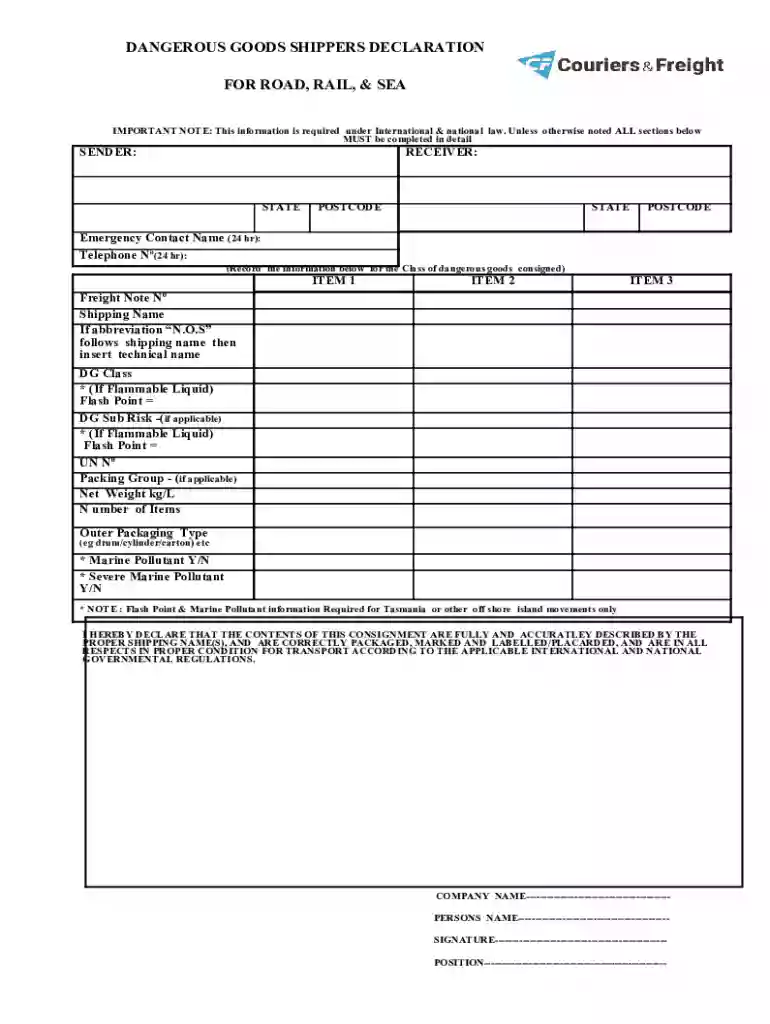
The Dangerous Goods Shippers Declaration for Road, Rail, and Sea is a critical document used to ensure the safe and compliant transportation of hazardous materials. This form, also known as the DGSD, serves as a formal declaration that outlines essential information about the goods being shipped, such as the shipping name, UN number, packing group, and emergency contact information. The declaration aids in aligning with both international and national regulations that govern the transport of dangerous goods, ensuring all involved parties are informed about the nature and potential hazards of the cargo.
Key Elements of the Declaration
The DGSD includes multiple key elements critical for a comprehensive understanding of the shipment details:
- Shipping Name and UN Number: A unique identifier for hazardous materials to prevent misinterpretation.
- Packing Group: Indicates the relative level of danger, with Group I being the most hazardous and Group III the least.
- Quantity and Type of Packaging: Accurate details ensure the shipment adheres to regulatory requirements.
- Emergency Contact Information: Essential for handling any incidents during transit. These elements help transporters and authorities manage the safe handling and potential risks associated with dangerous goods.
Steps to Complete the Declaration
- Identify the Hazardous Material: Begin by correctly identifying the materials according to the UN’s classification system.
- Gather Necessary Information: Collect data such as the proper shipping name, UN number, packing group, and emergency contact details.
- Complete the Form: Fill out each section of the form accurately, ensuring all information is consistent with regulatory requirements.
- Verification: Double-check for accuracy and compliance with both national and international regulations.
- Submission: Ensure the form accompanies the shipment and is accessible for any required inspections. Each step requires careful attention to detail to ensure the safe transportation of dangerous goods.
Legal Use of the Declaration
The DGSD is legally required for the transportation of hazardous materials and is enforced by international and national regulations such as the International Maritime Dangerous Goods (IMDG) Code and the US Department of Transportation (DOT) guidelines. Non-compliance with these standards can result in severe penalties, including fines and shipping delays. By adhering to these legal requirements, shippers not only safeguard against legal ramifications but also contribute to the safety of transport personnel and the environment.
Important Terms Related to the Declaration
Understanding specific terminology is crucial when dealing with the DGSD:
- Hazard Classification: Categories under which hazardous goods are classified based on nature and risk.
- Compatibility: Rules governing the transport of different hazardous materials together.
- Segregation: Requirements for separating incompatible substances during transport. These terms provide a foundational understanding necessary for accurate completion and compliance of the declaration.
Examples of Using the Declaration
Examples highlight practical applications of the DGSD:
- Transporting Chemicals: A chemical manufacturer uses the DGSD to ship flammable liquids by sea, ensuring compliance with the IMDG Code.
- Rail Transportation: A logistics company uses the declaration to move corrosive substances across state lines, adhering to DOT regulations. Real-world use cases illustrate the versatility and necessity of the DGSD in different transport scenarios.
State-Specific Rules for the Declaration
While the DGSD is subject to international rules, different U.S. states may impose additional requirements:
- California: Stringent regulations might require additional labeling as part of its environmental policies.
- Texas: Offers specific guidelines for oil and gas transportation, necessitating additional information on the declaration. Awareness of these state-specific rules ensures comprehensive compliance and avoids potential legal issues during transport.
Penalties for Non-Compliance
Failure to accurately complete and submit the DGSD can result in significant penalties:
- Fines: Monetary penalties imposed by regulatory bodies for non-compliance.
- Delays: Shipments may be delayed until proper documentation is provided, resulting in increased costs.
- Legal Action: Severe or repeated non-compliance could lead to legal proceedings against the responsible parties. Recognizing these penalties emphasizes the importance of ensuring the complete and correct submission of the declaration.