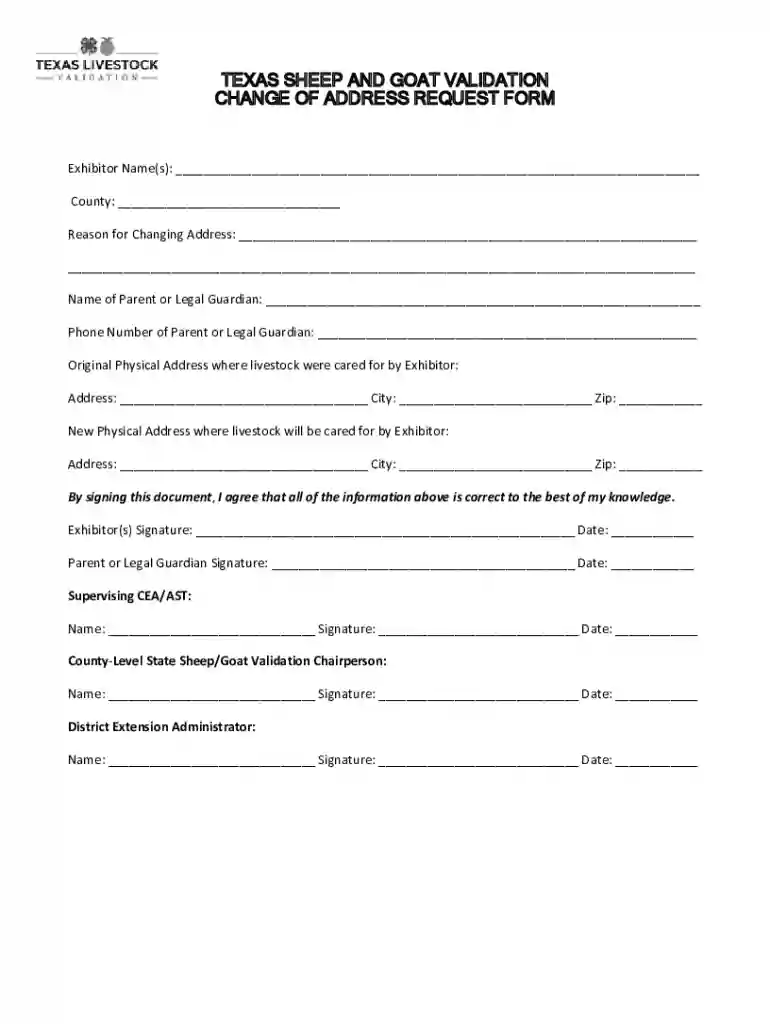
Definition & Meaning
The "Change-Of-County-Request-Form" is a document used primarily for updating official records to reflect a new county of residence or operation. This form is typically required for individuals or entities that need to officially change their county designation due to relocation or other qualifying reasons. It's essential for maintaining compliance with local regulations and ensuring accurate record-keeping with the corresponding authorities.
Key Features
- Purpose: To provide formal notice of a change in county residence or operational base.
- Usage: Primarily for individuals, businesses, or groups needing to update their legal or operational address.
- Relevance: Ensures all records are kept current, which can affect tax obligations, voting districts, or school zoning.
How to Use the CHANGE-OF-COUNTY-REQUEST-FORM
Using the Change-Of-County-Request-Form involves several straightforward steps, ensuring that the change in county is correctly documented and processed.
Usage Steps
- Acquire the Form: Obtain the Change-Of-County-Request-Form from the relevant local government or authorized online platform.
- Complete Required Sections: Fill out all necessary fields with accurate information, including current and new county details.
- Submit Documentation: Provide any supporting documents required, such as proof of residency, to validate the change.
- Review for Accuracy: Double-check all details to ensure they are correct before submission.
- Submit the Form: Forward the completed form to the designated office via preferred submission methods—online, in-person, or mail.
Practical Examples
- Relocation: If moving to a new house that is in a different county, use this form to update your address with government authorities.
- Business Expansion: A company opening a new branch in another county may need to file this form to update its official records.
Steps to Complete the CHANGE-OF-COUNTY-REQUEST-FORM
Completing the Change-Of-County-Request-Form involves a precise process to ensure all information is provided correctly.
Detailed Steps
- Gather Information: Collect relevant personal or business details such as social security numbers or business identification.
- Complete Form Fields: Input all required information, ensuring the new county information is particularly highlighted.
- Attach Supporting Documents: Include any necessary documents that substantiate your claim for a county change, like utility bills.
- Sign the Form: Ensure all parties that need to authenticate the form have signed it.
- Submit: Follow the instructions for submission, which may involve sending it to a particular county or district office.
Considerations
- Signatures: Ensure all required signatures are present; missing signatures can delay processing.
- Documentation: Always include valid proof for the new address to avoid rejections.
User Scenarios
- Individual Scenario: A family buying a new property that is in a neighboring county.
- Business Scenario: A retail chain opening outlets in multiple locations across different counties.
State-Specific Rules for the CHANGE-OF-COUNTY-REQUEST-FORM
State-specific regulations govern the filing and approval of the Change-Of-County-Request-Form, leading to variations in procedures.
State Regulations
- Texas: May require additional documentation for livestock exhibitors.
- California: Might have specific requirements for businesses related to tax obligations.
Key Differences
- Documentation: Varies significantly, as some states demand more extensive proof of residency.
- Approval Processes: Approval times can be influenced by state-specific bureaucracies.
Important Terms Related to CHANGE-OF-COUNTY-REQUEST-FORM
Understanding related terminology helps in accurately completing and submitting the Change-Of-County-Request-Form.
Key Terms
- County Jurisdiction: The geographical area that a particular county's government covers.
- Proof of Residency: Documents like utility bills or lease agreements that verify your address.
- Validation: The process of confirming the authenticity of information provided.
Term Applications
- County Jurisdiction: Knowing your specific county jurisdiction is crucial when addressing property-related matters.
- Validation: This includes the verification of documents submitted alongside the form.
Filing Deadlines / Important Dates
Timing is critical when dealing with the Change-Of-County-Request-Form to ensure compliance and avoid penalties.
Deadline Considerations
- Submission Timing: Each state may stipulate deadlines for submission after a move.
- Document Expiration: Ensure that all supporting documents are current and valid at the time of submission.
Case Examples
- Relocation in January: Filing deadlines may vary; some may require notification within 30 days of moving.
- Annual Reviews: Some states might have annual deadlines for verifying county changes.
Penalties for Non-Compliance
Failing to file a Change-Of-County-Request-Form can result in significant consequences.
Possible Penalties
- Fines: Financial penalties may apply if updates are not timely.
- Administrative Delays: Processing can be delayed, affecting tax and legal obligations.
- Legal Issues: Potential legal repercussions, particularly if tied to sensitive issues like voter registration.
Avoiding Penalties
- Timely Filing: Submit the form and necessary documentation within stipulated timelines.
- Complete Information: Ensure all sections are filled accurately to prevent administrative hold-ups.