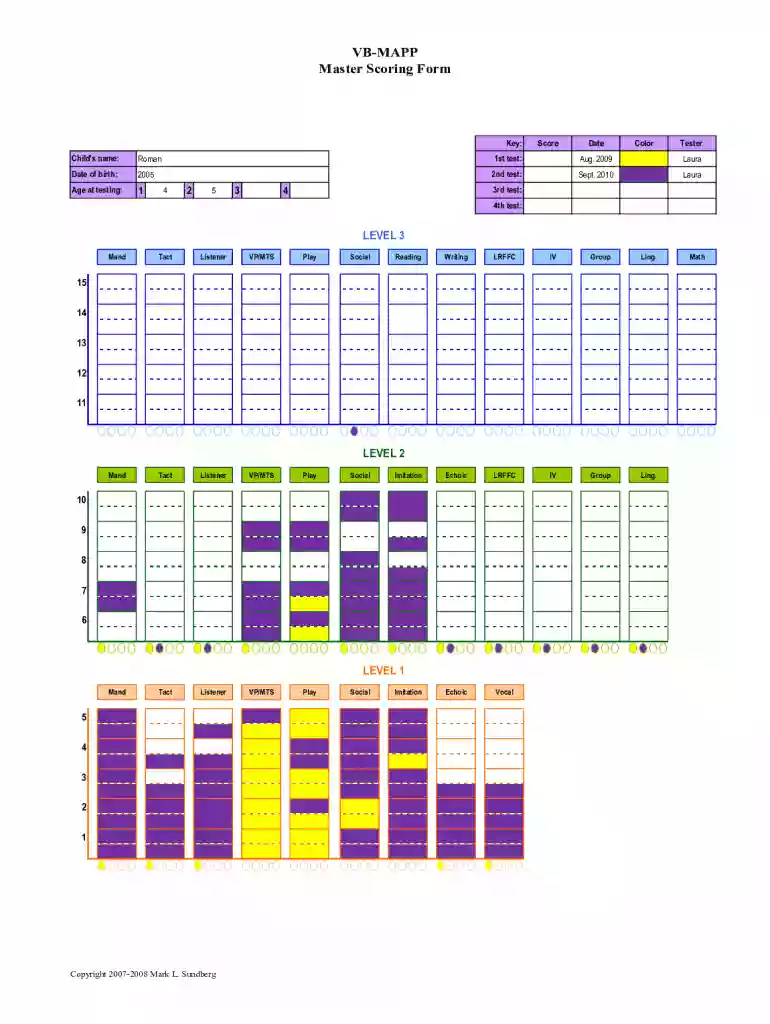
Definition and Purpose of the VB-MAPP Master Scoring Form
The VB-MAPP Master Scoring Form is an assessment tool designed for evaluating the language and social skills of children with autism and other developmental disabilities. The form is structured to capture a comprehensive overview of a child's skills across various domains, including communication (Mand and Tact), listener skills, and social interactions. Each section of the form corresponds to specific developmental milestones, providing a clear picture of the child's current capabilities and areas that may require targeted intervention.
Structure of the Form
- Skill Levels: The scoring form is divided into three skill levels that represent different developmental milestones.
- Performance Categories: Categories are identified as Mand, Tact, Listener, and Social skills, ensuring a focused approach to the assessment.
- Test Scores and Dates: Multiple scores from various tests conducted by trained professionals can be documented, allowing for a comprehensive understanding of the child's progress over time.
Using the VB-MAPP Master Scoring Form not only aids in identifying strengths and weaknesses but also assists in customizing intervention strategies that cater to the individual needs of each child.
How to Use the VB-MAPP Master Scoring Form Effectively
Successfully utilizing the VB-MAPP Master Scoring Form requires a systematic approach. The process involves several critical steps.
-
Preparing for Assessment:
- Gather all necessary materials, including the scoring form, testing resources, and previous assessment data for reference.
- Set a conducive environment free from distractions to ensure maximum focus during the assessment.
-
Conducting Assessments:
- Administer tests according to established guidelines and ensure consistency in the approach. Each skill area should be assessed through engaging interactions to capture authentic responses.
- Record scores as the assessments are conducted, marking clear observations and notes that provide context for the scores each child receives.
-
Scoring and Analyzing Results:
- After completing the assessments, compile the scores in the VB-MAPP Master Scoring Form, noting any emerging patterns in skill acquisition or deficits.
- Analyze results by comparing individual scores across different areas and levels, aiding in overall evaluation and future planning.
-
Review and Planning:
- Discuss results with professionals before creating individualized education plans (IEPs) to tailor interventions based on data collected.
- Reassess and revise the scoring form periodically to reflect changes in the child's development and update strategies accordingly.
Steps to Complete the VB-MAPP Master Scoring Form
Completing the VB-MAPP Master Scoring Form involves methodical steps that ensure accuracy and comprehensiveness in documenting a child’s skills.
-
Begin with Identifying the Child:
- Fill in identifying information at the top of the form, including the child’s name, date of assessment, and tester credentials.
-
Record Skill Level Scores:
- For each skill category, carefully score the child's performance based on observed behaviors during the assessment sessions.
- Use the specific rating criteria provided within the form to ensure standardized scoring practices.
-
Document Dates of Assessment:
- For every skill assessed, include the date when that particular assessment was performed. This helps in tracking the child's progress over time and correlating improvements with specific interventions.
-
Aggregate Scores for Reporting:
- Calculate total scores for various categories after individual assessments, summarizing performance levels to provide an overall evaluation that can be communicated effectively with team members and parents.
-
Provide Comments and Observations:
- Utilize the comment sections in the form to document observations that may influence understanding the scores. This contextual information is vital for future assessments and interventions.
Important Terms Related to the VB-MAPP Master Scoring Form
Understanding key terminology related to the VB-MAPP Master Scoring Form enhances clarity in both assessment and discussion of results.
- Mand: Requests for items or actions that an individual desires. This skill reflects a basic form of communication.
- Tact: The ability to label or identify items in the environment, demonstrating understanding and communication about objects.
- Listener Skills: These are essential receptive skills, indicating a child’s ability to understand and respond to verbal instructions or questions.
- Social Skills: Capabilities that include engaging appropriately with peers, sharing, and cooperating, which are crucial for social interactions.
Being familiar with these terms improves communication among professionals involved in the assessment and intervention processes, facilitating better outcomes for the child.
Who Typically Uses the VB-MAPP Master Scoring Form
The VB-MAPP Master Scoring Form is utilized by a range of professionals dedicated to supporting children with autism and related developmental disabilities.
- Behavior Analysts: They utilize the form for guiding treatment plans based on precise data collection and analysis, addressing specific behavioral needs.
- Speech-Language Pathologists: These professionals employ the scoring form to assess and track verbal communication progress, informing therapy methods.
- Educators and Special Education Teachers: They often use the form to tailor educational frameworks and ensure the curriculum meets the diverse learning needs of students.
- Parents and Caregivers: Understanding the scoring form enables them to engage meaningfully in the assessment process and contribute to planning interventions.
By involving these stakeholders, the VB-MAPP Master Scoring Form fosters a collaborative approach to assessment and intervention, enhancing overall support for the child.

State-Specific Rules for the VB-MAPP Master Scoring Form
State-specific regulations can influence how the VB-MAPP Master Scoring Form is applied within educational and therapeutic settings.
- Compliance with State Education Guidelines: Some states may require adherence to specific educational standards or mandates concerning evaluations for children with special needs.
- Funding and Reporting Requirements: Programs funded by state initiatives might necessitate particular forms to be completed alongside the VB-MAPP, detailing findings for accountability purposes.
- Variations in Intervention Strategies: Certain states may have established standardized curriculum frameworks that dictate intervention strategies based on VB-MAPP outcomes, ensuring that local needs are met through targeted support strategies.
It is crucial for professionals using the VB-MAPP Master Scoring Form to be aware of these regulations to ensure compliance and optimize the effectiveness of their interventions.