







Definition & Meaning
The "Location and Directions - Judy and Arthur Zankel Hall, New York" refers to a guide or informational resource detailing how to find and navigate to the Judy and Arthur Zankel Hall, a notable venue located within Carnegie Hall in New York City. This document typically provides vital details about its geographical location, proximity to key landmarks, and insights into the best transit routes and cultural relevance, aiding both locals and tourists in reaching the venue seamlessly.
How to Use the Location and Directions Guide
To use this guide effectively, identify your starting point and preferred mode of transportation. If you're traveling by car, refer to the sections describing nearby parking options and the best routes given traffic conditions. Public transit users will find detailed subway and bus routes, stops, and transfer points that lead directly to or near Zankel Hall. Consideration of these details ensures punctual arrivals and reduces the ambiguity typically associated with urban navigation.
Key Elements of the Location and Directions Guide
The guide's core components include a comprehensive address with postal information, a detailed map indicating major entry points, and tips for traversing complex urban environments. Users will find essential information on:
- Major highways and streets leading to Zankel Hall
- Subway lines and stops nearest to the venue
- Bus routes and their schedules
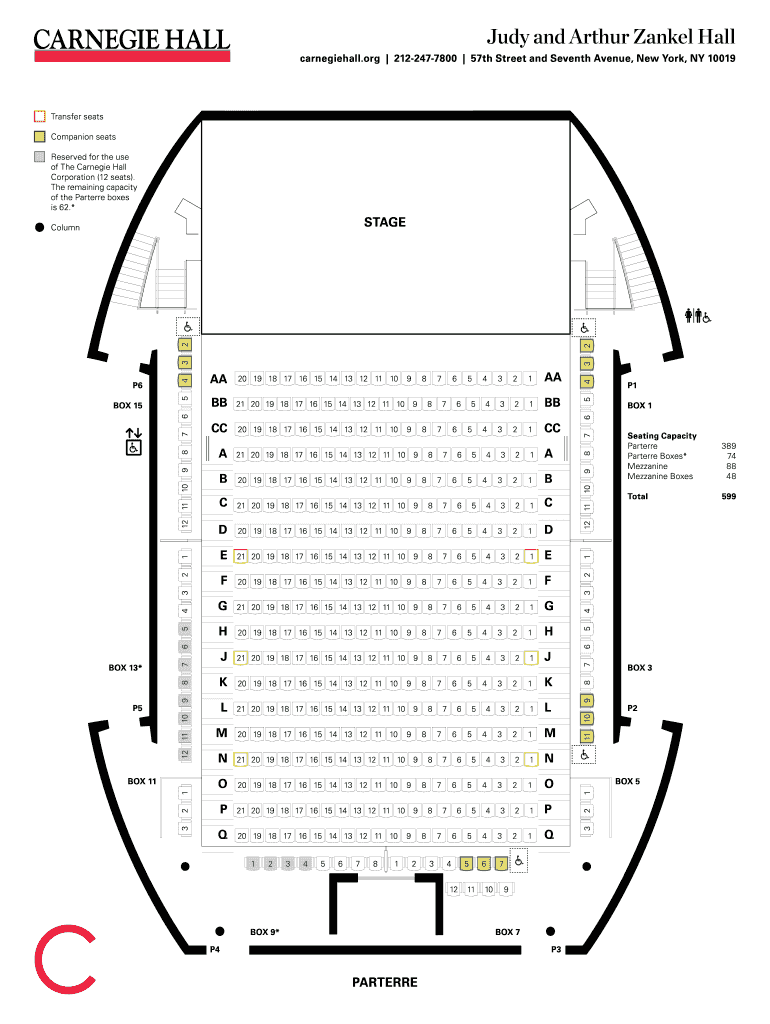
- Local landmarks that serve as navigational aids In addition to this, practical advice about accessibility features and alternative entrances for individuals with disabilities might be included to enhance the document's usability.
Steps to Complete Your Journey to Zankel Hall
- Plan Your Route: Start by identifying the closest subway lines or bus routes, or chart a driving route using GPS services.
- Check Transportation Schedules: Verify subway or bus schedules for any service changes or delays to avoid unexpected disruptions.
- Prepare for Arrival: Locate nearby parking garages or public transit stops through the guide's maps and instructions.
- Navigate On-Site: Utilize any provided maps or landmarks to identify the main entrance or accessible pathways to Zankel Hall.
Who Typically Uses the Guide
Multiple groups benefit from this guide, such as first-time visitors to New York, attendees of events at Zankel Hall, tourists exploring the cultural sites of the city, event planners coordinating logistics, and educators organizing school trips. For each, the guide simplifies the complexity of New York's transit system and enhances the cultural experience of visiting this prestigious destination.


Important Terms Related to the Guide
- "Main Entrance": The primary public entry point offering direct access to Zankel Hall.
- "Accessible Routes": Pathways designed to enable smooth navigation for individuals using wheelchairs, walkers, or other mobility aids.
- "Public Transit Stops": Designated locations for boarding and alighting from buses or subways near the venue.
- "Landmarks": Recognizable buildings or structures nearby that help in orienting and directing attendees.
Examples of Using the Location and Directions Guide
Consider the scenario of a conference attendee unfamiliar with New York City's layout. By referencing the guide, they successfully navigate the subway, transferring seamlessly from the A line to the B/D, emerging just steps away from Zankel Hall. Alternatively, an out-of-town driver consults the parking options and maps provided, efficiently navigating New York's streets to secure convenient event parking.
Software Compatibility for Map and Directions
The guide is designed with digital users in mind, offering compatibility with most GPS applications like Google Maps and Waze. These apps can be accessed via smartphones to plot routes in real-time, ensuring accuracy and timely adjustments for traffic snarls or transit changes. Integration with calendar apps further aids in managing time effectively and guaranteeing punctual arrivals.
State-by-State Differences
While Zankel Hall's directions remain largely consistent due to its fixed New York location, audience profiles and their transportation experiences may differ based on state of origin. Residents from states with less extensive public transit networks might prioritize driving instructions, whereas those from cities like Chicago or Boston with robust transit systems may lean toward subway and bus details.


