Definition & Meaning
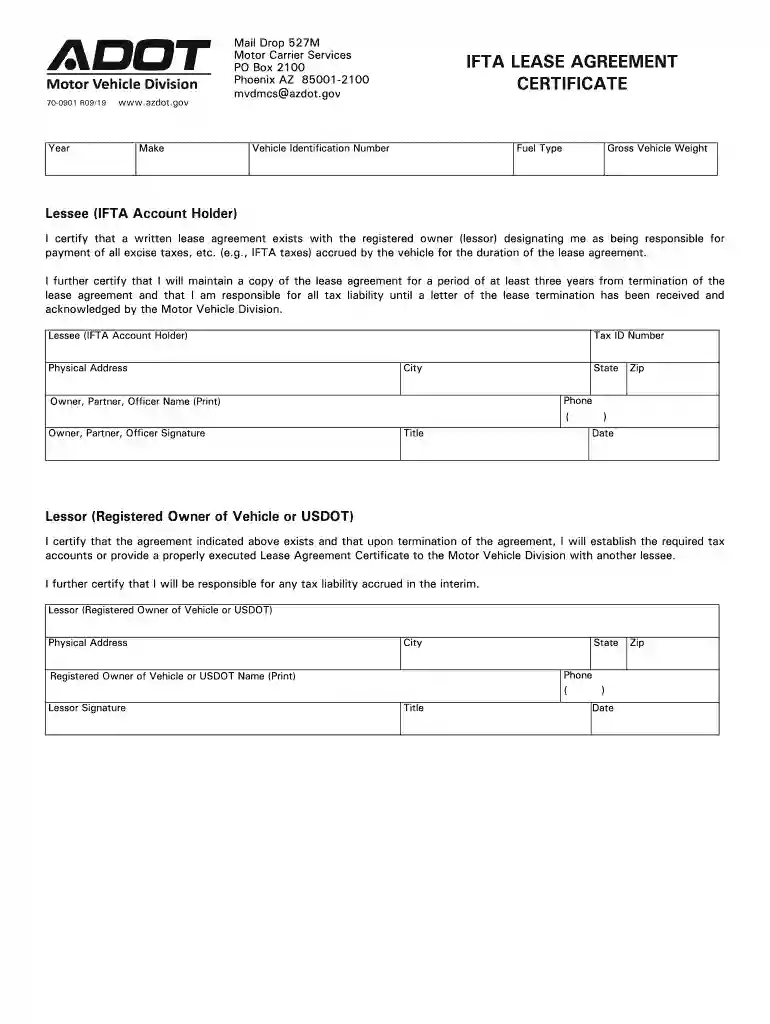
The International Fuel Tax Agreement (IFTA) Lease Agreement is a formal document outlining the responsibilities and obligations of the lessor and lessee concerning tax liabilities for leased motor vehicles. This agreement is crucial for any entity engaging in interstate transportation, ensuring compliance with the standardized tax rules that simplify reporting fuel use and taxes among member jurisdictions within the United States and Canada.
Key Elements of the IFTA Lease Agreement
The IFTA Lease Agreement must clearly define several critical elements to ensure effective compliance and understanding between both parties:
- Parties Involved: Clearly specify the lessor and the lessee, documenting their legal names and contact information. This ensures accountability for both tax liability and record-keeping responsibilities.
- Vehicle Details: Include precise details of the vehicle under lease, such as Vehicle Identification Number (VIN), make, model, and license plate number. Detailed vehicle descriptions help in accurate tax reporting and compliance.
- Tax Obligations: Outline the tax responsibility of each party during and after the lease period. Clearly delineate how fuel taxes will be calculated, reported, and paid.
- Record Maintenance: Both parties must agree to maintain records of distance traveled and fuel purchased for at least three years. This provision is critical for audits and ensuring tax compliance.
How to Use the IFTA Lease Agreement
To effectively utilize the IFTA Lease Agreement, follow these instructions:
- Draft the Agreement: Tailor the agreement specifics according to the vehicle, parties involved, and the lease period. Use a template if available to ensure all necessary components are included.
- Ensure Mutual Understanding: Facilitate a meeting between the lessor and lessee to discuss and verify each point within the agreement. Clarify all obligations and responsibilities to avoid future disputes.
- Sign and Secure the Agreement: After consensus, both parties should sign the document, making it legally binding. Store signed copies securely, yet accessible for both entities involved.
Important Terms Related to the IFTA Lease Agreement
Understanding these essential terms can facilitate clarity in the agreement's execution:
- Base Jurisdiction: Refers to the member jurisdiction (state) where the motor carrier is registered and from which they report and pay their fuel taxes.
- Licensee: The licensee is the entity the IFTA license is issued to, bearing the responsibility for filing returns and managing payments.
- Tax Reporting Period: This term defines the timeframe for which taxes are calculated and reported. IFTA uses quarterly reporting.
Steps to Complete the IFTA Lease Agreement
Completing the IFTA Lease Agreement involves several key steps, ensuring compliance and shared understanding:
- Identify Parties and Vehicle: Begin by clearly writing in the names of both the lessor and lessee, along with detailed vehicle information as specified.
- Detail Responsibilities: Clearly allocate responsibilities for tax payment, record-keeping, and compliance obligations.
- Include Legal Provisions: Incorporate clauses for dispute resolution, changes to the vehicle, or lease termination conditions.
- Final Review and Acceptance: Both parties should thoroughly review the agreement to ensure it accurately reflects their understanding and intentions. Provide ample opportunity for questions and amendments if needed.
Legal Use of the IFTA Lease Agreement
The legal use of an IFTA Lease Agreement ensures compliance with interstate fuel tax laws:
- Legal Protection: Provides clear accountability and resolution pathways, protecting both parties against non-compliance.
- Tax Compliance: Ensures that all fuel taxes are accurately reported and paid per IFTA regulations, minimizing the risk of penalties.
- Audit Preparedness: Facilitates readiness for potential audits by ensuring complete documentation and agreement in place.
State-Specific Rules for the IFTA Lease Agreement
While IFTA provides a standardized framework, each state may have unique considerations:
- Jurisdictional Differences: Some states might have specific reporting requirements or additional obligations attached to the IFTA Lease Agreement.
- Additional State-Based Levies: Be aware that states may impose separate fuel taxes that the agreement should account for.
- Consultation with Experts: Engaging with a tax professional is advisable to navigate state-specific nuances and ensure comprehensive compliance.
Examples of Using the IFTA Lease Agreement
Applying the IFTA Lease Agreement effectively involves practical considerations:
- Trucking Company Leases: A trucking company leases several vehicles for use in multiple states, using the agreement to clarify who handles quarterly tax filings.
- Independent Operators: An independent operator leasing a single vehicle to a fleet. The agreement specifies that the operator will manage record-keeping while the fleet pays taxes.
- Short-term Leases: Even in short-term leasing, IFTA agreements pinpoint who records miles and fuel purchases, ensuring seamless compliance.
By understanding the scope and application of the IFTA Lease Agreement, parties can effectively manage their tax obligations, minimizing disputes and maintaining regulatory compliance across the many jurisdictions involved.