




01. Edit your mmc medical records online
Type text, add images, blackout confidential details, add comments, highlights and more.

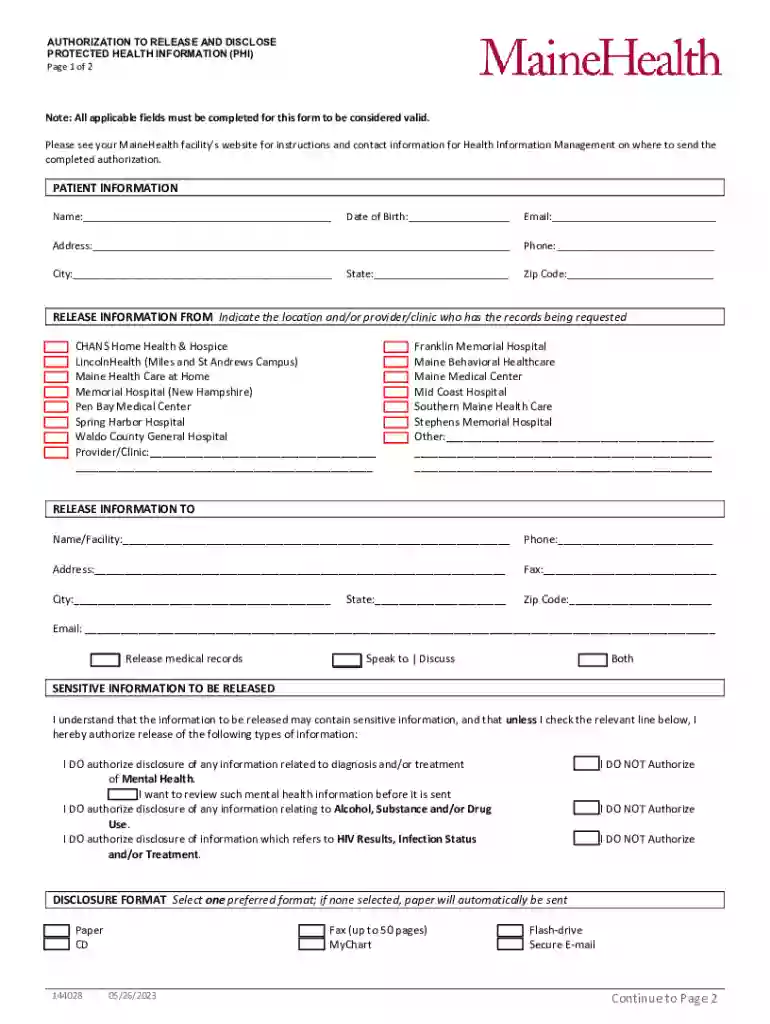
Type text, add images, blackout confidential details, add comments, highlights and more.

Draw your signature, type it, upload its image, or use your mobile device as a signature pad.

Send va medical forms printable via email, link, or fax. You can also download it, export it or print it out.
An "authorization to release" refers to a formal document that permits the disclosure and sharing of protected information between entities, typically related to healthcare or legal circumstances. This form is commonly used by patients to authorize healthcare providers to release their medical records to a third party. It outlines what information can be shared, with whom, and for what purpose. Completing such a form ensures that personal data is handled with the necessary permissions, adhering to privacy regulations like HIPAA in the U.S. Healthcare professionals, legal entities, and patients rely on this document to facilitate information exchange while maintaining compliance with legal standards.
Several critical components must be included when following the instructions to complete an authorization to release. Each section serves a specific purpose to safeguard privacy and ensure clarity:
Patient Identification: Clearly state the full name, address, and contact details of the individual authorizing the release.
Description of Information: Specify the types of information to be released, such as medical records or legal documents.
Recipient Information: Identify the party authorized to receive the information, including their full address and contact details.
Purpose of Release: Clearly define the reason for the information release, such as medical treatment continuity, legal processes, or insurance claims.
Expiration Date: Provide a clear expiration date or event upon which the authorization will cease to be effective.
Patient Rights: Include a statement informing the individual of their rights, such as the right to revoke the authorization at any time before fulfillment.
Signature and Date: Ensure the form is signed and dated by the individual granting authorization to validate the document.
When tackling the completion of an authorization to release document, adhere strictly to these steps for accuracy and compliance:
Read the Instructions Thoroughly: Before filling out the form, carefully read all instructions included to ensure comprehension of each section and requirement.
Gather Required Information: Collect all necessary information, including personal details, recipient information, and specifics about the information being released.
Fill Out Each Section: Enter the collected information into the designated sections of the form. Ensure all fields are accurately completed to prevent processing delays.
Review Patient Rights: Familiarize yourself with the patient rights section, which details the ability to revoke authorization and any conditions attached.
Verify Details: Double-check all entries for accuracy and completeness, as errors can delay or invalidate the authorization.
Sign and Date the Form: Sign and date the form in the appropriate sections to legally validate the authorization.
Submit the Form: Follow the specific submission instructions provided, whether online, via mail, or in person, to ensure proper delivery.
The primary users of authorization to release forms are entities and individuals involved in the management or exchange of sensitive personal information. These include:
Patients and Healthcare Providers: Patients use these forms to allow healthcare providers to share their medical records for treatment or billing purposes.
Legal Representatives: Attorneys may need these forms to obtain necessary information for legal proceedings.
Insurance Companies: Insurers require access to certain information to process claims and determine coverage eligibility.
Universities and Employers: These institutions might request certain records to verify an individual's qualifications or health status.


Following the instructions to complete an authorization to release is critical to ensure legal compliance and the protection of sensitive information. Legally, such forms:
Ensure Compliance with Privacy Laws: Adhering to regulations like the Health Insurance Portability and Accountability Act (HIPAA) ensures that all parties handle personal information responsibly and ethically.
Avoid Legal Penalties: Proper completion and use of these forms protect institutions and individuals from legal repercussions resulting from improper information disclosure.
Protect Individual Rights: By obtaining explicit consent, these forms protect the individual's right to confidentiality and control over their personal information.
Different states may have varying rules regarding authorization forms, particularly concerning format and additional information that may be required:
California: Often requires additional explicit consent for sharing psychiatric or substance use information.
New York: Includes specific guidelines for the disclosure of HIV-related information.
Texas: May require a notary's signature for certain types of authorizations to ensure document authenticity.
Understanding these nuances ensures that state-specific requirements are met, avoiding potential legal or privacy violations. Always consult local regulations or legal counsel if uncertain.
Several scenarios illustrate the need for and use of authorization to release forms:
Medical Treatment: A patient moves to a new city and needs their old medical records sent to a new healthcare provider to continue treatment seamlessly.
Legal Proceedings: An attorney requires a client's medical records to support a personal injury case, necessitating an authorization form for the healthcare provider to release these confidential documents.
Insurance Claims: During an insurance claim process for an auto accident, the insurance company requests medical records to verify injuries sustained. An authorization form is needed to facilitate this information exchange.
These examples highlight the critical role these forms play in facilitating lawful and secure information sharing across various sectors.
Understanding key terminology related to authorization to release forms is essential for accurate completion:
Protected Health Information (PHI): Refers to any information about health status, healthcare provision, or payment that can be linked to an individual.
Revocation: The cancellation of the authorization, allowing the individual to withdraw permission at any time before the information is released.
Disclosure: The act of releasing or transferring personal information to another entity or individual.
Grasping these terms helps ensure proper completion and comprehension of the form and the sensitive nature of the data involved.
We've got more versions of the mmc medical records form. Select the right mmc medical records version from the list and start editing it straight away!
At DocHub, your data security is our priority. We follow HIPAA, SOC2, GDPR, and other standards, so you can work on your documents with confidence.
Aug 25, 2017 These instructions will help you to complete the Authorization for Release of Health Information under the HIPAA (OCA-960).
OPTIONAL: Authorization to Release Information to Another Person. This form is also to be completed by a requester who is authorizing information relating to
Jun 17, 2025 INSTRUCTIONS FOR COMPLETING AUTHORIZATION TO RELEASE CONFIDENTIAL HEALTH INFORMATION Complete Copy of Records Selecting this option


