




01. Edit your form online
Type text, add images, blackout confidential details, add comments, highlights and more.

Type text, add images, blackout confidential details, add comments, highlights and more.

Draw your signature, type it, upload its image, or use your mobile device as a signature pad.

Send it via email, link, or fax. You can also download it, export it or print it out.
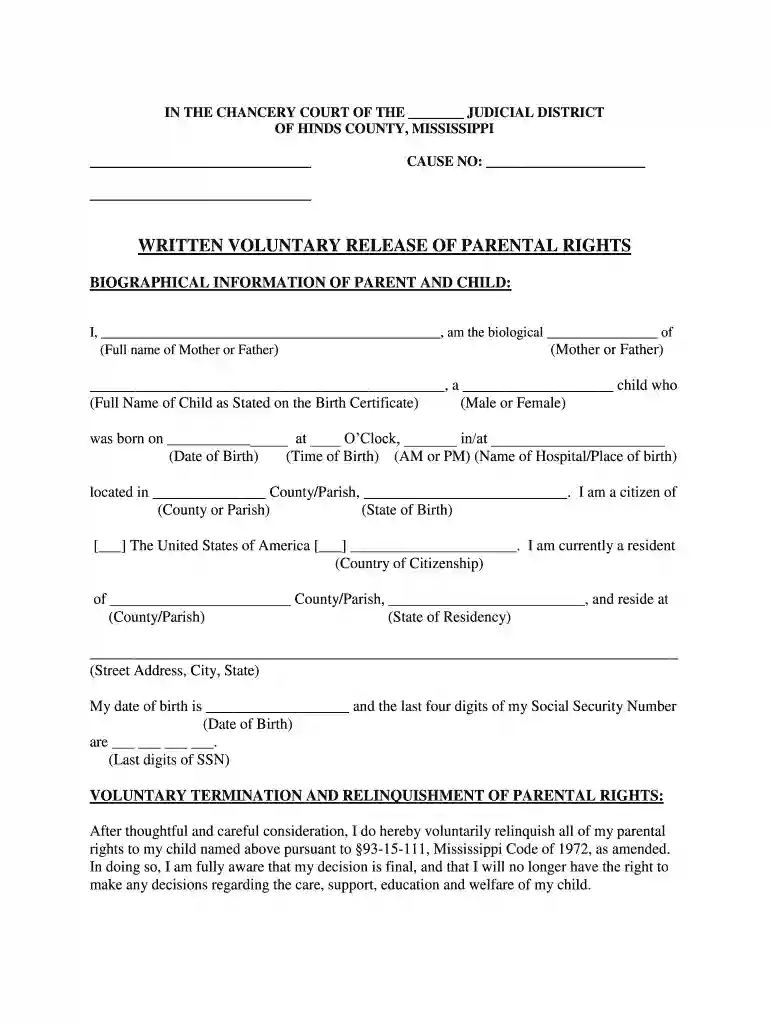
The Written Voluntary Release of Parental Rights is a legal document that allows a biological parent to voluntarily and formally relinquish their parental rights over a child. This process is predominately used in adoption cases, where the biological parent consents to terminate their rights to enable the adoption to proceed. By signing this document, the parent understands and agrees to the consequences, including the loss of custody, visitation rights, and claims to future inheritance from the child. It is imperative that the decision to sign this release is made freely, without any duress or coercion.
This form is mainly used by biological parents who decide to relinquish their parental rights voluntarily. It is often employed in adoption cases where parents agree that it is in the child's best interest to be raised by someone else. The document is also used in some legal situations involving custody disputes. Social workers, adoption agencies, and legal professionals working on family law cases may also require this document to proceed with adoption or custody arrangements. The form signifies a definitive step in altering legal parent-child relationships.


Several critical elements constitute the Written Voluntary Release of Parental Rights:
This form is legally utilized within the framework of family law to facilitate the transfer of parental rights, primarily in adoption contexts or custody modifications. The execution of this document must adhere to state laws and regulations, which may include court approvals and hearings to ensure the decision aligns with the child's best interests. It functions to prevent any future claims or disputes over parental rights once the release is validated by the court.
State laws dictate specific procedures and requirements for completing a Written Voluntary Release of Parental Rights. For instance:
Parents might opt for this release under various circumstances, such as wishing to provide their child with an improved family environment offered by adoptive parents, or when unable to care for the child adequately due to personal circumstances. It's a critical decision for ensuring the welfare and betterment of a child's future. Professionals should accompany the decision-making process to safeguard against unintended legal ramifications.
We've got more versions of the WRITTEN VOLUNTARY RELEASE OF PARENTAL RIGHTS form. Select the right WRITTEN VOLUNTARY RELEASE OF PARENTAL RIGHTS version from the list and start editing it straight away!
| Versions | Form popularity | Fillable & printable |
|---|---|---|
| 2019 | 4.3 Satisfied (36 Votes) |
At DocHub, your data security is our priority. We follow HIPAA, SOC2, GDPR, and other standards, so you can work on your documents with confidence.
For an Indian child only, inform the parent of their right to revoke the voluntary surrender of parental rights at any time prior to a decree of termination orRead more
The parent may consent to termination of his or her parental rights by signing a voluntary consent form to relinquish parental rights. (i) The written,Read more


