
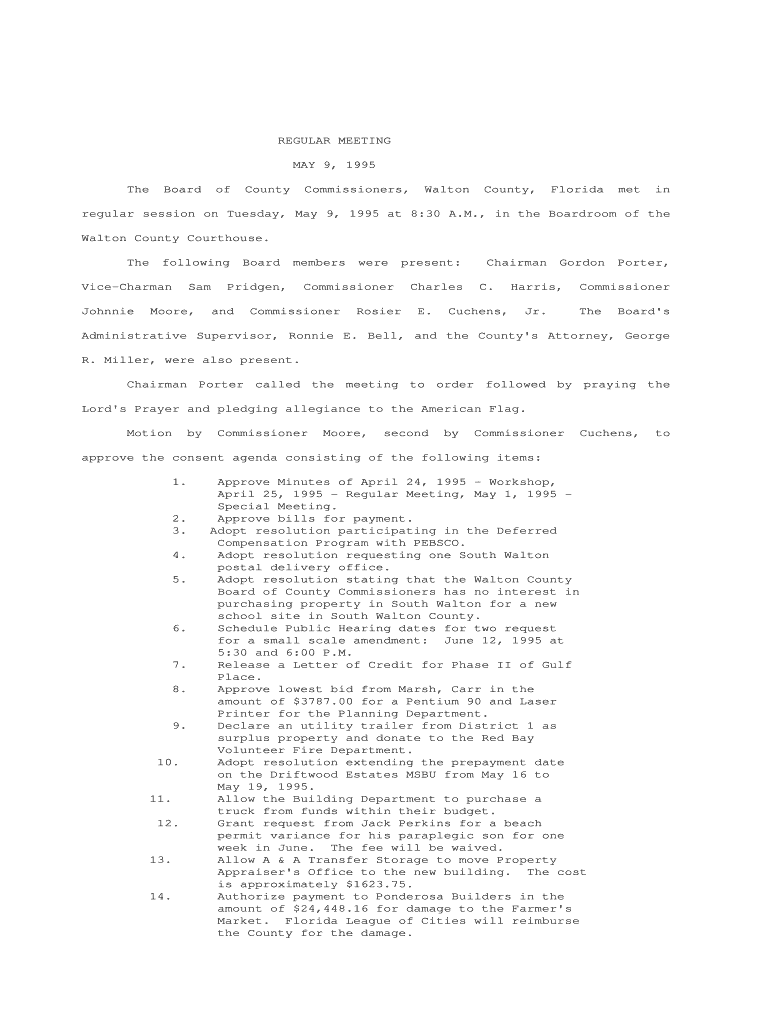







Definition and Meaning of the Board Meeting
The "Regular Meeting May 9, 1995, The Board of County" refers to a formal assembly held by the Board of County Commissioners of Walton County, Florida. These meetings are institutional events where elected officials gather to discuss and make decisions on various administrative and community issues. The minutes from this meeting provide a detailed record of discussions, decisions on bills, resolutions, property issues, and other pertinent matters, capturing the procedural aspects and outcomes of the meeting.
How to Use the Meeting Minutes
Meeting minutes, like those from the May 9, 1995 meeting, serve several purposes in both historical and practical contexts:
- Reference for Past Decisions: They offer a documented account of what was discussed and decided, serving as a reference for future policy considerations and decisions.
- Transparency and Accountability: By providing a clear account of the meeting's proceedings, these minutes help ensure that the actions of public officials are transparent and accountable to the community.
- Public Record: These documents are accessible for the public, enabling citizens to stay informed about governmental decisions and processes.
Steps to Obtain Meeting Minutes
To access the minutes from the regular meeting held by the Board of County, you can follow these steps:
- Visit the County's Official Website: The Walton County government website might provide access to archived meeting minutes.
- Contact the County Clerk's Office: Inquire if physical or digital copies are available for public viewing or purchase.
- Library Archives: Check local libraries for physical archives or access their databases for past records.
Key Elements of the Meeting Minutes
The regular meeting minutes include several key elements that are crucial for understanding the breadth of the meeting:
- Attendance Record: Details which board members and officials were present.
- Agenda Topics: Enlisted topics such as approvals for bills and resolutions concerning property and zoning issues.
- Resolutions Passed: Documentation of any resolutions that were adopted, highlighting the decisions made.
- Public Hearings and Discussions: Notes on proceedings of public interest areas like flood relief funding.
Legal Use and Importance
Meeting minutes have significant legal implications:
- Official Record: They represent the legal record of actions and decisions taken by the board, potentially impacting future legal negotiations and disputes.
- Evidence in Proceedings: In legal contexts, meeting minutes could be used as evidence to validate decisions or actions carried out by the board.
Who Typically Uses Meeting Minutes
Various stakeholders can benefit from reviewing meeting minutes:
- Community Members: To remain informed and engaged with local government actions.
- Business Entities: For updates on zoning changes or property resolutions affecting them.
- Legal Professionals: When research or evidence related to municipal decisions is required.
Contextual Examples of Usage
Meeting minutes can be illustrative in various scenarios:
- Research and Analysis: Scholars or analysts might examine these records to understand past governance trends and policy decisions in Walton County.
- Community Activism: Activists can utilize minutes to advocate for or against current board decisions based on historical commitments.
- Media Reporting: Journalists may reference these records in articles covering local government activities.
How State-Specific Rules Affect Meetings
The structure and conduct of board meetings can be influenced by state legislations such as:
- Sunshine Laws: In Florida, these laws mandate that meetings of governing bodies and public records be open to the public to ensure transparency.
- Local Government Statutes: Specific guidelines and procedures that dictate how these meetings are held, such as quorum requirements and voting protocols.
State-by-State Differences in Meeting Conduct
While Walton County follows Florida's state guidelines, meeting protocols may differ across states due to varying state laws and governance codes. Each state's legal framework influences how board meetings are structured, the processes they follow, and the level of public engagement permitted.




