







Definition and Meaning
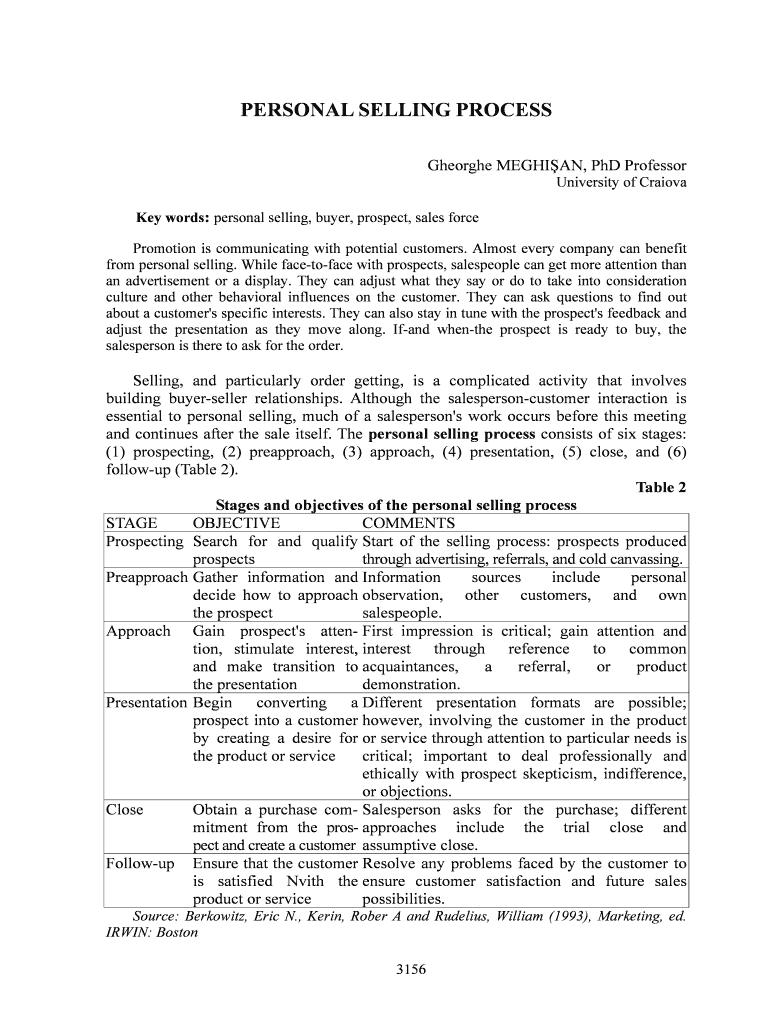
The personal selling process is a strategic, customer-focused approach to building effective buyer-seller relationships through direct interaction. This process is characterized by personalized communication that addresses individual customer needs, facilitating mutually beneficial sales outcomes. Key components include understanding customer preferences, crafting tailored sales messages, and fostering lasting connections. The ability to adapt to various scenarios and client queries is essential for ensuring successful sales conversions.
Steps to Complete the Personal Selling Process
-
Prospecting: Identify potential customers who are likely to benefit from your product or service. This step involves researching and qualifying leads to ensure they meet the criteria of your ideal customer profile.
-
Preapproach: Prepare for the initial interaction with the prospect. Gather relevant information and outline a sales strategy that aligns with the needs and interests of the prospective buyer.
-
Approach: Initiate contact with the prospective customer. This can be done through various means such as phone calls, emails, or in-person meetings. The goal is to make a positive first impression and establish rapport.
-
Presentation: Deliver a compelling and informative presentation that highlights the benefits and features of your product or service. Tailor your message to address the specific needs of the prospect while using visuals or demonstrations when appropriate.
-
Handling Objections: Address any concerns or questions the prospect may have. Effective handling of objections can involve clarifying misunderstandings, providing additional information, and demonstrating the value of your offering.
-
Closing the Sale: Finalize the deal by gaining the prospect's agreement to purchase. Techniques such as summarizing key points, offering incentives, or providing a trial can help in securing the sale.
-
Follow-Up: Maintain contact post-sale to ensure customer satisfaction and loyalty. This involves checking in on product usage, resolving any issues, and offering additional support or products when necessary.
Important Terms Related to Personal Selling Process
- Lead Generation: The process of identifying and cultivating potential customers for a business's products or services.
- Sales Funnel: A representation of the stages a customer goes through from initial awareness to purchase.
- Value Proposition: A statement that explains what makes a company's product or service attractive, how it fulfills customer needs, and why it stands out from competitors.
Key Elements of the Personal Selling Process
- Relationship Building: Creating trust and understanding between buyer and seller through effective communication and consistent follow-ups.
- Information Gathering: Collecting and analyzing data about the prospects to tailor the sales approach.
- Customization: Adapting sales techniques and presentations to meet the specific needs and interests of each prospect.
- Feedback and Adaptation: Listening to customer responses and adjusting sales strategies to address their concerns effectively.
Examples of Using the Personal Selling Process
Consider a scenario where a software sales representative engages a medium-sized business interested in a productivity application. The representative identifies key decision-makers, schedules a meeting to understand their workflow challenges, and demonstrates how the software can address these specific issues efficiently. By answering questions and offering customized solutions, the representative successfully converts the prospect into a client, demonstrating effective use of the personal selling process.
Who Typically Uses the Personal Selling Process
The personal selling process is predominantly used by sales professionals and marketers in B2B (business-to-business) environments. It is also applicable in sectors requiring customized solutions, such as real estate, insurance, and automotive industries. Personal selling is integral for businesses where direct customer engagement and long-term relationships are essential for success.


Business Types That Benefit Most from Personal Selling Process
- Consultancies: Firms offering specialized advice benefit from personal selling by tailoring their services to individual client needs.
- Technology Providers: Companies selling complex software or hardware solutions can use personal selling to demonstrate product capabilities and ensure proper alignment with customer requirements.
- Financial Services: Institutions providing banking, insurance, and investment products find personal selling essential in building trust and educating clients about available options.
Legal Use of the Personal Selling Process
When engaging in personal selling, businesses must adhere to legal and ethical standards, including truth-in-advertising laws and data protection regulations. Ensuring transparency in communication and obtaining necessary consents for data use are critical components of ethical sales practices within the personal selling process. Compliance with these requirements ensures a legal framework for conducting direct sales activities.




