
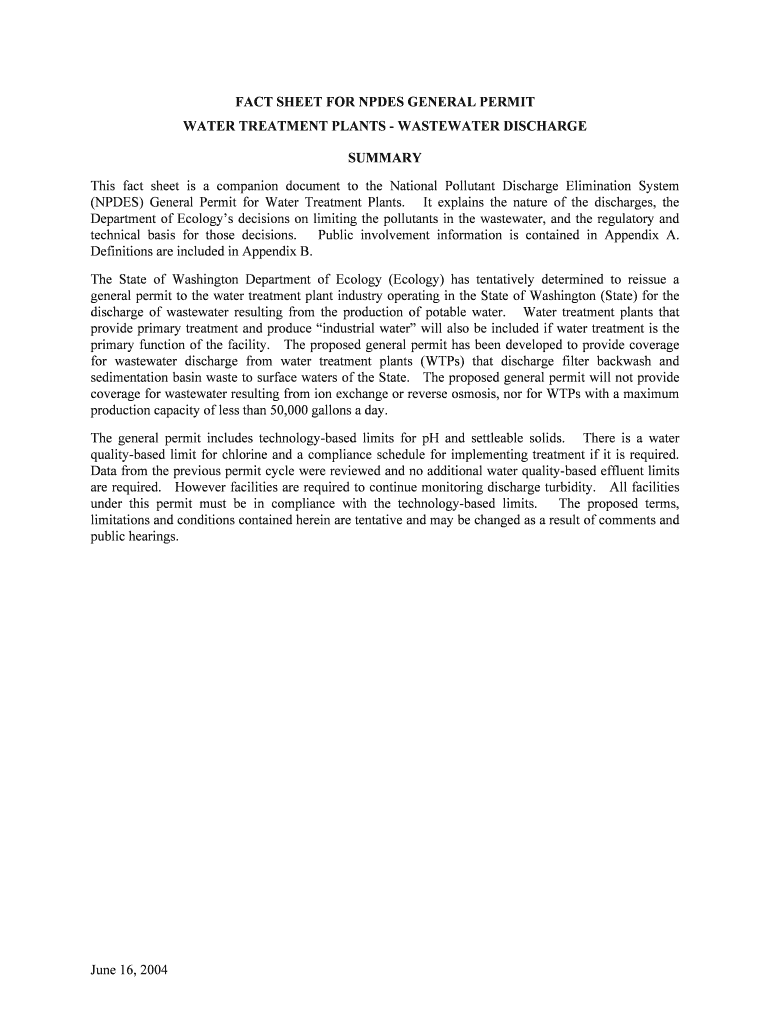







Definition and Purpose of the NPDES General Permit
The National Pollutant Discharge Elimination System (NPDES) General Permit is a regulatory framework established to control water pollution by managing the discharge of pollutants into surface water from specific sources like water treatment plants. It ensures that facilities comply with established pollutant limits to protect water quality and public health. The NPDES permit targets pollutants such as chlorine, pH levels, and settleable solids and requires regular monitoring and reporting of these elements.
Key Elements of the NPDES General Permit
The NPDES General Permit is composed of several crucial components designed to maintain high standards of environmental protection. Key elements include:
- Pollutant Limits: Facilities must adhere to specific technology-based limits for pH and settleable solids.
- Monitoring Requirements: Turbidity and other pollutants must be monitored regularly to ensure compliance with water quality standards.
- Public Involvement: Opportunities for public input during the permit issuance process help maintain transparency and community involvement.
- Compliance History: Facilities’ past compliance records are reviewed to inform decisions on permit reissuance or modification.
Steps for Completing the NPDES General Permit
- Understand the Requirements: Familiarize yourself with specific pollutant limits and monitoring obligations.
- Collect Required Data: Gather historical discharge data and analyze it to ensure compliance with limits.
- Prepare Documentation: Compile all necessary facilities’ compliance history and public feedback.
- Review and Submit: Carefully review the completed application for any missing elements before submission.
- Respond to Feedback: Address any public or regulatory feedback efficiently to ensure smooth processing.
Legal Use and Compliance with the NPDES General Permit
Compliance with the NPDES General Permit requires adherence to federal and state water quality standards. Facilities must:
- Maintain Accurate Records: Keep detailed records of discharge volumes and quality reports.
- Submit Regular Reports: Provide periodic updates and reports to regulatory bodies to document compliance.
- Address Non-compliance Issues: Promptly rectify any discrepancies or exceedances in discharge limits to avoid legal penalties.
Who Uses the NPDES General Permit
The NPDES General Permit is primarily used by operators of public and private wastewater treatment facilities. These entities must manage and control pollutant discharges to safeguard local water quality. Additionally, it is utilized by environmental consultants, legal advisors, and regulatory bodies overseeing permit compliance and enforcement.
Obtaining the NPDES General Permit
Facilities seeking coverage under the NPDES General Permit must apply through their state environmental agency or the Environmental Protection Agency (EPA). The process involves:
- Application Submission: Complete an application packet including required monitoring data and compliance history.
- Public Notice and Comment: Participate in public notice periods allowing for community input and feedback.
- Review and Authorization: Receive authorization or coverage under the general permit, which may include specific conditions tailored to the facility.
Penalties for Non-Compliance
Non-compliance with the NPDES General Permit can result in significant penalties, including:
- Fines and Legal Action: Financial penalties for violations and potential legal action by state or federal agencies.
- Revocation of Permit: Persistent non-compliance may lead to revocation or suspension of the permit, halting operations.
- Reputational Damage: Public and stakeholder trust can diminish, affecting the facility's community standing and operational viability.
State-Specific Rules for the NPDES General Permit
While the NPDES General Permit operates under federal guidelines, individual states may have additional requirements or variations due to local environmental laws and conditions:
- State Environmental Agencies: These agencies may impose stricter discharge limits based on regional water quality concerns.
- Tailored Solutions: States can implement more stringent enforcement mechanisms or incentives to encourage compliance.
- Local Water Quality Initiatives: Integration of the NPDES permit into broader state-led water quality initiatives to address regional pollution challenges effectively.
Examples and Scenarios of Using the NPDES General Permit
Practical examples of NPDES permit use include:
- Water Treatment Facilities: Adopting best practices to reduce chlorine levels in discharge water to comply with permit limits.
- Industrial Waste Management: Implementing innovative filtration systems to minimize settleable solids in effluent.
- Public Engagement: Facilities conducting community outreach sessions to explain their compliance efforts and gather feedback.
By addressing these critical areas, the NPDES General Permit ensures that water treatment facilities and other entities involved in pollutant discharge uphold environmental integrity and public health standards.




